
Paul Tremblay: “Man The Flying Saucers”
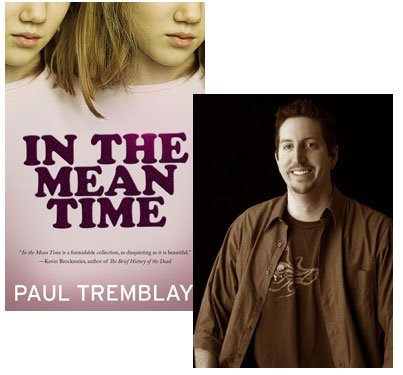
You’re going to want to read every short story in Paul Tremblay‘s collection, In the Mean Time, but here’s the thing: You can’t read them all at once. Heck, you can’t read more than one or two stories like “The Teacher,” or the really unsettling ones like “The Blog at the End of the World” and “It’s Against the Law to Feed the Ducks,” without your subconscious kicking back at you later that evening while you sleep. (Try “The Two-Headed Girl” on for size; it’s disturbing, but not quite as disturbing as some of the others—it even has its darkly funny bits.) I first met Paul when he read at the Center for Fiction in 2009, and I knew he had some awesomely weird stories in him, but I didn’t know then that they were anything like these. And it seems like we readers might not be able to appreciate his voice were it not for one story in one college class, as he explains here…
I hope this doesn’t sound trite, or like some sort of put on, but I’m not overstating when I say that Joyce Carol Oates’s “Where Are You Going, Where Have You Been?†changed my life.
I was 21 years old, a second semester senior, and taking my first college lit class. My excuse is that I was a mathematics major. Well, a double major: math and humanities (long and mostly boring story as to how that happened), but yeah, my humanities consisted of a hodge-podge of philosophy, history, and music courses, plus the one lit class. Of course, some of my best friends were English majors (including my future wife, Lisa), but the proud math undergrad that I was obnoxiously proclaimed that English majors/professors/hangers on just made it all up. The truth was I wasn’t confident in my own critical reading ability and I certainly wasn’t a reader of my own free will.
Oddly enough, math guy was totally mesmerized by Professor McLaughlin. It didn’t hurt that he was cool enough to be a fan of the Dead Boys, Mission of Burma, and Husker Du. He knew how to help connect me to the text through music. And, of course, he had us read “Where Are You Going, Where Have You Been?†It’s the story that made me fall in love with reading, and shortly thereafter, writing.
I’ll never forget my first, simple, visceral reaction to the story: I didn’t know there were stories/books out there like this.
30 December 2010 | selling shorts |
J. D. McClatchy on Translating Mozart’s Librettos

In Seven Mozart Librettos, the poet J.D. McClatchy translates (forgive me for being obvious here) the librettos to seven operas Mozart composed during the last decade of his life, aiming—as he writes in this essay, drawn from the nearly 1200-page volume’s introduction—to help readers “hear the verse, but listen to the drama.” My familiarity with opera in general, and Mozart in particular, is still fairly limited; I’ve only seen productions of two of the works included in this collection. But, as McClatchy notes later in the introduction, “perhaps the best way to read each opera is with a recording of it playing,” and since Mrs. Beatrice has a fairly decent collection of opera on CD, it looks like I’ve got a great opportunity ahead of me…
A libretto is not a poem or a play. It lacks the former’s structural intensity and elegance, and the latter’s depth and intricacy. It has a very specific non-literary function—to make the composer want to write music. Yet throughout opera’s history there have been librettos of superb finesse and polish. A great composer can make them into an unparalleled dramatic evening. But what is it that draws a composer—Mozart, say—to want to set a particular text?
One problem with the existing translations of Mozart’s operas is that, for all their earnestness or cleverness, often they don’t really give you what the characters are actually saying in the original, or they distort the tone of delivery. Take the opening lines of Don Giovanni, with the Don’s manservant Leporello impatiently waiting out in the cold while his master is enjoying a lady’s favors inside. The Italian goes this way, in a kind of shivering staccato that emphasizes each syllable:
Notte e giorno faticar,
Per chi nulla sa gradir;
Piova e vento sopportar,
Mangiar male e mal dormir.One of the more literal translations now in print translates this as
I work hard day and night,
And he never thanks me.
I endure winds and rain,
Poor food and little sleep.Granted, that is the gist of Leporello’s complaint, but hardly gives the flavor of his witty, if whiney, sense of life’s unfairness. Even the amateur can hear in the original the tetrameter line with its abab rhyme scheme, and pick up the sense of parallel pairs of terms (notte e giorno [night and day], piova e vento [rain and wind]). When W. H. Auden and Chester Kallman translated the opera in 1957, they wisely took a freer hand, and observed the Italian’s pattern of images and rhymes in a fluent English verse:
On the go from morn till night,
Running errands, never free,
Hardly time to snatch a bite;
This is not the life for me.One appreciates the slang (“on the go,” “snatch a bite”) that adds color to the moment and allows the singer to elicit a smile from the audience. But, presumably in an effort to add some background and prepare for what’s to come, the second and fourth lines here are entirely made up; and the problem is not that Leporello eats hurriedly, but that he eats badly. My own version tries to keep the verse scheme of the original as well as accurately carry over into English everything the Italian is saying, while still trying to brush up the character’s grumbling personality:
Always working, night and day,
And not a word of gratitude.
Wind and rain, come what may,
Never a nap, and rotten food.
29 December 2010 | in translation |
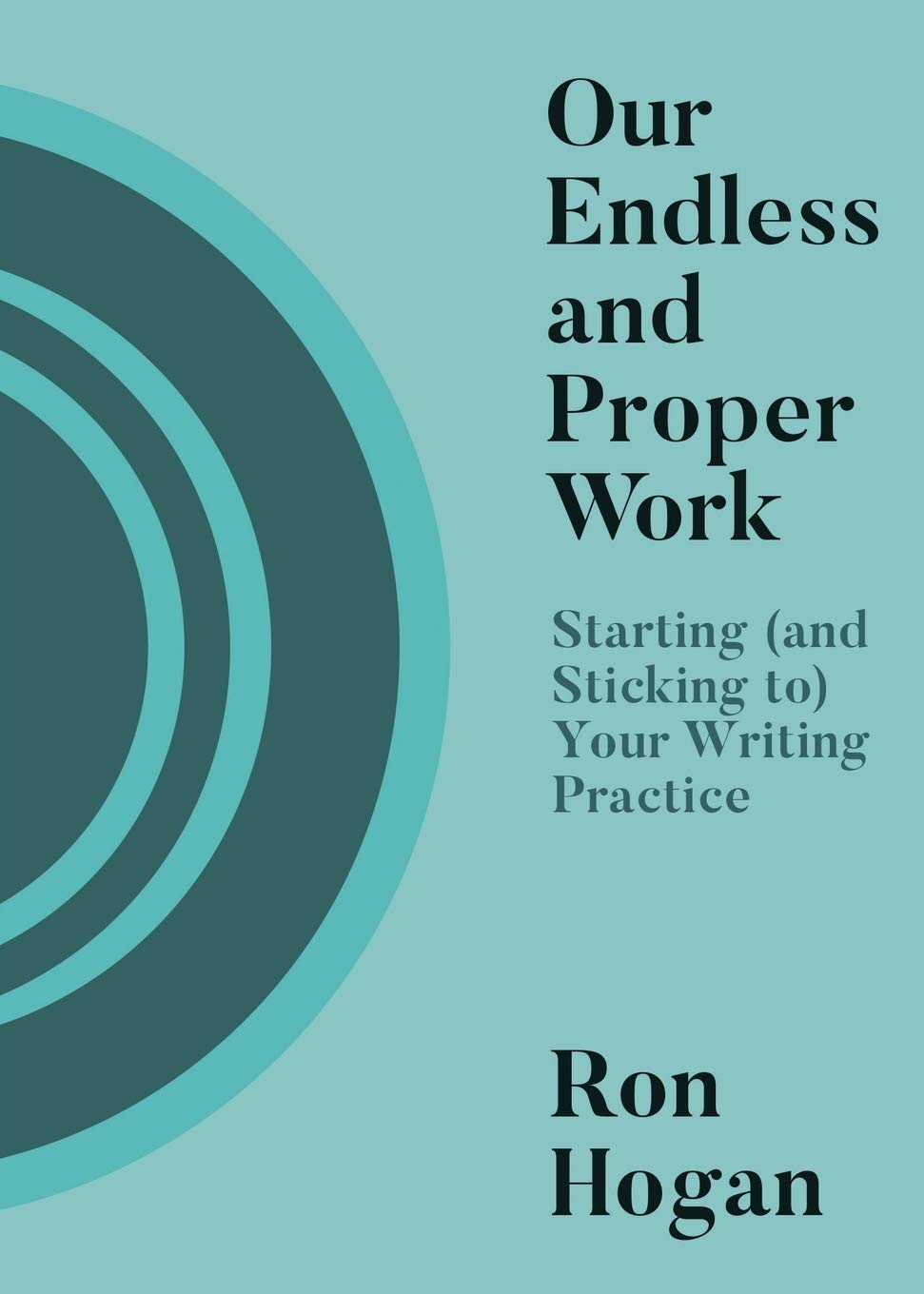 Our Endless and Proper Work is my new book with Belt Publishing about starting (and sticking to) a productive writing practice.