
Allan Peterson, “More”
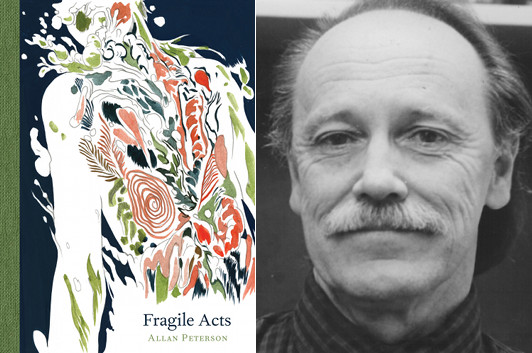
photo via Poetry Foundation
We want more, but more is an emergent property.
It comes for you out of the same constiutents
as when you were nothing but them yourself,
from the unspoken, the far place
nickels disappeared with their buffalos.
Most of us never believed the ordinary
was that miraculous, the complex reducible
completely to a few brash headlines.
Look at the inquisitive miles fingers have put on pianos,
knocking softly though nothing opened.
Perhaps the pretty demons inside failed to hear
the twisting polonaise, hiding as they were
behind the curtains in brocade
covered with hunting scenes,
seeing the parade of notes festive though death-dressed.
One day you discover from the ads
suspicious has the same look as discriminating,
that greeny tigers have hidden their skins on the leaves
of Diffenbachia, ideas like onions are dropping their pale slips
to the floor, that the garden is a smile around the house,
and around what is hidden by the house.
Fragile Acts is Allan Peterson’s fourth collection of poems. In addition to “More,” it includes “Pure Indonesia” from Boston Review and several poems archived at the Poetry Foundation website, like “Eight Presidents” and “Moon Missing.”
McSweeney’s previewed their publication of Fragile Acts with the poem “Long Distance,” as well as an interview with Peterson: “The poems I hope for and hope to write are reflective, revealing, and incantatory,” he said. “Incantatory, not in the sense of repetition, but spell inducing because of the aura of seriousness, metaphoric description, and reverie. A poem is not a caption to experience, it is experience, and not a reminiscence, though it may contain reminiscences. A poem is an act in the present.”
20 August 2013 | poetry |
Sophie Cabot Black, “Summit”
As you rise you must remove any sign
Of rising: footprint, a branch displaced,
The shifted rock. To arrive is to leaveThe way behind you unchanged, as the cold dawn
Picks over what is left. Up in regions
Not yet named, where scattered quartzBetrays a vein private with gold, where antlers
Locked and died in struggles of domain,
The last ones still against the skyShow the way out. In such air
Is no room for mercy. Days when we go up
The mountain, then down, only to head upAgain. Up to the edge, hurrying
To get however much done before weather.
Sophie Cabot Black’s new collection, The Exchange, also includes “Eat What You Kill,” “Love Poem,” and “It Never Goes Away,” all of which were first published in Boston Review. Then there’s “Private Equity” (The New Yorker), plus two poems from Slate: “Sheetrock” and “Biopsy.”
I met up with Sophie at Book Court, an independent bookstore in Brooklyn, earlier this summer, to record an episode of The Handsell, where we talked about the metaphorical framework that runs through these poems, and then she came up with some other poets for me to read when I told her I was a fan of Matthea Harvey, Paul Muldoon, and Kevin Young.
7 August 2013 | poetry |
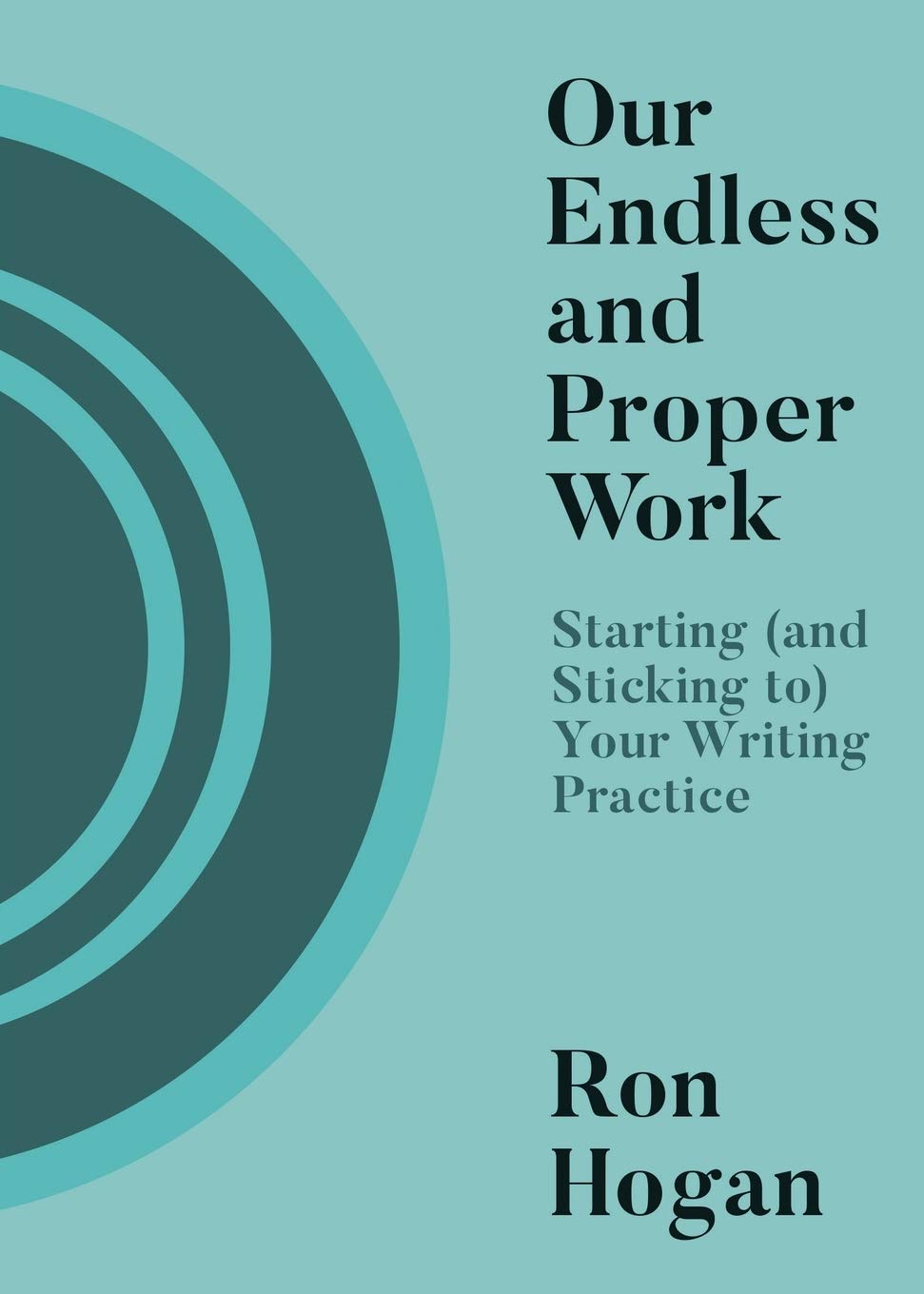 Our Endless and Proper Work is my new book with Belt Publishing about starting (and sticking to) a productive writing practice.