
Carolyn Burke: Rebecca & Paul & Georgia & Alfred
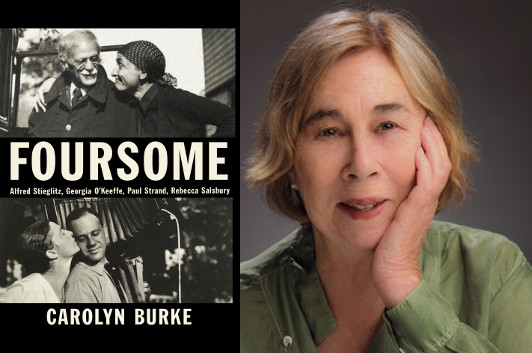
photo: Paul Schraub
I first met Carolyn Burke in 1995, when we discussed her biography of the early 20th-century artist Mina Loy. A decade later, Burke and Hazel Rowley shared some of their correspondence about literary biography with me. I’m delighted to introduce you to her latest book, Foursome, a group history exploring the interlocking lives of the photographers Alfred Stieglitz and Paul Strand and the painters Georgia O’Keefe and Rebecca Salsbury James. Over a span of decades, their personal and artistic passions frequently overlapped one another, until each of them owed something of their development to the other three. Sorting that story out wasn’t easy, but, as Burke writes in this guest essay, it was an opportunity that came along at the perfect moment.
Writing my way to the end of No Regrets, I seemed to be lingering, in my imagination, at Edith Piaf’s grave—where I first felt the sense of communion with the chanteuse that prompted me to write about her. I enjoyed writing that book so much that I could not imagine devoting myself to another birth-to-death biography.
What I did not realize until later was that in bidding adieu to PIaf, I was sensing the need for a break from the linear model of life-writing. In retrospect, it seems that writing lives of Mina Loy, Lee Miller, and Piaf has pointed the way to the idea of a group portrait, the kind of book that emboldened me to embrace the role of story-teller.
When I was wondering what to do next, an artist friend told me about a little-known ‘modern woman’ named Rebecca Salsbury James— “your kind of subject,” he said. She was just that, I learned from the scant material I could find about her. Still, Rebecca’s perspective on her years with the group of creative spirits around the photographer and cultural impresario Alfred Stieglitz—as the wife of his protégé, Paul Strand, as the close friend of Georgia O’Keeffe (who would marry Stieglitz), and as Stieglitz’s muse and correspondent—allowed me to imagine a narrative that interwove the lives of its protagonists, a tapestry, or, as I would come to see later on, the Southwestern embroidery called colcha adapted by Rebecca once she moved to Taos.
21 March 2019 | guest authors |
Camille A. Collins: Winter Reflections on Gratitude
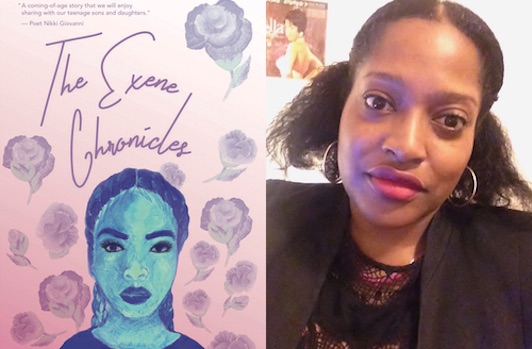
photo courtesy Camille A. Collins
I’ve known Camille A. Collins for ages in her capacity as a book publicist, but I hadn’t realized she was also a writer until she told me about her debut YA novel, The Exene Chronicles. It’s a story about growing up in the suburbs of San Diego in the 1980s that reveals a lot of the emotional truths about being a teenage punk rock fan in those days (yes, the titular “Exene” is the lead singer of X), wrapped up in a drama about child kidnapping, adolescent frustration, and the currents of racial hatred that have been bubbling on America’s surface for decades. Camille’s sent along “a small grouping of texts perfect for leisurely winter weekend reads,” as she describes them: “While reveling in the amazing writing, each novel, poem, or short story serves as a catalyst for reflection and gratitude, on things (such freedoms, privileges, or simple material comforts) which we sometimes take for granted.”
20 January 2019 | guest authors |
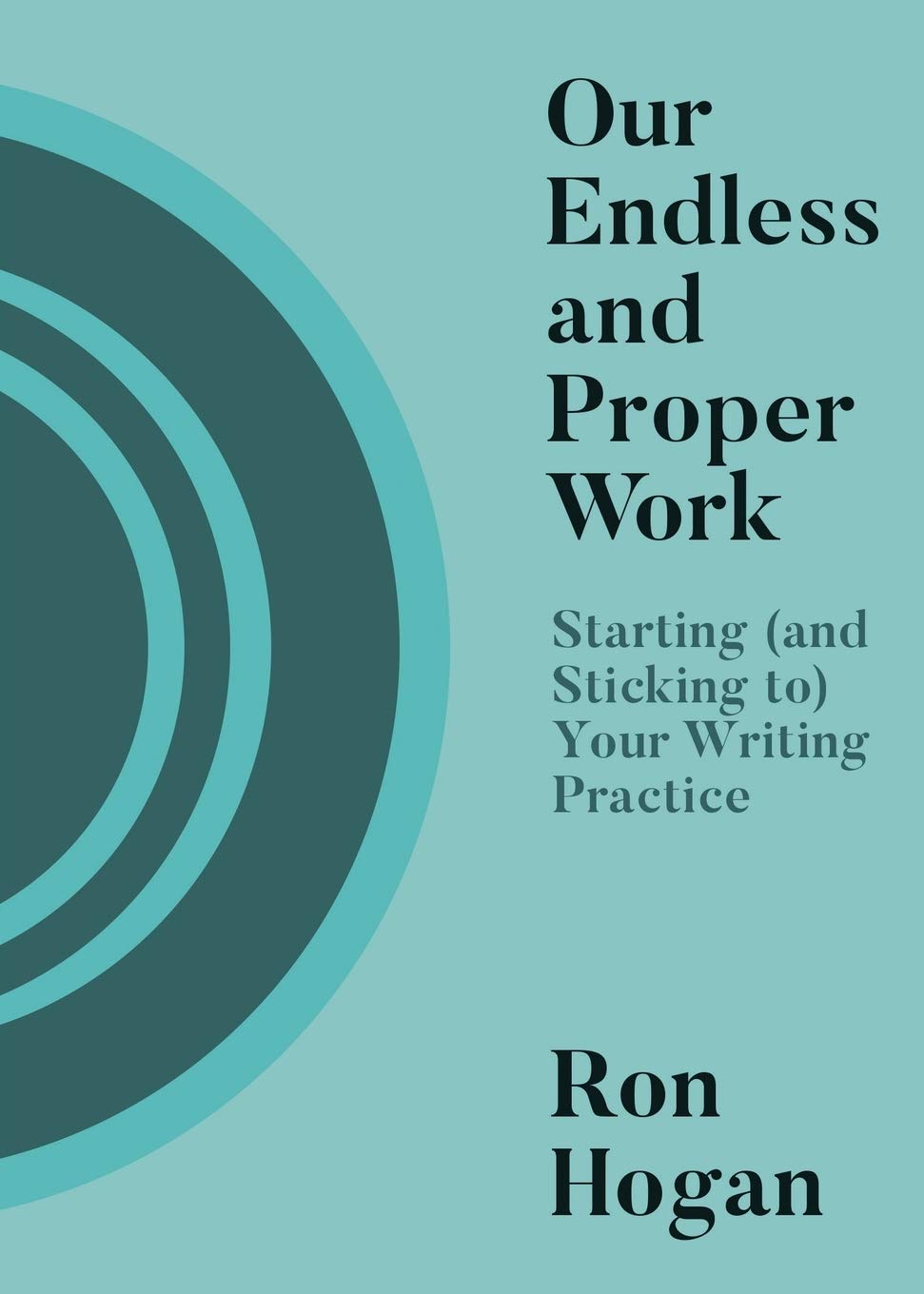 Our Endless and Proper Work is my new book with Belt Publishing about starting (and sticking to) a productive writing practice.