
Life Stories #45: Dani Shapiro
Subscribe to Life Stories in iTunes

illustration: Barry Blitt
“The relationship between the teller and the tale is the tale in memoir,” Dani Shapiro proposes in this week’s episode of Life Stories, a podcast series where I talk to memoir writers about their lives and the art of writing memoir. The book that prompted our discussion, Still Writing, isn’t exactly a memoir, although Shapiro does draw extensively upon her own life in her examination of the writer’s life. At the same time, this isn’t a how-to book—you could call it a creative writing handbook, I suppose, but if so it’s about a particular distillation of advice and experience, or advice refined by experience…
Among the topics we touch upon as we talk: How equipped the publishing industry is (or isn’t) to handle an author’s decision to veer away from her expected literary trajectory, whether Shapiro started publishing too early, the metaphor of the memoirist picking at the scars of the memories that cut the deepest, and what Shapiro has learned from her yoga practice that she brings to the daily discipline of writing.
Listen to Life Stories #45: Dani Shapiro (MP3 file); or download this file directly by right-clicking (Mac users, option-click). You can also subscribe to Life Stories in iTunes, where you can catch up with earlier episodes and be alerted whenever a new one is released. (And if you are an iTunes subscriber, please consider reviewing the podcast there!)
14 October 2013 | books for creatives, life stories |
Ruhlman’s Twenty: Chorizo Vinaigrette
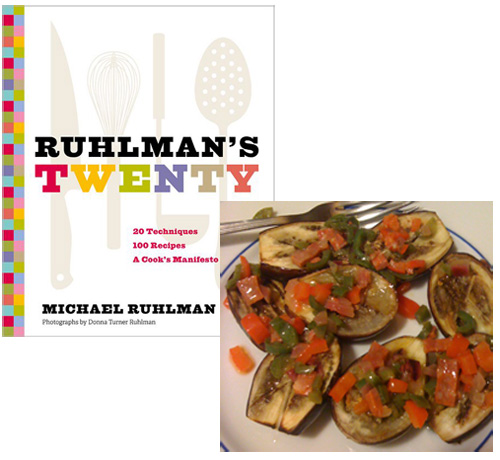
I’d had my eye on Ruhlman’s Twenty, a new cookbook from Michael Ruhlman, for most of the fall, especially after seeing a post at Erin Rooney Doland’s Unclutterer about Ruhlman’s championing of organizing principles in the kitchen, better known as mise en place. “Cooking is easier, faster, more efficient, more successful, and more fun when you think first, when you prepare and organize,” Doland quoted Ruhlman:
“This is not an additional step—it’s simply doing all that you would do throughout the cooking anyway. You’re just doing it ahead of time, spending less time between cupboard and counter, refrigerator and stove. Be sure your counter or work area is completely clear. Go to the refrigerator, pull everything you’re going to need, and set it out. Go to the cupboard, and pull everything there you’ll need. Gather your tools beside your cutting board, set the pans you’ll need on the stove, and get the oven hot if you’re using it. Think about the sequence of your actions. And then being to work, and as you work while you’re doing one thing, think about what you’ll be doing next and next after that.”
This is excellent advice for cooking, but of course it’s also excellent advice for any creative endeavor, and it’s something that I’m working on incorporating more fully into my life as I undertake some major new projects in the months ahead, which you’ll be hearing about as they become ready to reveal. There’s a second, equally important component to mise en place, though: “Put away everything that you don’t need.” It’s something that I’ve struggled with in the past, hanging on to books long past the time when it’s become obvious I won’t be reviewing them any time soon; moving into a new apartment a little over a year ago gave me an opportunity to purge, but I’m still working on dealing with the creeping piles, and I’m hoping to improve a lot in this aspect of my creative life, too.
Anyway, Ruhlman’s Twenty: I love that these are all very simple recipes, grounded in teaching me fundamental techniques that I’ll be able to experiment with at my own pace. The chapter on vinaigrette is a perfect example: I’m one of those people Ruhlman talks about, who never thought about vinaigrette beyond salad dressing, so the idea that it can serve as the base as a sauce to go with all sorts of cooked dishes was a real revelation. So the first recipe I decided to make from the book was a chorizo vinaigrette that calls for equal proportions of diced chorizo, red onion, red bell pepper, and jalapeno, sauteed in canola oil (although I used olive oil) with a generous helping of salt, then tossed in sherry vinegar once it’s cooled. I had no luck finding sherry vinegar in the grocery stores in my Queens neighbhorhood, but I did have a bottle of apple cider vinegar, and that substitution seems to have worked just fine.
4 January 2012 | books for creatives, cooking |
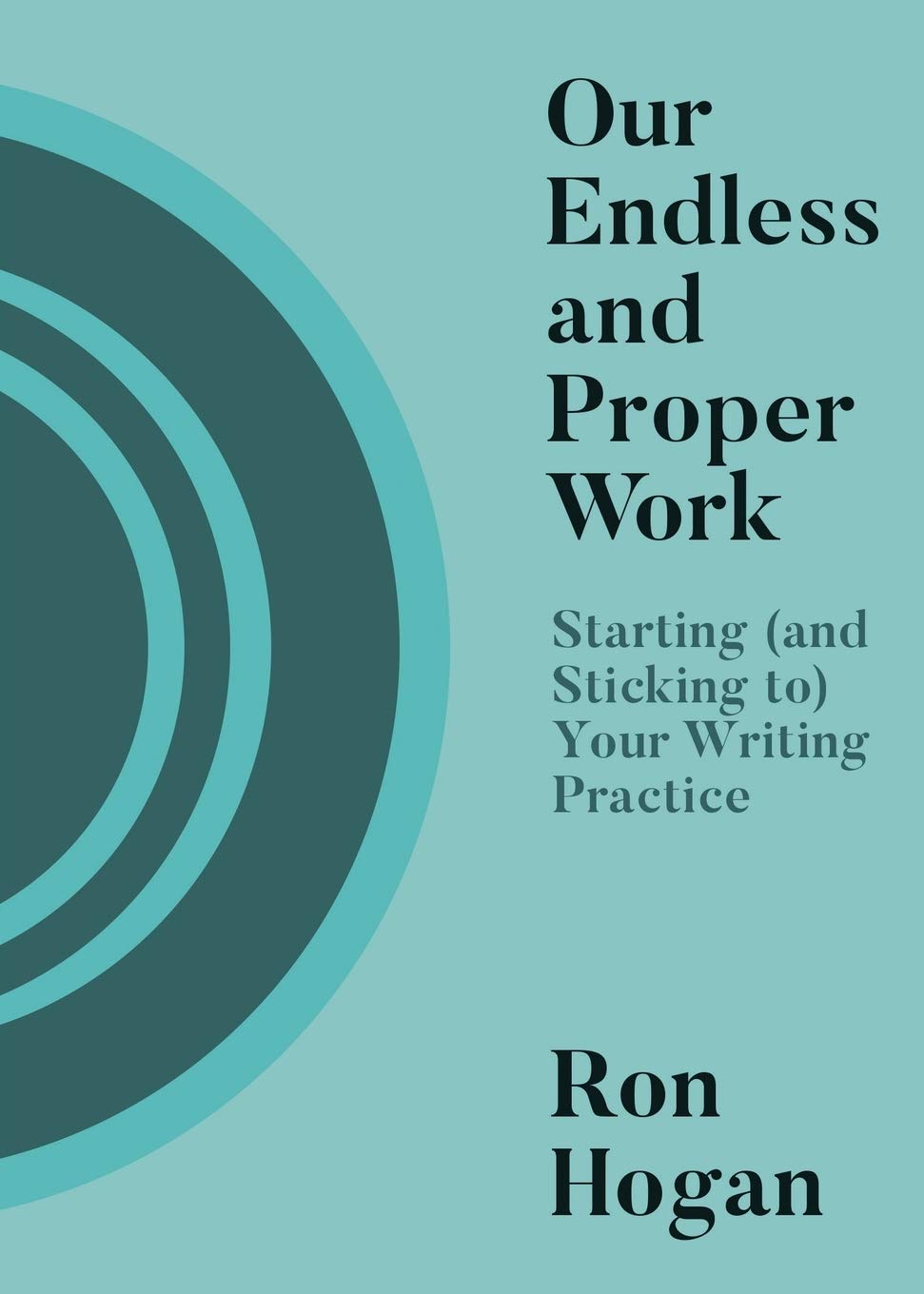 Our Endless and Proper Work is my new book with Belt Publishing about starting (and sticking to) a productive writing practice.