
Adventures in Urban Fantasy & Paranormal Romance
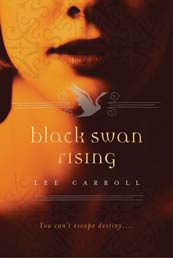 My new gig reviewing science fiction and fantasy for Shelf Awareness continues this month, with a look at Black Swan Rising, the first volume in a new urban fantasy series by “Lee Carroll” (the husband-and-wife team of Lee Slominsky and Carol Goodman). I was fairly impressed; despite some quibbles about the way the authors try to ground their universe in “our” world by implying a magical element to certain historical (and recent) events, I liked much of the framework they set up, it played out in an entertaining fashion, and we’ll see where they take things in the sequel.
(To elaborate, without giving away any key plot elements: Stories which attempt to establish a “magical” cause to real-life historical events, whether they are of a “good” or “evil” nature, sometimes make me feel as if those events are being trivialized or diminished—but it’s not just a fantasy problem, now that I think of it, because I also believe the ending to Jhumpa Lahiri’s short story “Going Ashore” is a weak gimmick, too. So maybe it’s really just about how real-life events are “hijacked” by fiction writers to boost up the drama… which, in the case of Black Swan Rising, wasn’t even necessary.)
Meanwhile, over at Tor.com, I did an interview with my friend Leanna Renee Hieber, the author of The Strangely Beautiful Tale of Miss Percy Parker and The Darkly Luminous Fight for Persephone Parker, touching upon her love of the Victorian era, how it didn’t take much to finesse paranormal elements into her chosen historical setting, and just how you write a sequel to a romance novel…
29 July 2010 | read this |
What Justin Taylor’s Learned from “The Crazy Thought”

I’m not a bad son. Only prodigal,” says the narrator of one of the stories in Justin Taylor’s debut collection, Everything here is the best thing ever, and it’s a sentiment many of his characters could share. Sure, on the surface, they look like screwups, and let’s face it some of them are a bit screwed up, but Taylor breaks past the surfaces and lets us into their lives, sometimes (as in “In My Heart I Am Already Gone” or “The New Life”) showing how mental and emotional blind spots can steer us down a path with devastating consequence. For his “Selling Shorts” essay, Taylor has chosen a similar story, the impact of which he himself didn’t quite recognize at first.
One of my favorite story collections is The Wonders of the Invisible World, by my former teacher, David Gates. The ten stories in David’s book are riveting and dark. Their incisiveness—not for nothing from the Latin, to carve—is downright scary; they are brutal and wise. The protagonists of these stories are old and young, gay and straight, women and men; and yet, they all tend to share certain qualities: a level of sophistication (high), education (ditto), attitude (bad), and class (white-collar middle, striving for upper). The result is a very strange and exciting paradox: a group of discontinuous cross-cuts that somehow adds up to a panorama.
Of the ten stories in Wonders, the one I return to most frequently is the first one, “The Bad Thing,” which I’ve re-read (and also taught) enough times now that I’d like to try and quote the opening from memory: “He has never hit me, and only once or twice in our two years has he raised his voice in anger. Even in bed Steven is gentle. To a fault. Why, then, am I wary of him?” But I don’t want to talk about “The Bad Thing.” I want to tell you about a story called “The Crazy Thought,” a sly devastator, and my nomination for the book’s outstanding deep cut.
The things that make “The Crazy Thought” such a marvel are not elusive, exactly, but they are relatively easy to miss. I confess that the story didn’t make much of an impression on me the first few times around. In fact, I had forgotten about it entirely until I pulled Wonders off the shelf to double-check my quoting-from-memory of the opening of “The Bad Thing,” which is the story I thought I was going to be writing about when I started. (Oh, and if you were wondering, my attempt at recitation was close, but not quite cigar-worthy. The quote given above is the amended, which is to say the correct version.)
Flipping idly around, I stumbled onto “The Crazy Thought,” and for whatever reason decided to stop what I was doing and give it a re-read. (Perhaps I was drawn in by the slightly bizarre, though arguably easier-to-memorize opening line: “The year was round, a millstone turning slowly clockwise, and even on this Friday afternoon in August, Faye could feel it moving down toward Christmas.”) In any case, true to its title, I now can’t get “The Crazy Thought” out of my head.
28 July 2010 | selling shorts |
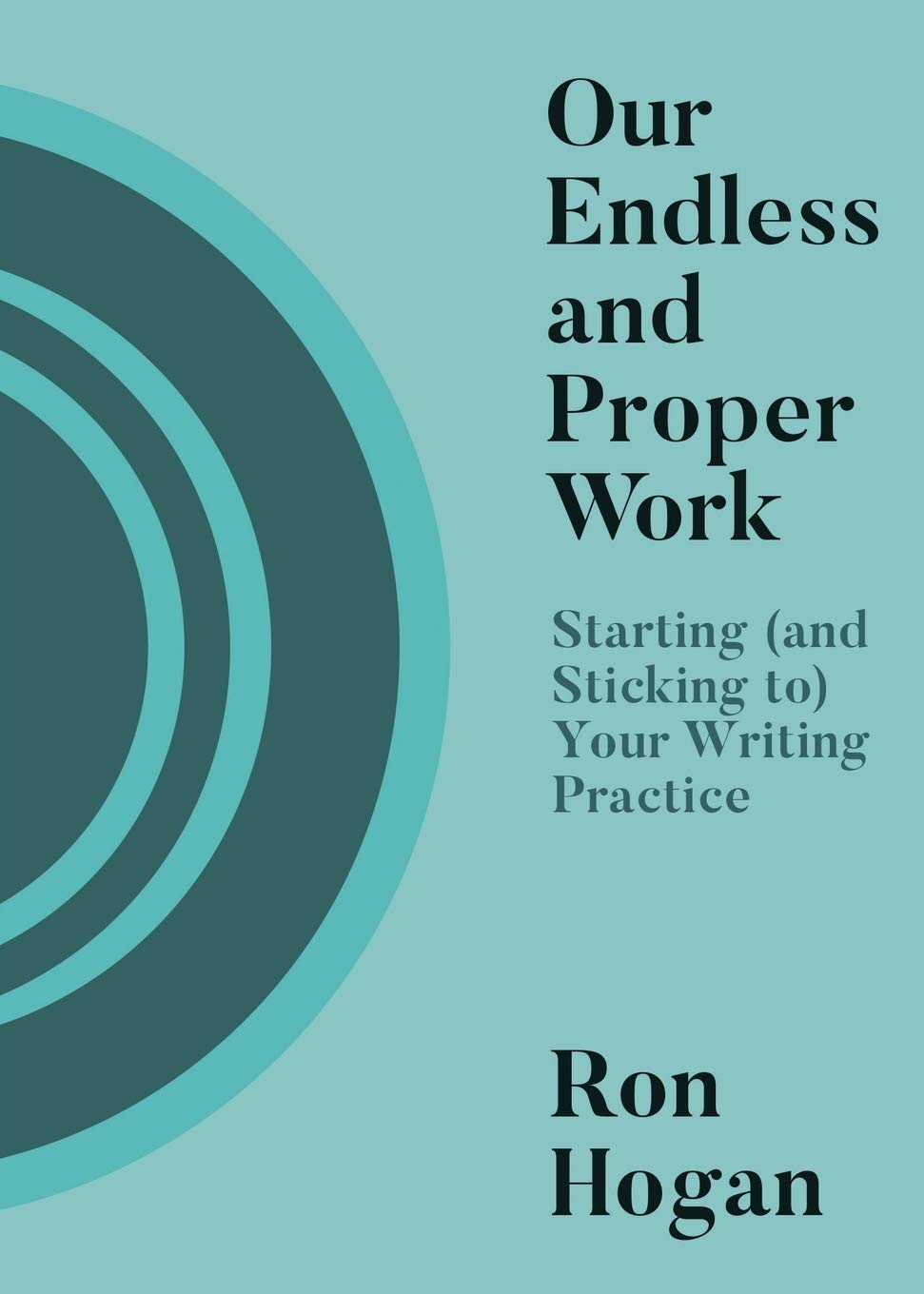 Our Endless and Proper Work is my new book with Belt Publishing about starting (and sticking to) a productive writing practice.