
Erin Blakemore: Standing Down Literary Intimidation
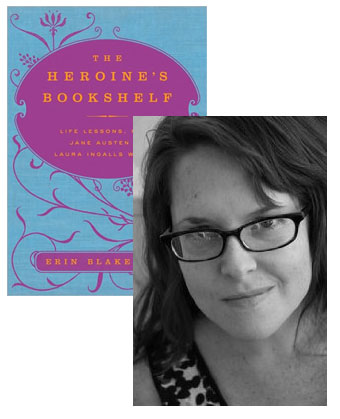
The “Intimidation” that Erin Blakemore writes about in the essay you’re about to read is of a kind with the Resistance Steven Pressfield discusses in The War of Art, one of my all-time favorite books about creativity, and we’re fortunate that Blakemore prevailed and completed The Heroine’s Bookshelf, a delightful guide to what the heroines of some of the great novels by women writers, and those writers themselves—from Pride and Prejudice to The Color Purple, or from Laura Ingalls Wilder to Colette—can teach us about life.
By the way, New Yorkers: If you’re free Tuesday evening (October 26), you might join Blakemore at Bookbook (266 Bleecker Street) at 6:15 p.m., where she’ll kick off a women’s literary walking tour of Greenwich Village—you’ll see the house where Louisa May Alcott wrote Little Women as well as the homes of authors like Edith Wharton, Edna St. Vincent Millay, and Alice Walker—followed by a discussion back at the bookshop. If you do decide to go, and you’re on Facebook, please RSVP; it’s always helpful to have an idea of how many people might show up!
The longish pause that separated my book deal from my book writing really shouldn’t have happened. I was on a tight deadline, inundated with commitments to my day job, and riding high on the wave of a debut book contract. What was my problem, again?
I blamed. Myself, of course. Couldn’t I have picked a less intimidating subject than the great heroines and authors of literatures for my first published book? Sadly, I was the kid at school whose arm went numb with handraising and who always chose the 3,000-page tome when the 30-page children’s book would do. Add overachievement to hubris and BANG, there I was, popcorn seeds all over my pajama top, wringing my hands over the blinking cursor at 4 a.m.
Weak.
25 October 2010 | guest authors |
Read This: The Parasol Protectorate
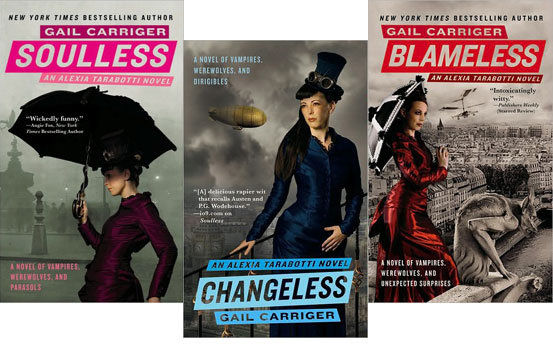
I met Gail Carriger at last year’s BookExpo America, when Orbit was putting a big push behind her debut novel, Soulless, and the idea of a romantic heroine running around a steampunk Victorian London liberally sprinkled with werewolves and vampires was too intriguing for me to ignore—I plunged into the novel soon after, and it became one of my favorites for 2009, in large part because of what I described as Carriger’s method of “queering up the paranormal romance,” which isn’t simply a matter of adding gay vampires, but of injecting a sensibility so arch you could parade a victorious army through it. (More helpfuly, Carriger took several romance novel conventions, some of which produce quite unrealistic—perhaps even silly—behavior on the part of characters, and essentially agreed that they were silly, then pushed them even further. In a sense, it’s camp—perhaps closer to what Sontag called “camp that knows it’s camp,” but without any of the perjorative aspects of that definition. That is, Carriger isn’t taking a mediocre genre and amplifying its characteristics in order to mock the genre; she’s engaged in a sophisticated, extended ironic questioning and re-appraisal of a genre about which, presumably, she finds much to love, in a way that allows her to “reclaim” the genre by “updating” it and infusing it with a new attitude.)
As I understand it, Soulless was originally intended as a one-off, which is why it ends with something like the traditional romance ending, as the “ugly duckling” Alexia Tarabotti is engaged to be married to Lord Maccon, the werewolf who runs the British government’s supernatural investigation bureau, but Orbit liked the novel so much that they encouraged Carriger to expand the storyline—thus, Changeless takes place shortly after they’ve been married, plunging them into a new investigation (which leads to a brilliantly parodic trip to Scotland) that ends on a personal cliffhanger which carries over into Blameless, which is now the pivot point of a projected five-book series.
Blameless has a lot going for it: It expands upon the personal relationships that have been established through the first two novels, and challenges them in ways that a single-volume romance simply doesn’t have the space or “mandate” to. And, too, it allows for greater intimacy and complexity with the secondary characters, which serves to make them and the world in which they live more compelling to us; I should emphasize the world, because Carriger particuarly pushes the worldbuilding here, sending Alexia into new territory and revealing much historical backstory along the way. Obviously, you pretty much need to be familiar with Soulless and Changeless for this novel to “work” at full effect, but if you have the foundation, it will deliver for you, while still keeping you hungry for Heartless and Timeless, as the last two books have been announced. (And after that, who knows?)
21 October 2010 | read this |
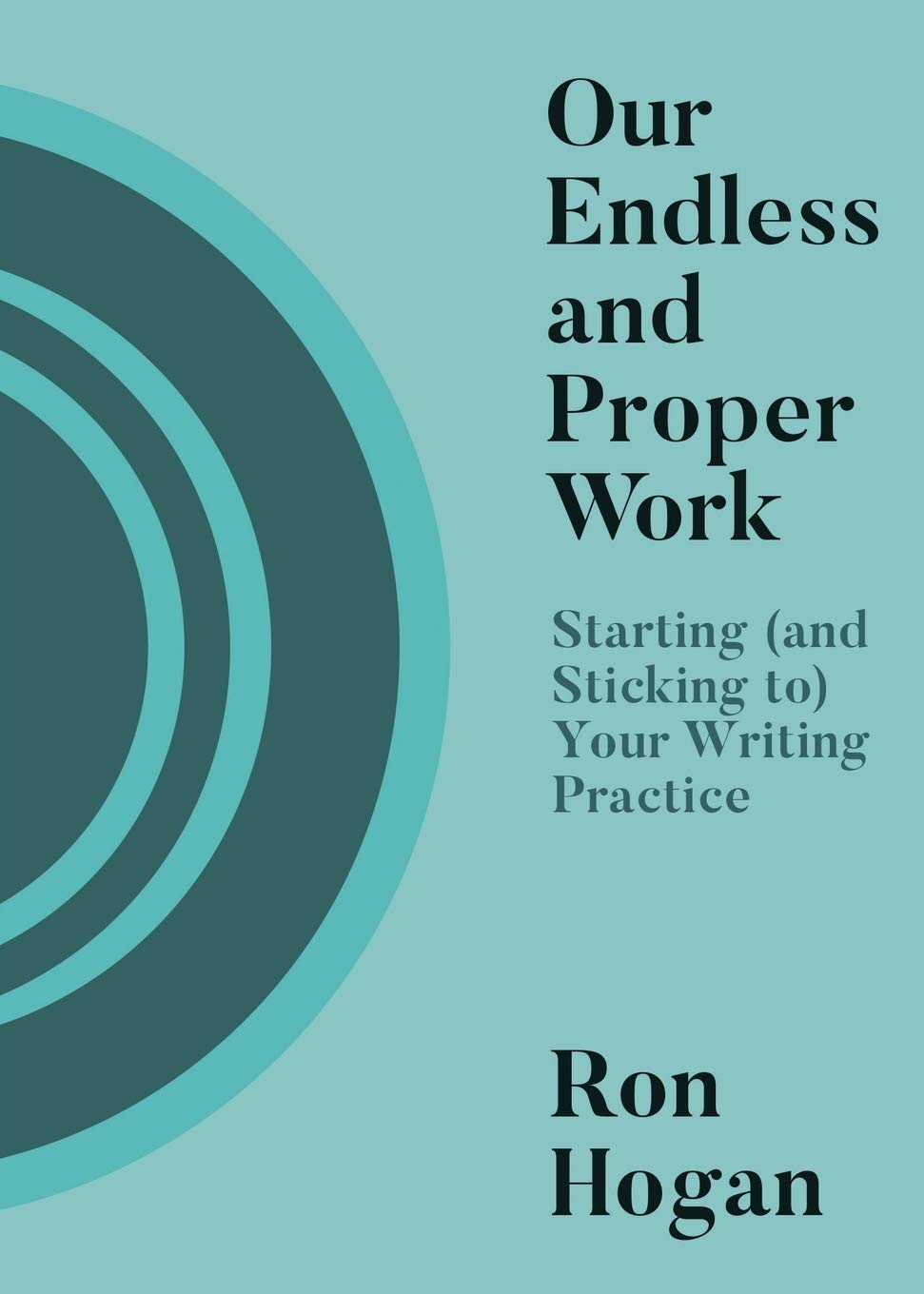 Our Endless and Proper Work is my new book with Belt Publishing about starting (and sticking to) a productive writing practice.