Read This: The Finkler Question
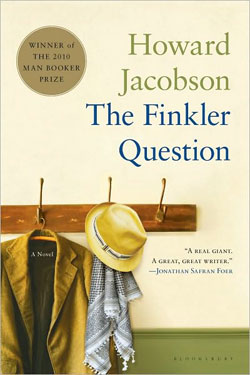 In a post-Man Booker interview with the New York Times, Howard Jacobson admits, “When I hear people call me a comic novelist, I want to scream.” It’s an apt thing to remember when reading The Finkler Question—yes, it has quite a few funny bits, but the novel’s humor is always in service of a more fundamentally serious purpose. Jacobsen can—and does—take a character like Julian Treslove, a middle-aged Brit with an excessive sense of Jews as the exotic other, and play him for laughs. But that initial premise—Treslove’s conviction that a random mugging was in fact an “accidental” anti-Semitic assault, pushing him towards a dance with Jewish identity—gradually gives way to the reality of ongoing anti-Semitic violence in present-day England; meanwhile, Treslove’s two closest Jewish friends, who share a roughly equal amount of the novel’s focus, are grappling not just with Jewish identity but, after the deaths of their respective wives, their own mortality.
There are some threads I’d like to have seen Jacobson pursue a bit further; in one passage, for example, Sam Finkler—a public intellectual who has built much of his reputation on being a Jew who’s ashamed of Israel—learns that his own son has been injured in an anti-Semitic incident, but the scene gets turned around and Finkler is forced to confront the consequences of his moral philosophy… and then his family drops off the radar entirely. And, okay, I get that Treslove and Finkler (and their former teacher, Libor, with whom they’ve stayed in touch) are all men with tenuous emotional connections to other people, but, still, the tight focus on the trio does get a bit claustrophobic at times.
In fact, The Finkler Question tends to be a bit more “interior” of a novel than I usually go for these days; although things happen over the course of the novel, it’s less a novel in which things happen than one in which characters think deeply about their situations and have extended meaningful conversations with each other. (In a certain sense, those aspects of the novel remind me of the late Robertson Davies, although Davies was always effective at combining those interior/philosophical elements with plenty of action, sometimes fantastic and frequently quite absurd, so Jacobson seems subdued by comparison.) And, in the interest of full disclosure, I’d actually place it just behind two novels that it beat out for a spot on the Man Booker longlist, Paul Murray’s Skippy Dies and David Mitchell’s The Thousand Autumns of Jacob de Zoet, as far as personal preferences go. But when I think about the novel in the terms that Jacobson sets out for himself in that Times interview (“Jane Austen, with a little bit of Yiddish”), I believe it hits the mark… and it absolutely rewards the attention from you that it demands.
20 October 2010 | read this |
Raymond Khoury’s Long Pilgrimage to Success
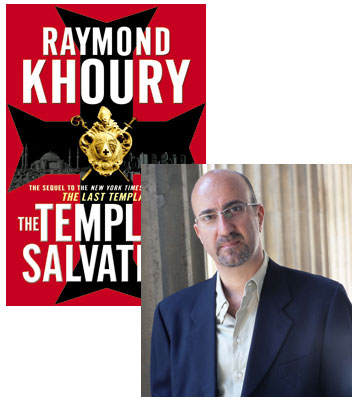
Today is the official publication date for Raymond Khoury‘s The Templar Salvation, and an excellent time to look back at the roundabout way its predecessor, The Last Templar, found its way to publication and from there to the bestseller lists. It’s a story that reminds us—the only person who can absolutely keep a book from getting published is the author who quits believing in it.
I remember the phone call: London, 2006. Around 11 p.m., walking out of a football game on a cold January night. It was my editor in New York. Despite the 3,000 miles separating us, the ambient post-match chaos, and his Zen-like composed tone, I could tell something good was up.
It was way more than good.
My first novel, The Last Templar, the one he had championed, had hit the New York Times bestseller list at #10 in its first week.
The calls kept coming for 3 months, every Wednesday night, as, astonishingly, the book climbed up the list after that first call: to #6, #5, then #4, with only three stellar names ahead of me: James Patterson, Stephen King and Dan Brown. I say astonishingly, because I never, ever expected any of that. I’d been hoping for, maybe, a week on the extended list. But I did take immense pleasure in it all, given that its saga had begun over ten years earlier.
Cycle back to 1994. I’m a budding screenwriter. No agent. Nothing sold yet. Photocopying my screenplays (two at that point) and DHL’ing them (the pre-email dark ages) to movie industry contacts like, for instance, someone who knew someone who’d once bumped into Stephen Spielberg’s dog-walker in a park. That level of connection. And, surprisingly, not getting results.
Those first two screenplays had been small, personal. And here I was, hanging out with some friends in France, frustrated, telling them I felt like writing something big, epic, a summer movie that the studios would fight over. And a buddy of mine said, What about the Templars?
Boom.
19 October 2010 | guest authors |
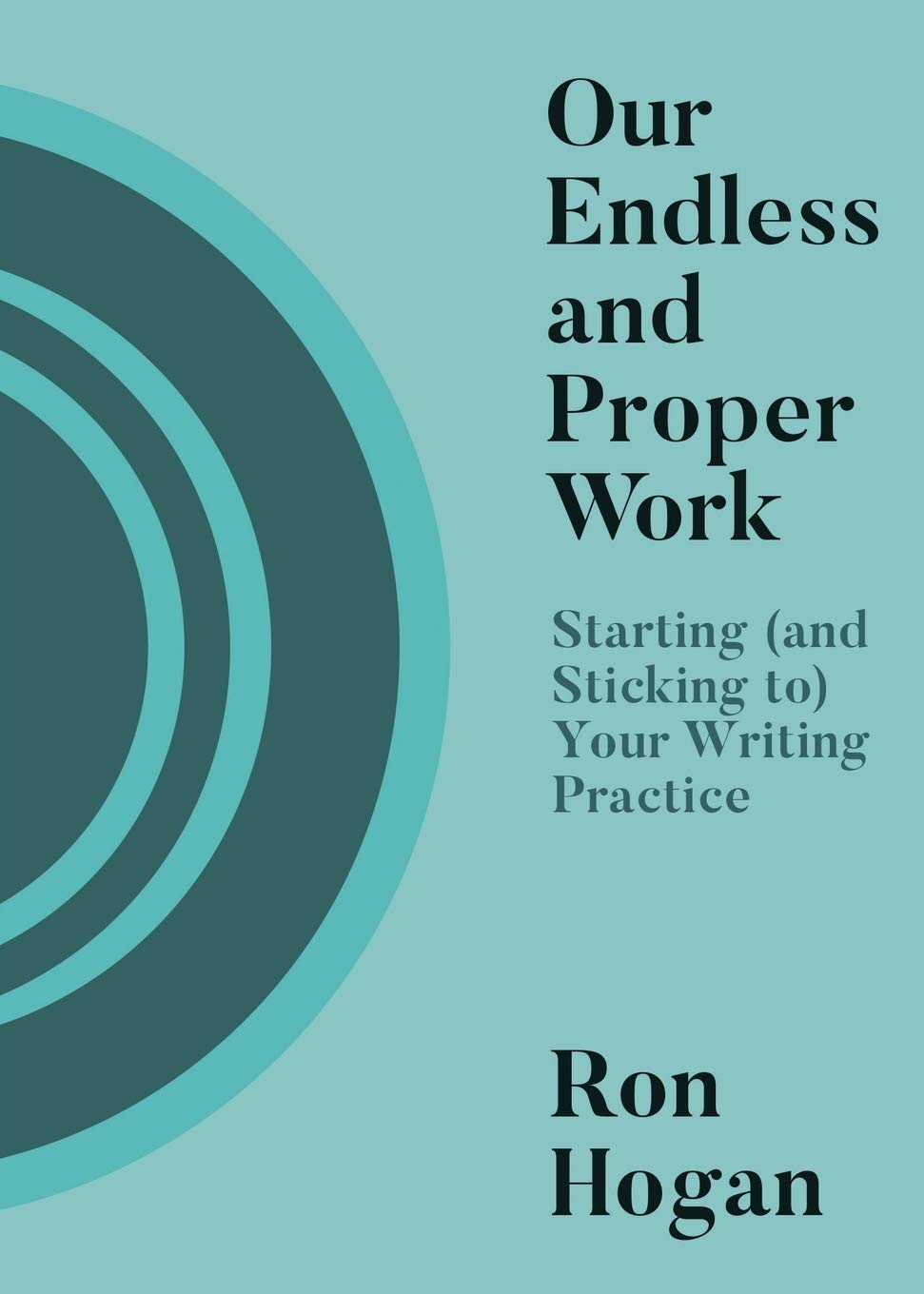 Our Endless and Proper Work is my new book with Belt Publishing about starting (and sticking to) a productive writing practice.