
I Want to Read Like Common People
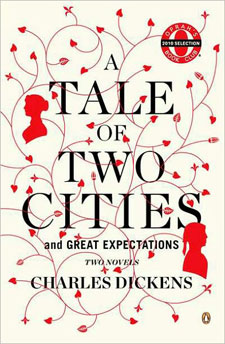 Now, it’s true, I have some issues with Oprah’s Book Club, specifically with the pattern of books Oprah Winfrey’s been picking for it over the last six years, and I even share the opinion of the bookish New Republic writer, Hillary Kelly, that Great Expectations and A Tale of Two Cities is an awkward pair of Dickens novels to read in tandem. (So what would I choose? Nicholas Nickleby and David Copperfield, maybe?) But that’s one of the few things I agree with in Kelly’s profoundly elitist attack on Oprah, the ruination of great literature.
Kelly’s article comes across as one lone note of resentment that Oprah Winfrey, rather than the official gatekeepers of the literary canon, is convincing people to read Dickens and Tolstoy—of course, if Oprah’s making the recommendation rather than, oh, I don’t know, Harold Bloom, it stands to reason that she must be encouraging us to read these books for the wrong reasons. Seriously: Kelly says the Book Club’s selections stem from “a generally wrongheaded view of novels,” one through which “the Book Club has carved its niche among readers by telling them that the novel is a chance to learn more about themselves. It’s not about literature or writing; it’s about looking into a mirror and deciding what type of person you are, and how you can be better.” So, you see, I’m not just invoking Bloom off the top of my head:
“If we read the Western Canon in order to form our social, political, or personal moral values, I firmly believe we will become monsters of selfishness and exploitation. To read in the service of any ideology is not, in my judgment, to read at all. The reception of aesthetic power enables us to learn how to talk to ourselves and how to endure ourselves. The true use of Shakespeare or of Cervantes, of Homer or of Dante, of Chaucer or of Rabelais, is to augment one’s own growing inner self. Reading deeply in the Canon will not make one a better or a worse person, a more useful or more harmful citizen. The mind’s dialogue with itself is not primarily a social reality. All that the Western Canon can bring one is the proper use of one’s own solitude, that solitude whose final form is one’s confrontation with one’s own mortality.”
(And Bloom wrote The Western Canon well before Winfrey had made her first Book Club selection!)
15 December 2010 | theory |
Read This: Travels in Siberia
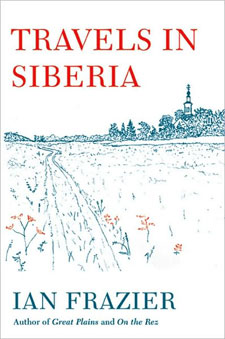 I’m headed to the 92nd Street Y tonight to see a discussion between two of my favorite New Yorker writers, Ian Frazier and John McPhee, where one of the main topics of discussion is sure to be Frazier’s new book, Travels in Siberia. I am only one-fifth of the way through it as I write this, but I’m absolutely loving it—this is a perfect example of an author giving himself over to his passion for a subject and letting it take him where it will. In this case, there’s Frazier’s passion for the “real,” geographical and natural Siberia, but that’s just the beginning; just over 100 pages in, and there have also been historical, cultural, social, and literary dimensions to his enthusiasm as well. The descriptions are exquisite, but infused with a masterfully deadpan humor. One of my favorite lines so far: “To an unromantic eye, [Nome, Alaska] in certain seasons may look like an expanse of mud with pieces of rusted iron sticking out of it.”
And it is entirely to Frazier’s credit that he can still make you want to visit that place.
There’s a section of photographs in the middle of the book, but I’m more enchanted by the line drawings Frazier has dropped into the text at irregular intervals—you can get a feeling for his style with that cover illustration. But I’m even more enamored of his prose, which manages to be both intimate and comprehensive. As I say, he’s given himself over to his passion for the subject, and, for the reader, he serves as a personal guide, walking us through the vast terrain and making sure our attention never flags. I don’t want to spoil very many of the pleasures this book has in store for you by giving them away early, and I still have plenty of them to discover for myself, but I will tell you that Frazier can make you care as much about a 19th-century American travel writer, or the long span of the Mongol Empire, as you will about his own camping trip with crabby American tourists. Travels in Siberia is a warm, thoughtful book that has me very much looking forward to hearing more from the man who wrote it.
13 December 2010 | read this |
 Our Endless and Proper Work is my new book with Belt Publishing about starting (and sticking to) a productive writing practice.