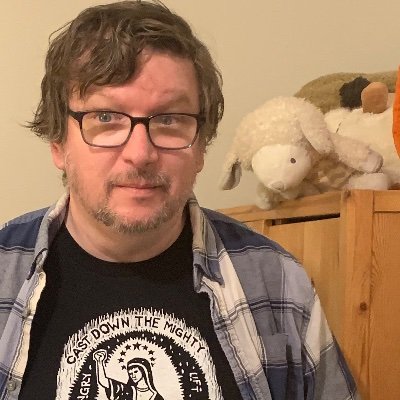
Paul Murray: Filling in the School Novel’s Margins

If only the café down the street from Paul Murray’s hotel had donuts—our interview could have had that extra little touch of Skippy Dies resonance. No such luck, but once I’ve brought a latte and a tea back to our table, we’re able to plunge into a wonderful conversation. I began by observing that if you read his first novel, An Evening of Long Goodbyes, as an answer to the question “How do you pull off Wodehouse comedy in the 21st century?”, Skippy Dies could be seen as an answer to, “OK, then, how do you do the boarding school novel in the 21st century?” But of course Murray isn’t systematically working his way through the sub-genres of the 20th-century British novel. “I just found the environment of the school very enjoyable to write about,” he explained. “However many characters you want… the setting brings everything together.”
The novel had its origins in a short story about a biology teacher and one of his students, who had turned in a paper about “sea enemies;” when that story passed the 60-page mark, however, he tried to figure out how to scale it back. Then his brother suggested that maybe the answer was to build it out even further, into a novel, and Murray remembered a fragment of a story he’d written years earlier, about two schoolboys sitting in a diner having a donut-eating contest when one of them dies, and not from the expected causes…
“But the conventions of [the school novel] are so strong that you have an architecture given to you,” he reflected. “Most readers are so familiar with the scenario that you can experiment with the edges and take the story to different places. And if you have the grounding and a foundation that’s familiar to you, it’s easier to know what to leave out and get to the core of the story quicker.” So the novel’s Seabrook College is, he admitted, “pretty identical” to his own school (“although I wasn’t boarding, thank God”), enough that former classmates would be able to recognize the layout and the buildings. “But the teachers I invented… I never feel right about using characters from real life; they never quite fit the bill.”
10 December 2010 | interviews |
Colum McCann’s Hand-Picked Stories
Early in his introductory remarks last night, Colum McCann recalled a bit of literary insight another writer had passed on to him: The Irish were brilliant short story writers, he’d been told, because they had practice going to confession. (It was true, he added, describing how he’d catalogued all sorts of imaginary sins rather than tell the priests what he’d really done.) But the stories he chose to present for an evening of the “Selected Shorts” series at Symphony Space were only “confessional” in the broadest sense of the term. It began with McCann’s own brutally suspenseful “Everything in this Country Must,” read by Amy Ryan, followed by Mary-Louise Parker’s hilarious but poignant treatment of Anne Enright’s “(She Owns) Every Thing.” And then, after a brief intermission, Michael Cerveris read Nathan Englander’s haunting “Free Fruit for Young Widows,” which held the audience riveted in silence for something close to half an hour.
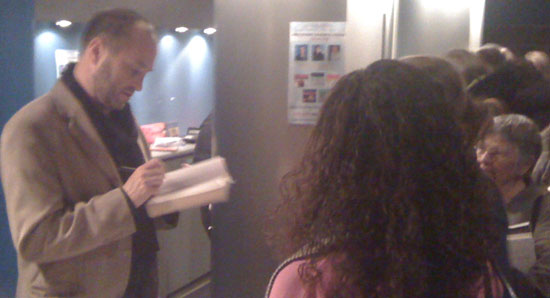
Selected Shorts host Isaiah Sheffer had mentioned in his opening remarks that McCann had needed some persuading to commit to the evening, as he’d really been meaning to take time off from all the extracurricular aspects of the literary world and just sit down and write for several months. But I know the audience was grateful that he decided to spend one more night sharing three amazing stories with a few hundred of us—many of whom, as the photo above suggests, were eager to thank him directly afterward.
9 December 2010 | events |
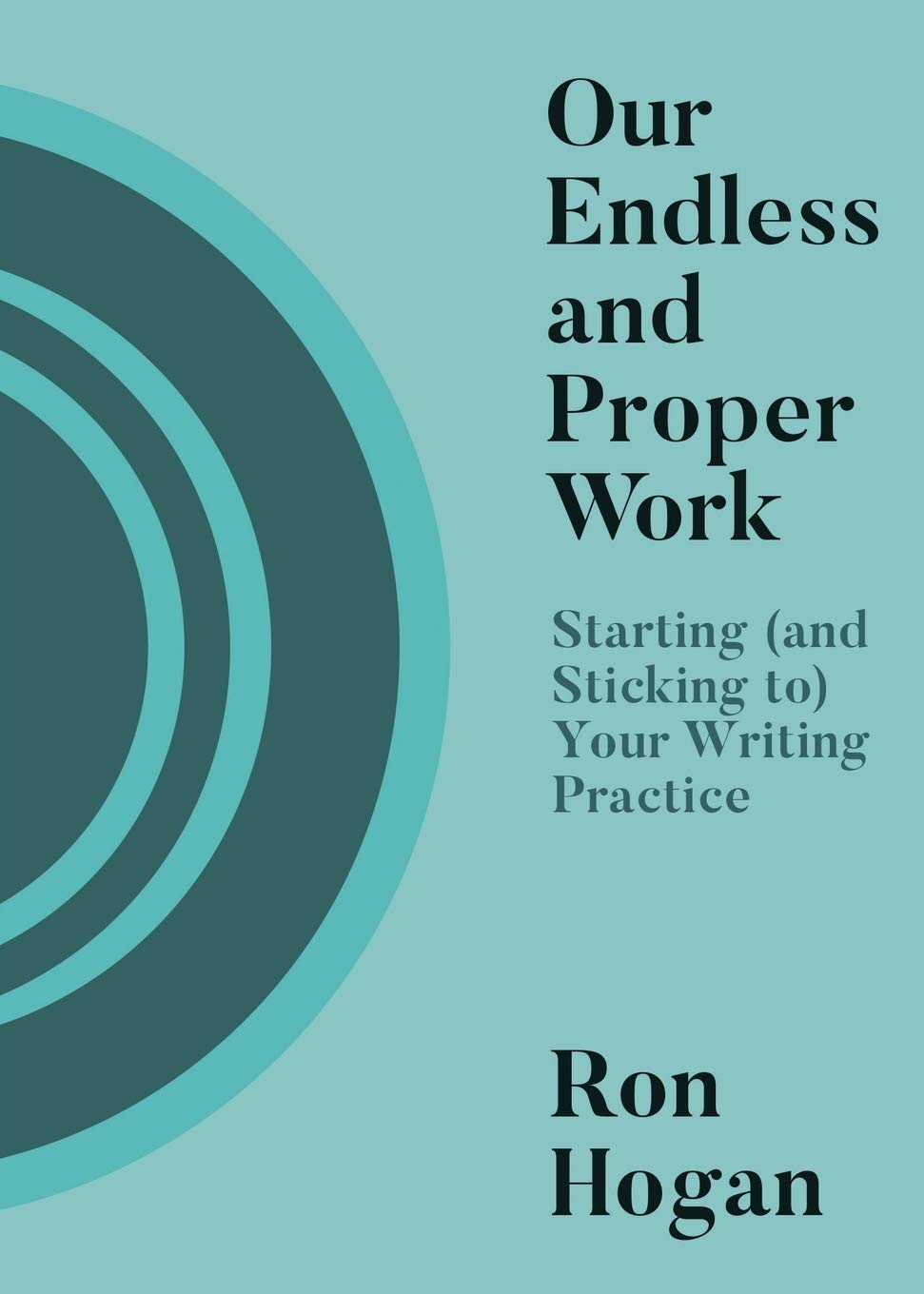 Our Endless and Proper Work is my new book with Belt Publishing about starting (and sticking to) a productive writing practice.