Ethan Nichtern: Poets Are Better Than Poetry
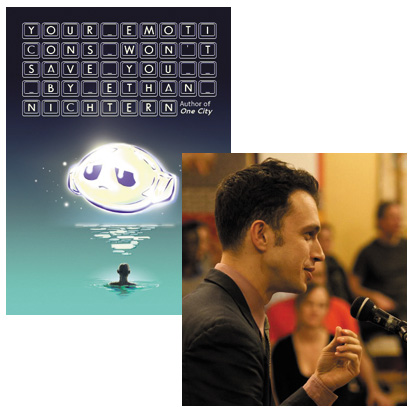
When I got a look at Ethan Nichtern‘s “short novel with poetry” Your Emoticons Won’t Save You, I was intrigued by the notion of writing poems from the perspective of the novel’s main character, so I approached Ethan and asked if he’d be interested in doing a guest essay for Beatrice. He takes a very personal approach to that topic, one that touches upon his own introduction to poetry as a child, and the personal connections he’s made with it as he’s gotten older.
Confession: I like poets more than I like poetry. Always have. My first formal poetry lesson came from Allen Ginsberg, when I was about nine years old. Allen studied with the same Buddhist teacher as my parents. He invited a handful of kids from the community to his East Village apartment and led us through some writing exercises and songs. Of course I had no idea who he was, except for a sweet old dude named “Allen.” I don’t remember much of what he taught; I hadn’t read a word of his writing. I remember his kind demeanor, his fearlessly bad singing voice, his soft gaze of a wild uncle at his kitchen table, and the old-style overhead-chain toilet in his bathroom.
Later, in high school and college, when I actually started to fancy myself a “Wannabe” Poet, I finally read Ginsberg’s work in depth, appreciating the ways his lyrics churned, the way he painted with words, the way his thoughts effervesced out onto the page. But mostly I remembered our few interactions before his death in 1997, and his figure in his apartment, a portrait etch-a-sketched in my mind. Since then, I’ve been around my fair share of poetry and my fair share of poets, both of the written and the performance variety. Something interesting always happens to me when I encounter a poet’s work. If I know the person and know a little of what makes them tick, I find myself leaning into their language with laser-like focus. If I don’t know them, if I haven’t inhabited their life at all, I find my interest in their work waning quickly. Poets, it seems, “do it” for me much more than Poetry.
I wrote a nonfiction book on contemporary Buddhism, One City: A Declaration of Interdependence. It was published in 2007, and was well received, but I always considered poetry and fiction to be, for me, the most resonant realms for exploring all the nooks and crannies of the mind’s wisdom and the heart’s confusion.
Your Emoticons Won’t Save You follows Alex Bardo, the self professed CEO of the Wannabe Poet’s Brigade, through a nostalgic road trip back to an old summer-camp at the end of the summer of 1998, as he’s going on 21 years old. Multiple forms of loss—as well as a tragicomic sense of just plain being lost—converge on him throughout the narrative. He uses poetry, or more precisely, his ironic identity as a Wannabe Poet, to cope with the space of transition in which he lives. For him, the act of writing poetry is one part narcissistic meditation and one part savior of sanity.
For every Actual Poet I have ever met, I have met 1,000 Wannabe Poets. Wannabe Poets do it for me even more than Poets. Wannabe Poets scribble on napkins and press our pen way too hard into those 99-cent camouflage journals. We open WordPress accounts in fits of inspiration and then forget to post anything for months. Wannabe Poets compose horrible love poems when someone breaks up with us, and even more horrible poems when someone returns our text message flirtatiously. Wannabe Poets forget to write anything at all when someone we love dies. We get depressed by failure and solemnly vow to never write again, then wake up the next morning and start scribbling on the closest piece of paper we can find. Wannabe Poets are a dime a dozen (less with inflation), and we even get off a little bit on the cliche of just how ludicrously numerous we are.
Your Emoticons Won’t Save You ends with 12 poems, authored by the novel’s protagonist over the next decade of his life, as life and love and loss have seasoned him a little bit toward that overrated state called maturity.
The premise of Your Emoticons Won’t Save You follows from my early experience with poetry, beginning with sitting in Allen Ginsberg’s apartment as a nervous nine year old. The idea is that if you get to know a poet first through reading his story, you will be more likely to want to read his poetry. Or, in Alex Bardo’s case, the idea is that if the reader gets to know a Wannabe Poet, you will want to read his Wannabe Poetry.
Updated Confession: I like Poets more than I like Poetry—and I like Wannabe Poets even more.
1 March 2012 | guest authors |
Read This: Recently Character Approved Writing
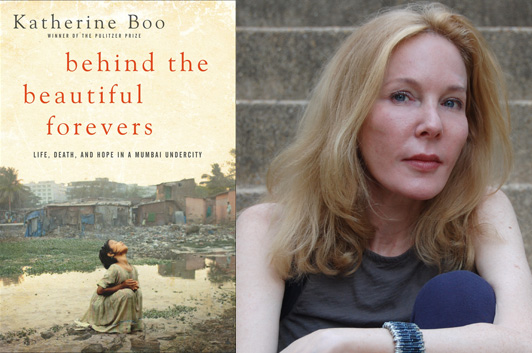
I have a freelance gig with the USA Network’s Character Approved blog, where I provide them with a weekly update on some of the best new books. I haven’t mentioned any of those books here in a few weeks, so I thought I’d round up some of my recent selections. For example, there’s Katherine Boo’s Behind the Beautiful Forevers. Boo spent years checking in on the micro-community of a Mumbai slum, and one family in particular. It’s an amazing piece of immersive journalism, and a drama that’s all the more powerful for being true.
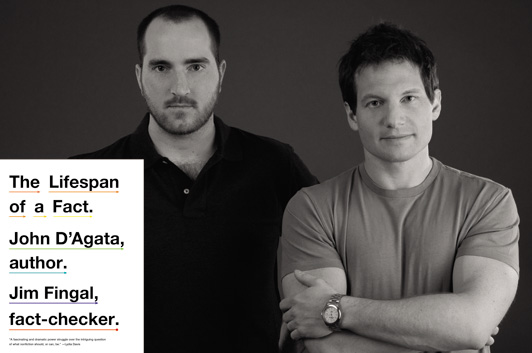
When you know how much effort Boo put into getting the facts of her story right, it makes the debate that takes place in the pages of John D’Agata and Jim Fingal’s The Lifespan of a Fact that much more significant. Basically, D’Agata wrote an essay inspired by the suicide of a Las Vegas teenager, but decided that because he wasn’t writing “nonfiction,” but rather some kind of art inspired by facts, he wasn’t limited to those facts. Fingal, the fact checker assigned to that essay by editors at The Believer, felt differently, and pushed back on every one of D’Agata’s deviations from what could be verified.
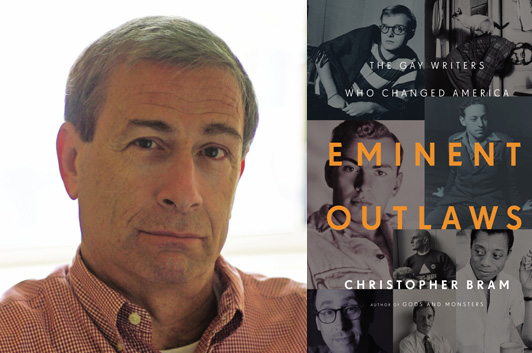
Christopher Bram’s Eminent Outlaws is a lively (if idiosyncratic) history of gay American literature from just after the Second World War to the present day. It’s got plenty of dish on authors like Gore Vidal and Truman Capote, or—as it moves closer to the present—Edmund White and Larry Kramer, and it subtly connects the impact these writers had on Bram’s own personal development to the broader cultural developments that have made it possible for gay authors to be more open about their identities—and for those identities to no longer be as radically shocking as they were for previous generations. Bram admits to one of the book’s most significant flaws, which is that it has nothing to say about the parallel progress of lesbian American literature, by pointing out that he doesn’t have much to say on that subject; it’d be a worthy thread for someone to pick up (as would the histories of other queer literatures, for that matter).
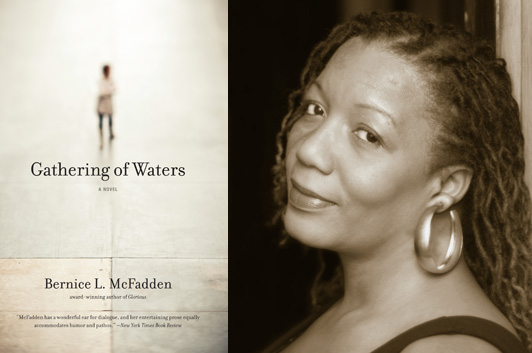
Then there’s Bernice McFadden’s Gathering of Waters, a highly imaginative retelling of the murder of Emmett Till in Money, Mississippi, in 1955. It’s not just that McFadden gives Till a young, black girlfriend who remains emotionally traumatized by his death even after she marries and leaves Mississippi. It’s that she gives that young girl a backstory that involves vengeful ghosts, a seduced preacher, and the Great Flood of 1927—not to mention the invoking of Hurricane Katrina. This novel’s definitely not going to be to everyone’s tastes, but I found myself intrigued by McFadden’s creative effort to bring some sort of healing karmic balance to the impact Till’s death had on the consciousness of Mississippi, the South, and the nation as a whole.
Looking at these selections in light of last month’s reflections on the gender imbalances in my book reviewing, the obvious first reaction is to pat myself on the back for hitting the 50-50 mark, and for hitting upon all sorts of other diversities besides. That would be both premature and prideful—and though I have some idea of how I’m planning to continue to live up to my chosen goals in writing about books in the months ahead, we’ll see how they play out.
28 February 2012 | read this |
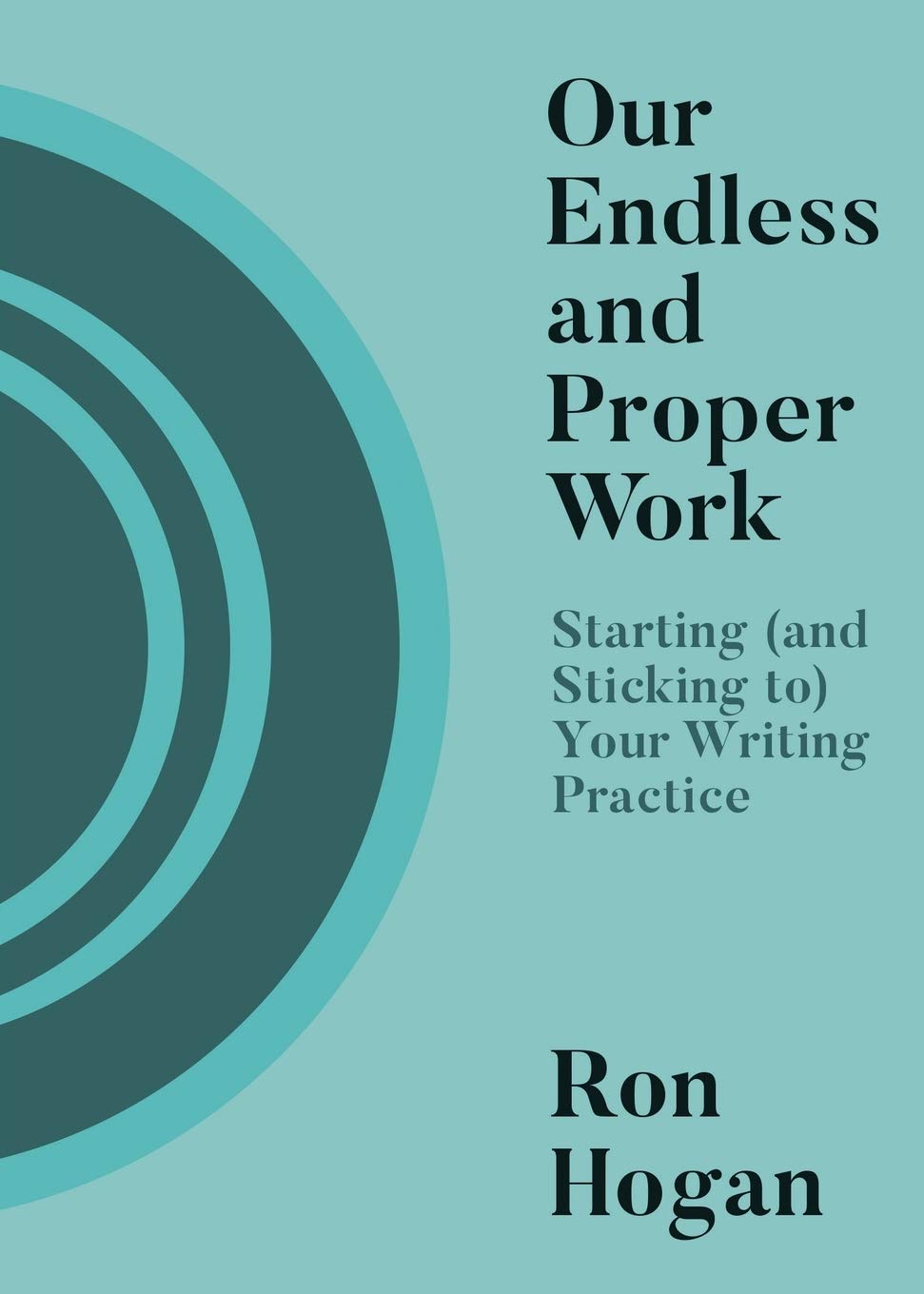 Our Endless and Proper Work is my new book with Belt Publishing about starting (and sticking to) a productive writing practice.