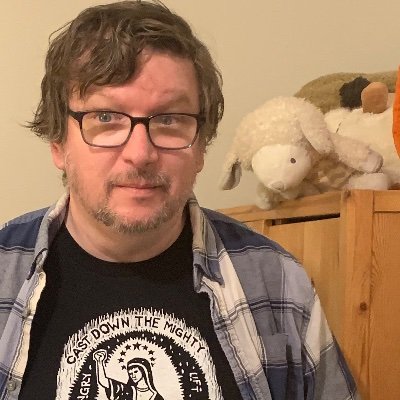
Author2Author: Bradford Morrow & Peter Straub
I had my eye on Bradford Morrow‘s short story collection, The Uninnocent, and Peter Straub‘s short novel, Mrs. God, from the moments (a few days apart) that they arrived in my inbox. I’ve been a fan of both writers for decades, admiring the ways that they’ve applied their literary sensibilities to the themes of horror literature. (Below, Brad invokes the term “gothic,” which in some ways has become to the horror/dark fantasy genre what “slipstream” was to science fiction—a way for literary critics to identify the sophisticated stuff.) What I didn’t realize, but probably should have, is that the two writers knew each other well, and were more than happy to send each other a few questions about these books, and about the fuzzy territory where genre and literary fiction overlap.
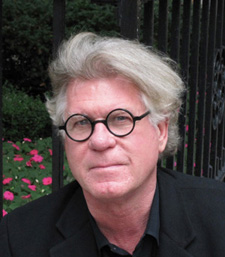 Bradford Morrow: As a horror writer who has achieved international commercial success but also stayed true to your serious literary roots, you have often been fearlessly innovative in the way you’ve crafted your narratives. Would you mind talking a little about how you perceive the divide between so-called “genre” fiction and “literary” fiction? My sense is that there is a growing number of serious writers who ignore this critical distinction altogether.
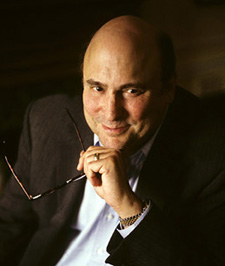
PETER STRAUB. I’ve been seeing for years that the distinction between genre fiction and literary fiction has been erased by a number of writers whose work assumes that the genre markers can be overlain atop the literary, thereby making the question of a real distinction purely academic. John Crowley and Kelly Link, both of whom began with an at least theoretical attachment to science fiction and fantasy, are the poster children for this tendency. Dan Chaon and Brian Evenson are literary writers whose work falls naturally into considerations of horror and the gothic. For decades. Stephen King has been more or less devouring attributes of the literary stance and using them to expand the possibilities to be found within horror.
Of course many genre writers happily go on using the toolkit/toybox handed to them by previous generations, writing pseudo-Lovecraft stories, pseudo-Sherlock Holmes stories, updated hardboiled novels, etc. This impulse comes from a very common desire to replicate deep satisfactions by echoing the forms and gestures of their sources. Hence the many variations on the Tolkien model for fantasy.These replications, most of which are worthy, are grounded in the desire to create pleasure, suspense, and gratification in the reader. None of them, however, go any farther, so the experience of a prolonged reading of such writers is like that of meeting child after child, brothers, daughters, first cousins, grown-up sons and teenage sons, of the same family. But even the most literary of genre-based writers wishes for a positive pleasurable response from the reader (though it may be for a more complex variety of pleasure than that offered by a Rex Stout novel, Rex Stout being for these purposes an adult son of Sherlock Holmes). There will never be any genre-rooted variation on Finnegans Wake, for example, though I think The Good Soldier is practically begging to be used in this way.
And now, a Question for you, my dear friend: You have demonstrated, it delights me to observe, an unusual openness, for a literary writer of the purest kind, to the possibilities to be found in genre writing, which is most often either dismissed out of hand or patronized by authors of literary fiction. And most if not all of your more recent work has ties to mystery or horror, especially The Diviner’s Tale and The Uninnocent. To me, The Uninnocent is really filled with horror stories, with joyous embraces of any number of horror’s stances, attitudes, gestures, and favored narrativities (a word I think I just made up.) So I want to ask you how you got that way, and what this general artistic evolution of yours means to you. One would think that such a movement would necessarily be toward a general narrowing of focus and intent, but in you it seems to involve a kind of widening-out, a kind of opening to a different Otherness. How could this have happened to a devoted student of Gass, Barth, and Gaddis?
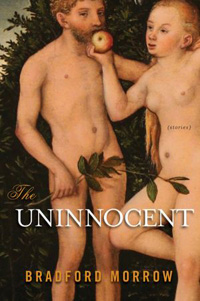 Bradford Morrow: My interest in the gothic—and by extension, horror—dates back at least as far as my second novel, The Almanac Branch, in which the narrator, Grace Brush, may or may not be hallucinating electric-pink light people in the ailanthus tree outside her bedroom window. I co-edited with Patrick McGrath an anthology, The New Gothic, in 1991, which brought together writers as wildly diverse as Anne Rice and Angela Carter, Ruth Rendell and Kathy Acker, Emma Tennant and William T. Vollmann. In other words, the genre writers alongside literary writers, so-labeled. A few of the stories in The Uninocent also date back to the same period in the ’90s, including “The Road to Nadeja” and the title story itself.
That said, this is a challenging question, Peter, because in the past my novels fluctuated from mystery/gothic-centered narratives to fairly large scale political/historical “literary” investigations. The more I think about life, I think about it as a very dark place. These latest books also embrace a necessary chiaroscuro of hope and faith. My view of the gothic is that, well, the focus is on evil, entropy, illness mental and otherwise, all things dark. It concurrently and inevitably juxtaposes with good, light, sanity, and so forth. One of the reasons I have become so increasingly interested in the gothic (and even horror) is because it offers me a rich opportunity to explore that ineffable thing that resides in the heart of the most diabolical sociopath, and that is a fundamental, albeit often paltry, goodness.
20 February 2012 | author2author |
Laurie Thompson: Introducing Stig Dagerman
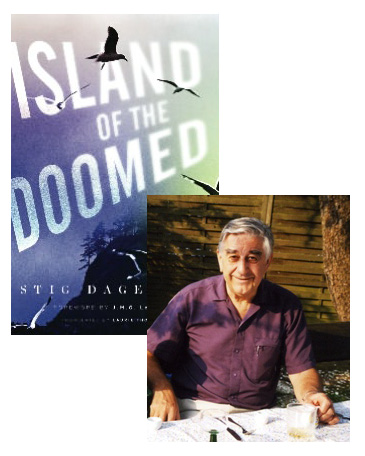
Stig Dagerman is a Swedish author from the mid-20th century I hadn’t known about before coming across Island of the Doomed, but in talking with that novel’s translator, Laurie Thompson, I learned a bit about Dagerman’s all too brief, nova-like burst of literary excellence—including the daily satirical verses (think along the lines of those short poems Calvin Trillin writs for The Nation) he created for Sweden’s leading newspaper, Arbetaren, right up until the day he killed himself. Now I want to track down more of Dagerman’s work, and fortunately the University of Minnesota Press seems to be making that a bit easier; Island is the second Dagerman book they’ve republished in the last year (after German Autumn). In this essay, Thompson introduces us to Dagerman, and tells us a bit about what makes Island of the Doomed such a remarkable story.
Stig Dagerman was the Wunderkind of the 1940s in Sweden. In his early twenties, between 1945 and 1949, he wrote four novels, half a dozen plays, many short stories and poems, not to mention large numbers of polemical articles and other journalism—all of them very positively received. He seemed to be blessed with an ability to write brilliantly about anything and everything, and to capture the spirit of the age, without apparent effort. Then, for reasons which are still being debated, he found it increasingly difficult to write anything at all. In 1954, he committed suicide at the age of 31, locking himself in his garage and starting the engine of his car: he seemed to change his mind at the last minute, but it was too late. He had frequently written about suicide as an honourable means of quitting this life: and now he had done just that.
Memorably described in one review as “the flying fortress of 1940s attitudes and beliefsâ€, Island of the Doomed was published in Sweden in 1946. It was received as the ultimate expression of post-war Angst. Following a shipwreck, half a dozen characters are cast away on an impossibly remote island. Instead of trying to find sources of food and drink (one of their number even empties their only container of drinking water), they argue about what image to inscribe onto a rock, so that when their dead bodies are eventually discovered, their rescuers will have an idea of their attitude to life.
Dagerman was a shy, modest young man with a working class background, but widely read and familiar with the literary and psychological theories that dominated Swedish thinking in the post-war years—notably French Existentialism (especially Sartre) and Freudian psychology, but also echoes of Kierkegaard and Heidegger. The human condition is characterized by Angst, life is pointless, but one can make a meaningful gesture by making a moral stand—the image Captain Wilson wants to scratch onto the rock symbolizes the cruel imposition of power over others, whereas Lucas Egmont’s stands for solidarity and peaceful co-existence. In Island of the Doomed, Dagerman bombards the reader with a non-stop flood of imagery coupled with detailed realistic descriptions that sometimes pass over into Surrealism. Close analysis of the imagery shows that he was consistently in complete intellectual control of what he was writing (try for instance charting the imagery that stems originally from the red scars on Lucas Egmont’s back caused by whippings administered by his father—red cord, red sunsets, red seas, red spiders, spiders’ webs shining red, and so on), which is remarkable when one considers the speed with which Dagerman wrote: the final sixty pages or so of the novel were written in a single all-night sitting, to the accompaniment of background music on the radio and an endless supply of strong coffee.
The apparently effortless fluency with which Dagerman wrote has been an inspiration to many more recent Swedish novelists, notably Mikael Niemi and Björn Ranelid. His reputation in the history of Swedish literature is of the young genius blessed with enormous natural talent who produced an astonishing amount of top-class work in the second half of the 1940s, but died tragically early, unable to cope with the awesome implications of his ability.
Personally, I treasure memories of an afternoon in the 1970s spent with Anita Björk, Dagerman’s second wife and one of Sweden’s leading actresses, in her impressive apartment in the Stockholm Old Town. I was invited to sit on a cushion on the floor: she sat on another one, surrounded by books and manuscripts—she was preparing for a radio broadcast on her memories of her husband. Eyes gleaming, she stared into space and no doubt saw Stig’s face smiling down at her as she told me how walking through town or through the countryside with Stig was an unforgettable experience that broadened her understanding of life and inspired her to new heights as an actress. He would maintain a non-stop commentary on things happening round about them, sights and sounds and smells, things she would never normally have noticed, and his descriptions were all the more vivid as a result of the imagery he used on the spur of the moment.
It would be nice to think that Island of the Doomed will have a similar effect on 21st-century readers.
19 February 2012 | in translation |
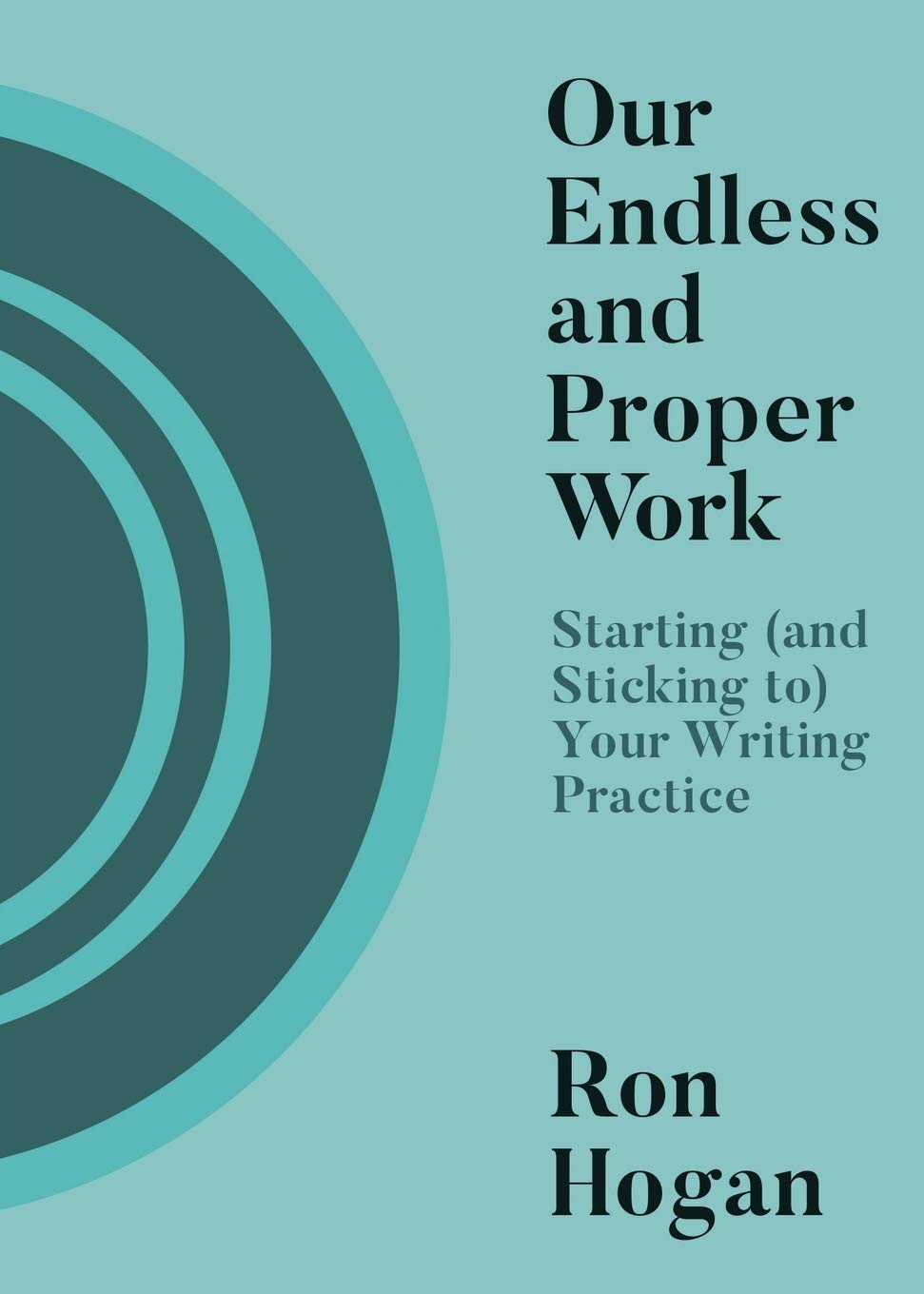 Our Endless and Proper Work is my new book with Belt Publishing about starting (and sticking to) a productive writing practice.