I Believe I Might Have Told You So
Ron Hogan/GalleyCat
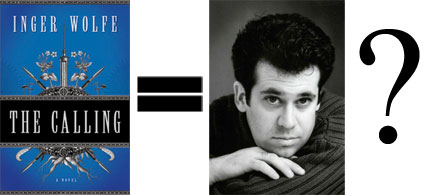
Back in 2008, there was a mystery novel called The Calling by a pseudonymous author named “Inger Wolfe,” and as often happens in such cases, a guessing game ensued. I was writing daily publishing industry news for GalleyCat at the time, and I soon determined, based on insider tips, that Michael Redhill was the most likely candidate. Of course, neither Wolfe’s publisher nor “her” agent were going to confirm that at the time.
Four and a half years later, and Wolfe (who now goes by “Inger Ash Wolfe” so as not to be confused with the Danish crime novelist Inger Wolf) has a new book out, A Door in the River—and what’s this I see in the accompanying press materials? Less than a month ago, Redhill finally outed himself:
“The idea of a pseudonym had been flitting around my brain for a long time, along with its cognate, disappearance. In the 1980s, I published some poems under a pen name in a literary magazine to see what it would feel like. It was fun. It was even a little thrilling. I’d had an early stint in acting school, and there was something satisfying about becoming a character, about being inside another mind that you had to create out of yourself. As I moved toward a life in writing, I found many of the things I’d learned in acting school still applied. No matter what it was, you had to salt yourself into what you were making. You had to disappear into your work.”
I’m not 100% clear on why he’s pulling back the curtain, but if I’m reading the essay correctly, Redhill seems to be suggesting that, as times get leaner and the publishing and bookselling industries contract, it becomes much more difficult for an author to build upon his or her success while refusing to participate in the public sphere—that is, you can’t just send your books out into the world and hope more and more people will keep discovering them; eventually, you hit a plateau, and then you’ve got to put more effort for more success. Which, it appears, he fully intends to do: “Her series has five more books in it and I’d like them to get written. After all the pleasure Inger has given me—not to mention to her small flock of followers—I owe her that.”
9 August 2012 | uncategorized |
Nathan Larson: Diving into Dewey Decimal’s World
Akashic Books
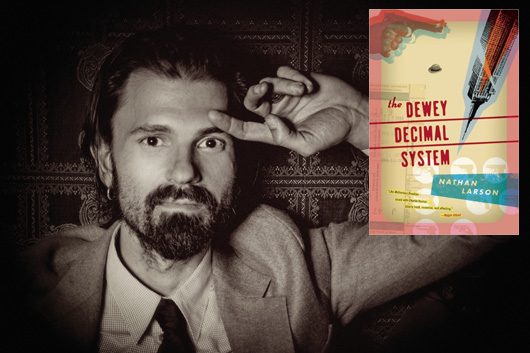
I’d made tentative plans earlier this summer to interview Nathan Larson for one of the Beatrice ebooks, and when we couldn’t quite get our schedules to sync up, I knew I still wanted to get him talking about his first two novels, The Dewey Decimal System and The Nervous System—the opening salvos in a “dystopian noir” series set in a post-disaster New York City, where an amnesiac veteran who’s taken it upon himself to safeguard the main Public Library building gets dragged into a bunch of other messes and, as your noir heroes do, pushes at them over and over until he provokes traumatic outbursts. If you’re not from the city, you’ll have to take my word for it, but Larson gets the street-level details meticulously right; even in post-disaster condition, you could navigate the city by his descriptions, no problem. (The scope of what happened to the city—and the world—is unclear, though there are hints throughout the two books of a string of coordinated incidents; there are also several hints about Dewey’s pre-disaster past, though those clues haven’t quite gelled together yet.)
Here, then, is Larson’s take on his shift to fiction writing after (or, rather, in addition to) a productive music career that includes playing guitar for Shudder to Think back in the ’90s and subsequently composing film scores.
Y’all, I am brand spanking new to this writing game, and don’t pretend to have any answers with respect to how it’s done. Like any creative endeavor, it seems to have something of the esoteric about it, and when it flows it feels very much like one has tapped into some sort of cosmic cloud of information for which the author serves as conduit. There’s nothing new about this description; greater minds than mine have waxed upon the subject. It’s exactly the sensation I’ve experienced working as a musician, so I’m not a stranger to this thing—but I find it fascinating to observe this phenomenon at work regardless of the medium.
Of course this kind of hippy shit occurs about 5 percent of the time, and the other 95 percent is pure slog and persistence. It’s work, it’s a jobby-job. And this too is exactly like making music. If I’ve learned anything about writing, whether I’m speaking about prose or film scores or songs or whatever, it’s that you have to sit down and do it, and you have to finish it, and it will suck, and then you go back and make it not suck, to the degree that you are willing and able. Seemingly, it’s that simple. And I believe one of the only barriers between a project that will forever languish and a project that will see completion is to overcome this fear of sucking, to work through it, to dodge the inner censor who will tell you you are worthless and have no business writing a fucking book/song/film score, that you should just put it down and do something else. This voice can be very strong and overwhelming, and to tramp it down is no simple thing.
5 August 2012 | guest authors |
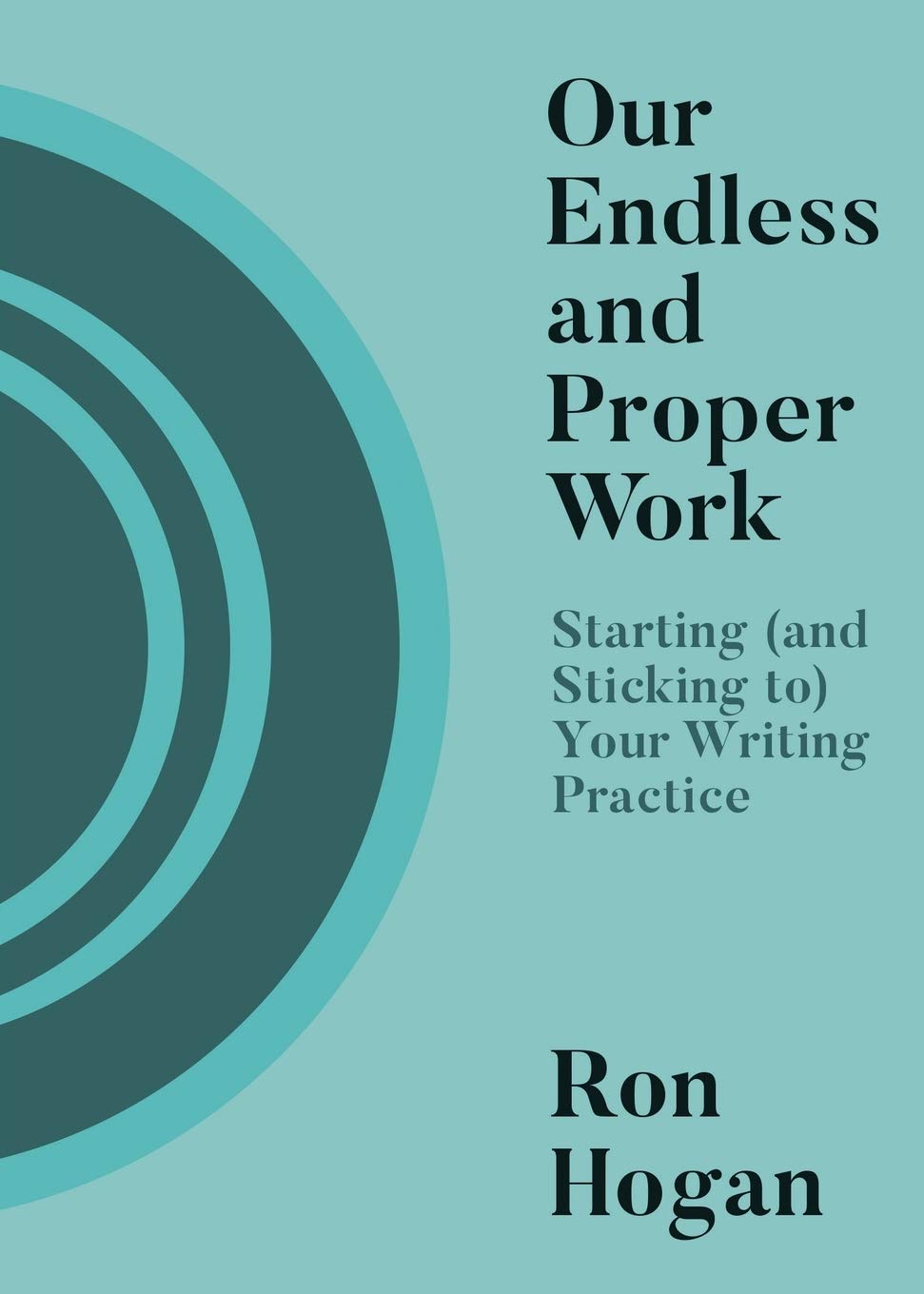 Our Endless and Proper Work is my new book with Belt Publishing about starting (and sticking to) a productive writing practice.