Buy My Friend’s Book!
 As part of my ongoing effort to get you to read Phil Campbell’s Zioncheck for President, I hereby direct you to an excerpt published by his former employer, Seattle’s alternative alternative newspaper, The Stranger, about his involvement in Grant Cogswell’s campaign for a spot on the city council:
We tried to create an independent speaking tour for Grant. We didn’t have much success until Grant received permission from the owner of a popular outdoor theater to talk to his patrons for 10 or 15 minutes before The Wizard of Oz began. There would be several hundred people in attendance, more than all of the District Democratic meetings combined.
I didn’t drive Grant that night; I was too busy crunching some voter statistics we had just received. So Grant and Tara borrowed my car. Tara drove while Grant tried to think about what he would say to all of the families that he would be standing in front of.
They got to the theater with plenty of time before sundown, only to discover that the theater had moved the year before, and neither of them had any idea where it was now located.
Our volunteer coordinator called Grant’s cell phone, gave Grant the correct address, and urged him to hurry. The movie was going to start in five minutes, with or without him.
12 October 2005 | read this |
It’s Official: I’m Now a Quotable Expert
Former Amazon colleague Tim Appelo writes a piece for the Seattle Times on “disaster lit,” and includes a bit of anecdotal book reviewing from yours truly:
“Reading the paperback of Kim Stanley Robinson’s Forty Signs of Rain the week after Hurricane Katrina was eerie,” says former Amazon editor Ron Hogan. “I knew that the novel hinged upon the efforts of D.C. scientists and lobbyists to force the government’s hand on global warming issues, but I had no idea that its climax was going to be the arrival of a massive storm system which overflowed the Potomac and turned the streets of Washington into rivers. Some of Robinson’s descriptions of the storm’s impact seemed a little tame in light of what we’d just seen on TV, but other scenes—like the evacuation of the animals at the National Zoo—felt vividly authentic. I can’t wait to see how he plays out the aftermath in the upcoming sequel, Fifty Degrees Below.
“Science fiction has always had an apocalyptic streak running through it,” Hogan continues, “but there’s usually a sense that if we just listen to the scientists, everything will turn out OK. Robinson’s latest story seems to have that optimism, but there’s also a hint of fatalism, too—as if to say that things have just about hit the breaking point, and we’re going to have to start performing triage just to keep things going.”
Of course, my enthusiasm for Fifty Degrees Below is also fueled in part by an admiration for Robinson’s science fiction that goes back twenty years, when I was reading The Gold Coast as soon as I could dash off whatever little exercises my teachers were foisting on me that day.
12 October 2005 | interviews |
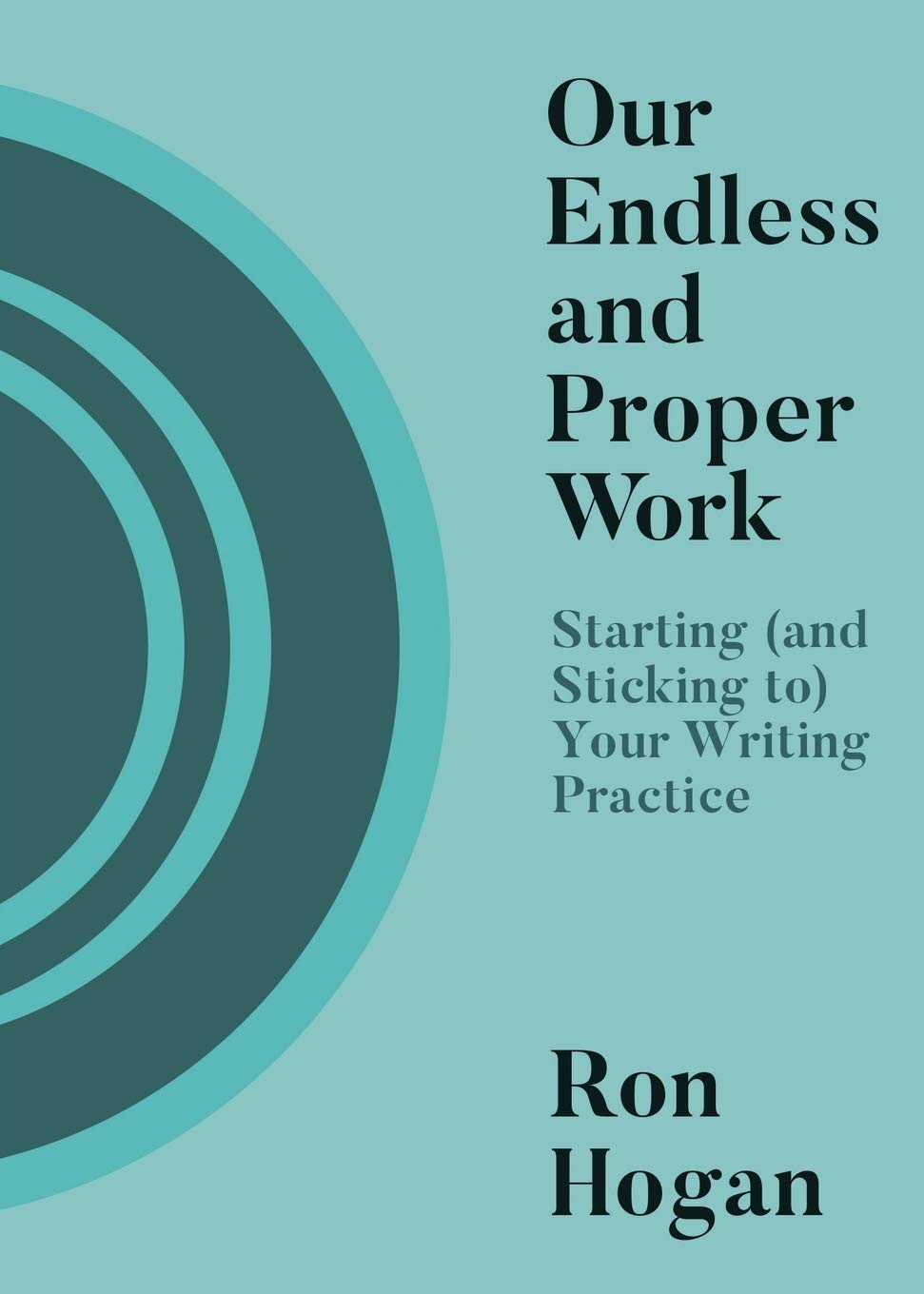 Our Endless and Proper Work is my new book with Belt Publishing about starting (and sticking to) a productive writing practice.