
Jerome Charyn’s Isaac Babel Shortlist
 Jerome Charyn has long been one of my favorite novelists, and when I found out that he’d just published a biography of Isaac Babel—Savage Shorthand—I wondered if he might have some recommendations for readers who, like me, aren’t yet familiar with Babel’s stories. He very kindly sent the following note:
“Babel’s ‘Guy de Maupassant’ is my favorite story in the whole world; it’s funny and sad, and it’s the most telling story ever written about language and all its tricks and traps.
“My next best favorite is ‘The King,’ about the Odessa gangster Benya Krik and his magical orange pants.
“Readers should also look at ‘Di Grasso,’ a story about the mysteries and sometimes sordid magic of art.
“I would then suggest a look at Babel’s 1920 Diary, which is his own portrait of the artist as a young man, an artist under enemy fire.
“Now the reader is ready to look at Red Cavalry and its curious ride through Poland, with all the savagery and bump-bump of the human heart.
“And lastly, the reader should look at ‘Benya Krik,’ Babel’s screenplay about Benya, but from the point of view of a Soviet writer who has to wind his way through Soviet politics, which has already become a deadly maze.”
Charyn has also recently edited Inside the Hornet’s Head, which starts with his love for Saul Bellow’s Adventures of Augie March and goes on to include eightteen other great Jewish-American writers, ranging from Isaac Bashevis Singer to Leonard Cohen.
18 October 2005 | guest authors |
Words of Awe
posted by Pearl Abraham
I attended the W.S. Merwin tribute at the 92nd Street Y on Monday night (courtesy of Beatrice.com) and came away with the feeling that I’d heard our prophets speak. Each of the three poets who read, by way of introducing Merwin, has a particular relationship with him and the poems they selected reflected that. Naomi Shihab Nye, whose work I don’t yet know, read, among other poems, a Lucille Clifton poem dedicated to W.S. Merwin; Edward Hirsch, who has an interest in Sufic writings, read some of Merwin’s more mystical work, including one about his black dog Molly, animals being a frequent subject of Sufic poetry; Gerald Stern spoke of and read poems set in NYC, specifically the Waverly Place walk-ups in which he and Merwin once lived. And then Mr. Merwin himself stepped out and read a selection of poems that ranged from his earliest books to most recent, some not yet published. W.S. Merwin’s words, the meanings they made, his quiet attentiveness to the natural world, and most palpably, his celebration of what’s good in this world imparted a numinous quality not often experienced at public events, sitting, as I was, in a near full house at the Y’s Kaufman Hall.
W.S. Merwin’s, Migration: New and Selected Poems (Copper Canyon Press), is a finalist for the National Book Award in poetry.
13 October 2005 | events |
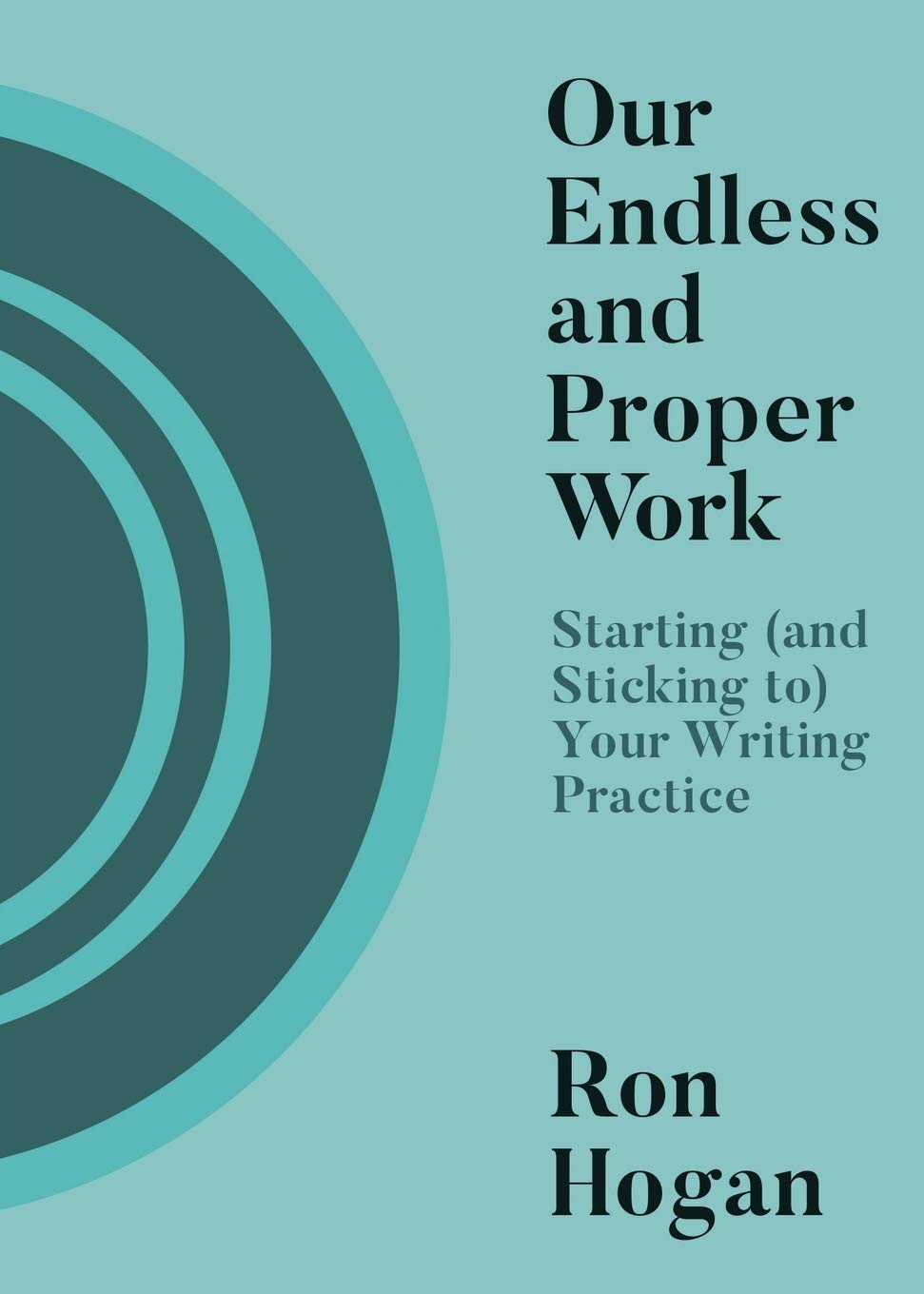 Our Endless and Proper Work is my new book with Belt Publishing about starting (and sticking to) a productive writing practice.