Author2Author: Jeff Chang & Simon Reynolds
I’m always looking for great pairs to throw together for an Author2Author discussion, and I think this chat between Jeff Chang and Simon Reynolds is going to be a real winner. Jeff’s Can’t Stop Won’t Stop: A History of the Hip-Hop Generation and Simon’s Rip It Up and Start Again: Postpunk 1978-1984 tackle the formative musical years of my generation from two different directions, and it’s interesting to see how their work informs and relates to each other.
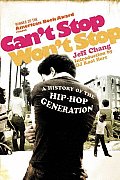 Jeff Chang: First off, congratulations on Rip It Up! It’s fantastic work, and more than deserves every accolade that’s come down. My formative music years also coincided with the turn of the ’80s and Reagan/Thatcher, and—all VH1 kitsch aside—I agree that it’s a period that has been easier to parody than take seriously. I love the breadth of the groups you cover in the book, from Adam and the Ants to PiL to the Slits; it resonates with my own musical explorations during my teens. I remember that reggae, Hawaiian music, and hip-hop were the sounds that I searched out, and that post-punk and new wave was what I was primarily reading about, in magazines like Rolling Stone, Musician, Trouser Press, and the occasional NME and Melody Maker that made it to my shores in the Pacific.
How in the world do you begin to capture this all under one big “post-punk” umbrella? And do you think it’s possible that the diversity of that period sets us up for the proliferation of micro-pop genres and niches these days? And how do you think the profusion of styles you encountered in your teens informed your views of music and culture?
Simon Reynolds: Thanks, Jeff, and big up ya chest for Can’t Stop, Won’t Stop, a colossal achievement—literally colossal (more on that later!). I did tons of research for Rip It Up but I can’t imagine what it was like for you embarking on a project that cuts across three decades of not just musical but social and political history. Perhaps you could talk a bit about how you approached such a huge undertaking, how long it took to research, and also the difficulty of deciding what to leave out.
On the subject of postpunk as umbrella term, the way I loosely defined postpunk was music that had been catalysed by punk but didn’t sound like punk rock in the classic sense of Pistols/Clash/Ramones. Bands that wouldn’t have existed without the spur of punk giving them the confidence to do it themselves, but who felt the true spirit of punk was not to repeat but to experiment and keep moving. The big exception to “catalysed by punk”—which requires a second-level definition of postpunk—is bands who happened to be in existence before punk happened; e.g. Devo, Cabaret Voltaire, Pere Ubu, the Residents. Some of them had been around many years, but only found a substantial audience because punk opened things up. That opening-up had several levels. Firstly, punk created an audience with an appetite for more challenging music. It shook up the major labels, and made them more likely to sign edgy bands or take risks—the chase to sign Devo as “the next Sex Pistols” is one example—for fear of getting left behind. Punk also catalysed the independent label movement, which provided a distribution network for weirdo music that would otherwise have just subsisted on a home-taping/mail-order level, and also a cultural context in which risk-taking music “signified” and found a proper reception. So overall, I’d define postpunk not as a genre of music but rather as a possibility space in which a host of new genres and scenes formed.
That open-endedness naturally lent itself towards diversity and fragmentation. So as the postpunk era proceeds, by the time we get near the end of the period I’m covering (1983-84) the distance between things is starting to get vast. There’s a gulf between Goth and the glossy New Pop stuff, between synthpop and the return-to-guitars of those bands I’ve dubbed “glory boys” (Echo & the Bunnymen, U2, etc). Everything is scattering and following its own divergent and often antithetical path. But the point of origin—the mythic site of lost unity—is punk. That’s the ignition point, the Big Bang. Even Duran Duran, who seem like the ultimate “like punk never happened” band, had started out wanting to combine Sex Pistols’ “God Save the Queen” and Chic’s “Le Freak.”
I don’t know if postpunk is the beginning of the modern age of genre fragmentation, though, because the early Seventies was like that, in a way: a diverse but diffuse era that people still have some difficulty getting a grip on. It’s more like rock history has alternated between periods of unity (the mid-to-late Sixties; punk; to a lesser extent grunge and early rave) and phases when consensus disintegrates and the tribes scatter. These periods of drift and diaspora tend to get seen unfairly as troughs or wastelands, which was one reason it was enticing (but also challenging) to attempt to write about the punk “aftermath” as both a unified epoch and a surge-phase.
15 June 2006 | author2author |
Craig Clevenger Interviews Sara Gran
I’m just going to step back and let Craig Clevenger, the author of Dermaphoria, introduce you to Sara Gran and her new novel, Dope.
 Craig Clevenger: One-Eyed Fred, Fifty-third Street Jackson, Nuthouse Jim, and “…at least a dozen guys who went by Nick the Greek” are among the unwashed and unwanted characters wandering the 1950s Manhattan of Dope. One of them is the who in the story’s whodunit, but the real nemesis of narrator Josephine “Joe” Flannigan is a silent monkey on her back that she’s kept subdued for two years as the novel begins. Heroin, though, is the only habit our heroine can kick; she’s been paying for food and rent with the same sticky fingers that once fed her drug addiction. But when, after being hired to find a missing young socialite, Joe eyes her first stash in two years (“a pile of brown powder…as big as a half dollar and almost as high”), her sleeping monkey wakes up screaming.
There’s a reason I like noir. Good writing, especially good noir writing, examines the world as seen looking up from the bottom, illuminating life in a way that the perfect universe of pop culture cannot and will not. Sara Gran’s Dope is true noir at its baddest.
Sara, you have a deep understanding of mid-century New York’s con artist and grifter communities, and a real affection for them, as well. Where do these come from?
Sara Gran: Well, I’m from New York—until recently I’d been in Brooklyn all my life. A lot of the landmarks in the book like the Automat, Gimbel’s, or Alexander’s were still around when I was a kid. The Bowery was still very much the Bowery; Times Square was not the New York Disneyland. Three-card monte dealers and shell games lined Broadway. So even though the book takes place 50-plus years ago, it still felt like my New York.
11 June 2006 | interviews |
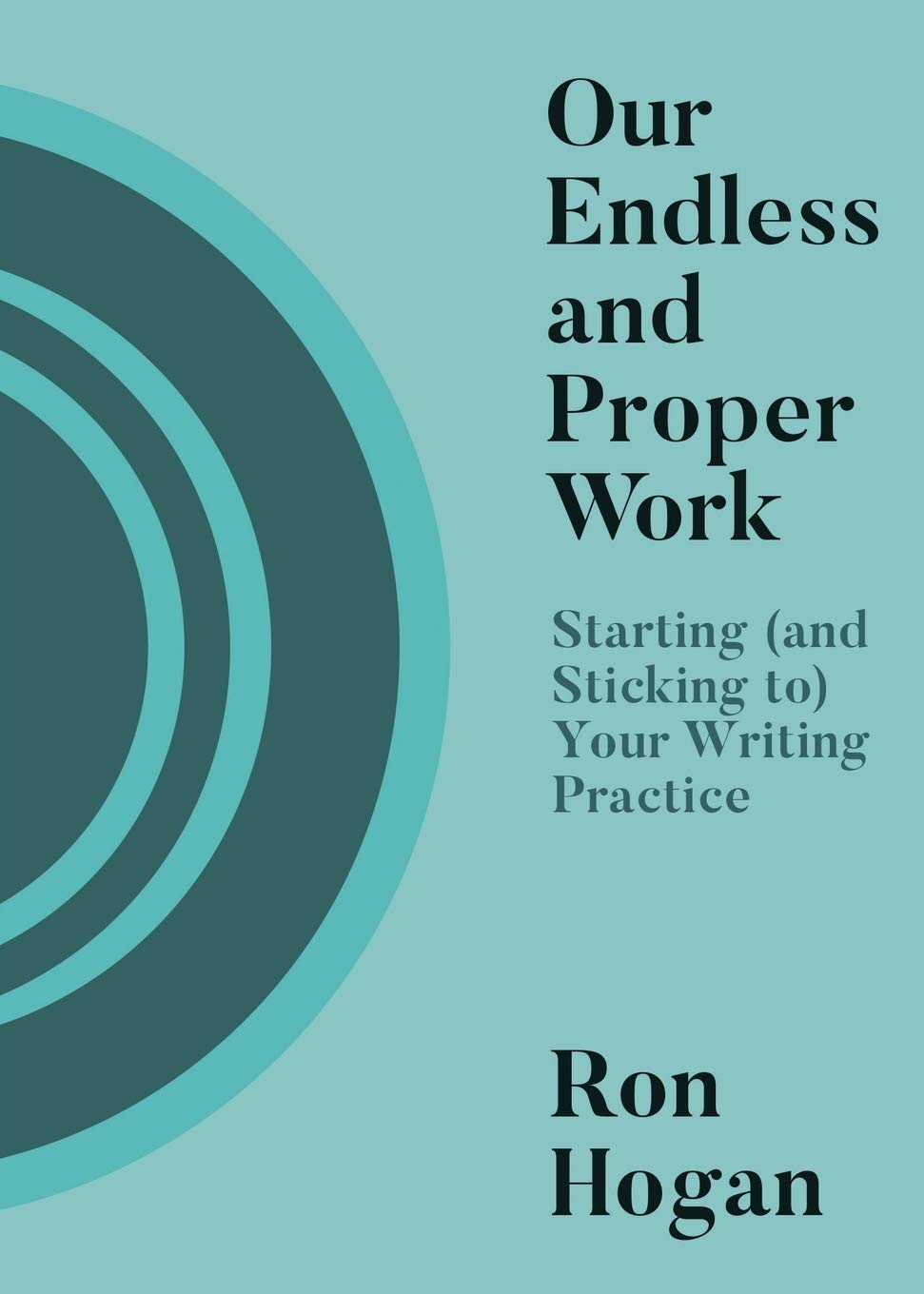 Our Endless and Proper Work is my new book with Belt Publishing about starting (and sticking to) a productive writing practice.