
Author2Author: Mary Sharatt & Katharine Weber
In the latest Author2Author exchange, Katharine Weber and Mary Sharratt talk about historical fiction. Mary’s most recent novel, The Vanishing Point, is a suspense tale set in early colonial Maryland, while Katharine’s Triangle revisits one of the worst industrial accidents in American history, the Triangle Shirtwaist fire of 1911, in which 146 garment workers died, unable to escape the ninth floor of their burning factory. Katharine is reading tonight at the Tenement Museum, on Manhattan’s Lower East Side—a perfect venue to discuss the historical elements of her novel.
 Katharine Weber: When you were researching The Vanishing Point, did you discover information that took your novel in some way, large or small, off the path you had in mind? Did you discover historical details that surprised you and inspired you to add certain elements in the plot or certain features to your characters?
Mary Sharratt: The story was based on a novella I wrote in the early 1990s before I did much research. From the very beginning, I had the two sisters—May, who is lost, and Hannah, who is searching for her—and Gabriel, the man who is in turn May’s husband and Hannah’s lover.
However, my original plot became much more complex when I realized how harsh life was in 17th-century Maryland and how isolated the English settlers were. We tend to base our image of American colonial life on the New England model, but the Chesapeake was an utterly different world. Instead of the close knit New England village, you had far flung plantations mimicking a wilderness version of English feudalism. The gentleman landowner had nearly absolute power over his family, indentured servants, and slaves. Yet, paradoxically, it was a very perilous place for a landowner to be—isolated in the back country where, in some cases, blacks far outnumbered whites. As I was writing, I became intrigued with the possibility of mutiny on these remote plantations. What if the servants overthrow their master? This became a crucial part of the story.
Also, the mortality rate was incredibly high. The slave trade brought malaria and yellow fever to the region. English settlers, who had no natural resistance to these diseases, died in droves, leaving countless children to be raised by step parents and servants. There were no English physicians in the Chesapeake in this era. If you needed medical attention, you did for yourself or went to the blacksmith for surgery. Ships sailed from to and from England only once a year. Thus, it would take a year, sometimes more, for a letter to English relatives to arrive.
This research made it all the more poignant for Hannah, who remained in England to take care of her aging father, while her beloved sister sailed off to Maryland to wed a young man she had never met. I thought about how these two sisters would long for each other and how difficult any communication between them would be until Hannah was free to sail to America and join her sister.
28 June 2006 | author2author |
Author2Author: Carolyn Burke & Hazel Rowley
I first met Carolyn Burke several years ago, when I interviewed her about her biography of Mina Loy. Last year, she wrote Lee Miller, a biography of the acclaimed photographer that was nominated for a National Book Critics Circle award. She suggested to me a month ago that she’d love to chat with Hazel Rowley, who had just published Tête-A-Tête: Simone de Beauvoir and Jean-Paul Sartre, about some of the issues surrounding literary biography. I thought it was a great idea, and here we are…
 Carolyn Burke: I’m interested that rather than writing a conventional biography, you chose to write about Sartre and Beauvoir’s relationship. How did you decide on this approach? What were the consquences for the way you shaped the narrative? What sorts of things did you choose to emphasize, to omit?
Hazel Rowley: I was keen to move away from womb-to-tomb biography, and to feel freer as a storyteller. And I did feel freer. I have never enjoyed writing a book more. Obviously I still had to get the facts right, but I didn’t have to take on board their whole lives (the narrative begins in the summer of 1929, when Sartre and Beauvoir met, and it pretty much ends with Sartre’s death in 1980). I talk about their writing lives and their iconic roles as public intellectuals (intellectuels engagés) because these were important aspects of their relationship, but I didn’t feel obliged to fill out the picture. What a liberation! After my other books, I felt as if I were wearing dancing shoes.
I tried to give equal space to Sartre and Beauvoir. It’s true that most readers sense that my sympathy lies with Beauvoir, but I admire both of them in many ways. Sartre’s insecurities made me feel a real tenderness towards him. He drank a lot; he took enormous quantities of speed; at times he was on the verge of madness. It’s my belief—contrary to public opinion—hat he needed Simone de Beauvoir more than she needed him.
What did I choose to emphasize or omit? As philosophers and as writers, Sartre and Beauvoir adamantly believed they should tell the truth. I was guided by the same principle in my book. I wanted to tell the truth about their relationship and not to whitewash their behavior, but the fact is, their love life does not always show them in their best light, and I was conscious of the danger of trivializing these two 20th-century icons. In order to tell this story without simply muckraking, I took pains to sketch in the broader picture—to give a sense of their intellectual trajectory and their writing.
At the same time, I was determined to keep the book fairly short. I had loads of material. I was dealing with not one but two people, and this love story contains many other characters as well. The danger was clear. I could easily produce summary rather than story. The answer, I realized, was selectivity; I had to trim my narrative with a sharp razor. What to choose? Well, you tell stories that are revealing. Above all, you tell a good story!
18 June 2006 | author2author |
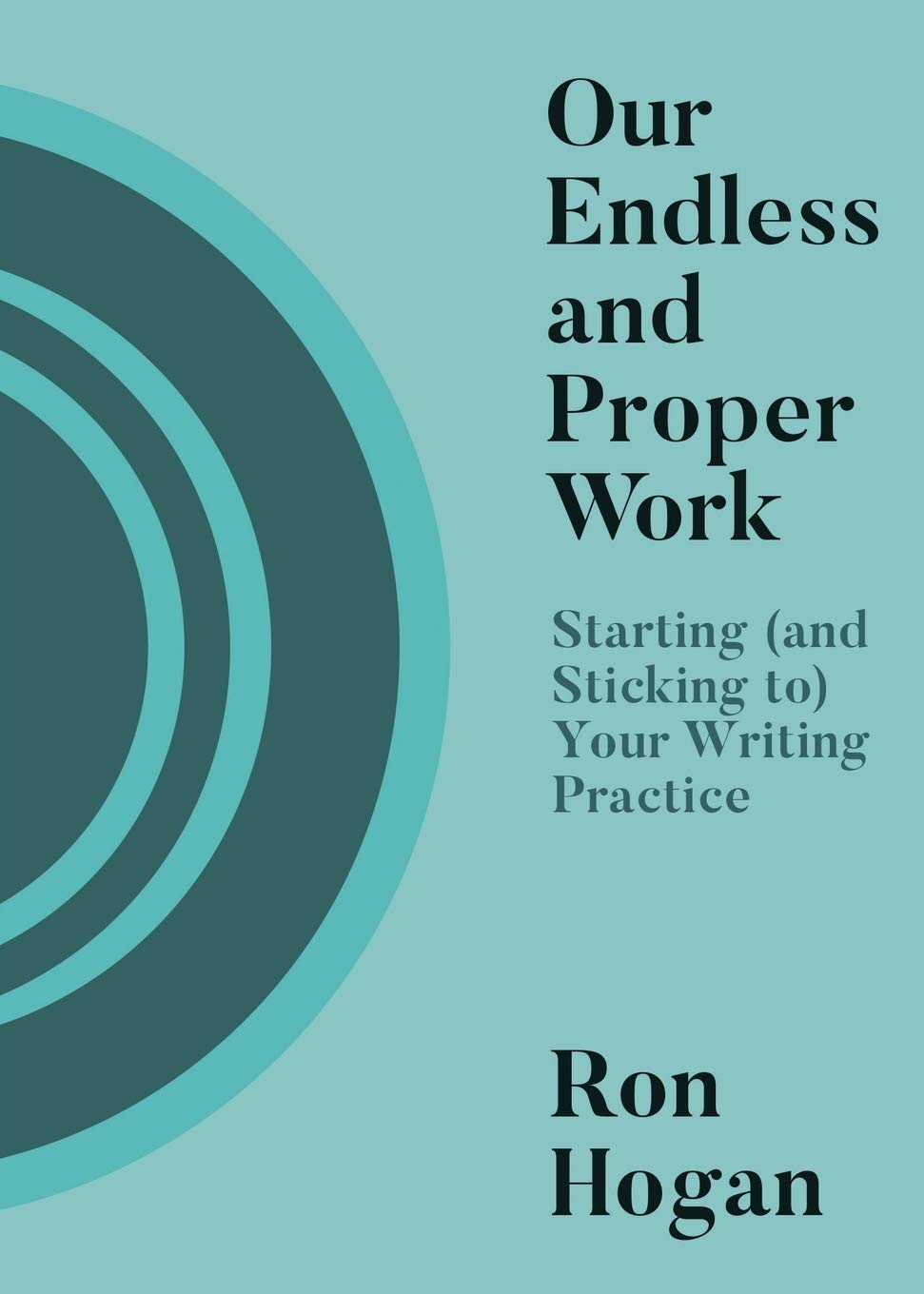 Our Endless and Proper Work is my new book with Belt Publishing about starting (and sticking to) a productive writing practice.