Alan Fox Explains the PR of Storytelling
Alan Fox is the director of StoryFocus, a corporate communications firm, and has managed more than 350 publicity campaigns including work on behalf of major publishers, Hollywood film studios, and a wide range of leading companies. He’s also a novelist who chose to publish The Seeker in Forever himself and is using his own publicity background to get the word out. In this essay for Beatrice, he explains how solid PR work isn’t just about knowing the right tactics to use; it’s about having a strategy in place that those tactics will serve.

I have found, through 14 years in the field, that a lot of people don’t understand the true nature of publicity. If you are interested in writing as a human enterprise, and you want to know one of the great secrets of the story industry, then you’ll want to pay attention to this. I have not seen this adequately explained anywhere.
Publicity was born out of news writing. News writing was born out of story.
Most people think publicity was born of advertising. They have totally the wrong picture in their heads. It’s not that at all. To go there is to go in the wrong direction.
It’s sad to see writers work for years and then go wrong.
For a writer of stories, publicity is not going off to fight a strange war in an alien territory. Publicity is coming home. You’re coming home to your finished story. You will find quality. And there you will stand. And you will not let anyone move you.
< (more…)
23 October 2006 | guest authors |
Author2Author: Michael Largo & Lisa Cullen
Michael Largo, the author of Final Exits, an “illustrated encyclopedia of how we die,” was psyched when he found out I wanted to pair him up for an Author2Author with Lisa Cullen to talk about her new book, Remember Me, a “lively tour of the new American way of death.” You see, two decades, when Cullen’s doctor warned him that he’d probably be dead in six months if he kept up his way of life, Cullen responded by pre-ordering his tombstone. When he didn’t die, he recalls, “the monument company threatened to grind my name off and sell it to someone else if I didn’t pick it up. So I persuaded six friends to help me carry this monstrously awkward stone up to my filth floor walk-up apartment on St. Marks Place. This marker in my living room turned out to be the wildest 400 pound granite Post-It note money could buy. In fact, the heavy reality of it got me over the immortality mindset of my twenties and was ultimately a wake-up to modify many a harmful lifestyle.”
 Michael Largo: Lifestyle, as I’ve discovered, is the real cause for nearly 50% of all deaths. How do we actually die? That is the question I wanted to know. Of course, the Center for Disease Control (CDC) puts out the top ten causes each year, but that is such a tablet of saccharin in the sea of data, some of which you’ll find in Final Exits. While researching your book, did you find cause of death to be influential in burial choices?
Lisa Cullen: I thought I ought to start by letting you know that Final Exits has been selected for admission to my family’s library of bathroom books. Its quick, funny, bizarre, bite-size reads makes the book perfect for the smallest room of the house. I apologize if you had grander ambitions, but, to my family, this placement is in fact the highest honor… I must however admit I question your moorings. What kind of person knows that more than 500 people died between 1999 and 2003 from economy-class syndrome? Or that halitosis can lead to cancer? Or that “in 1987, Texan Walter Mitchell killed his wife because she was about to say the words ‘New Jersey'”? Your tale about keeping a tombstone in your apartment only deepens my suspicions, friend.
But you pose a serious and interesting question. My first instinct was to answer no, that the cause of death did not seem to reflect upon the mode of burial among the people I profiled in my book who chose unusual and personal send-offs. After some reflection, however, I thought of the mother of three with cancer who chose a “green” burial in a nature preserve in South Carolina. I did not get to interview her before her passing, but it occurs to me that her unimaginable pain must have been eased somewhat by knowing she had chosen to go as one with nature. I think it would for me. And in the case of the Port Authority worker who died on 9/11, his empty casket was held in the mausoleum until his remains could be found.
Do you think the fact that a book like yours can exist means we Americans perceive death differently today? In other words, does our generation see humor in death? And if so, why now? The world just isn’t so funny these days.
16 October 2006 | author2author |
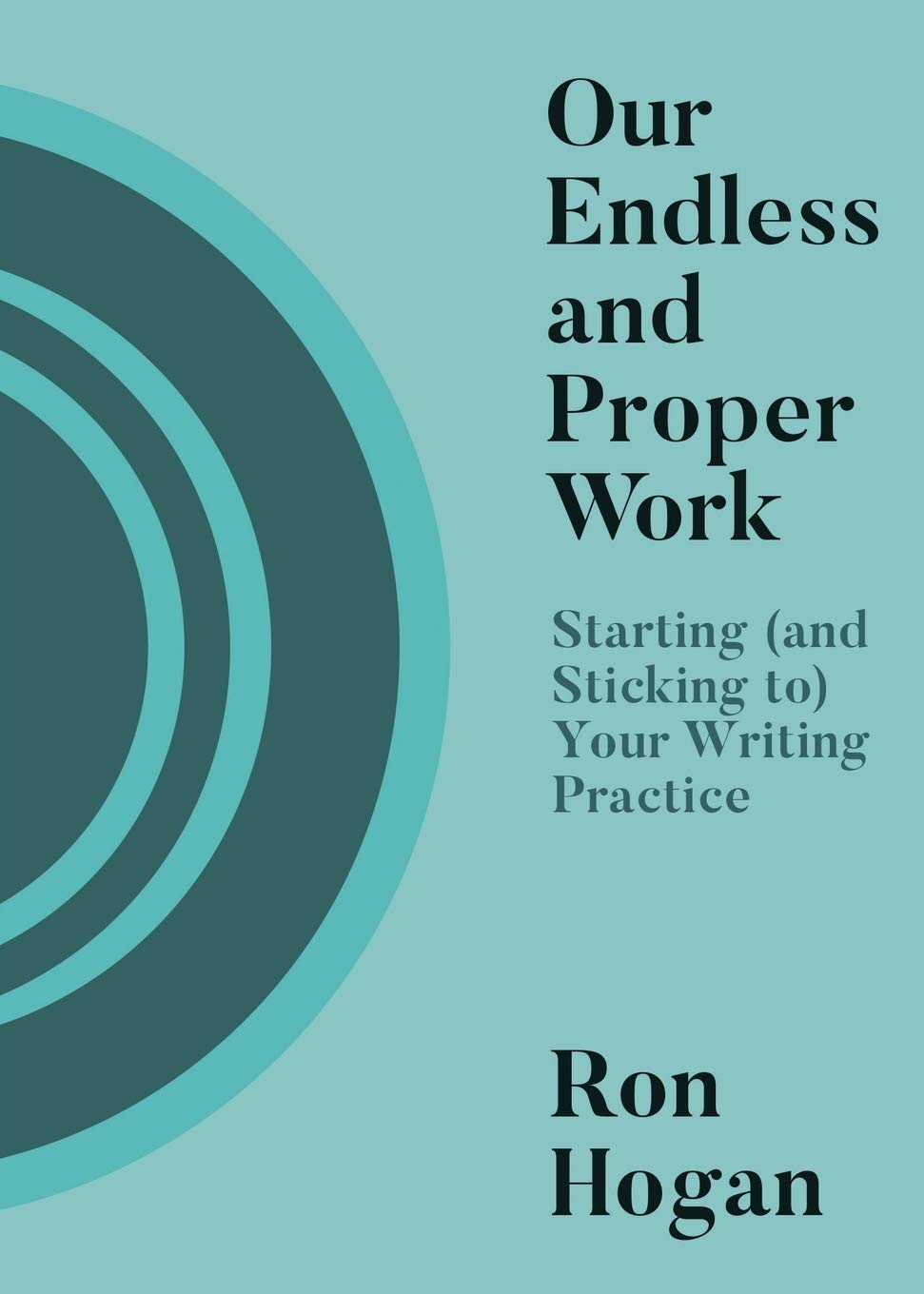 Our Endless and Proper Work is my new book with Belt Publishing about starting (and sticking to) a productive writing practice.