Erica Simone Turnipseed Gets Real With Her Fiction
Erica Simone Turnipseed recently published Hunger, the sequel to her first novel, A Love Noire. Both books work to ground the relationship between the central characters by placing them in a world recognizable as our own, even to the extent of drawing from recent events. Here, Turnipseed explains why she chooses to embrace the responsibility of getting public stories right in order to tell her own.
The phrase “truth is stranger than fiction” is ubiquitous, at least in English. We often utter it when watching the evening news as some sort of explanatory statement that helps us process the world’s endless parade of madness and sadness, whether man-made or the proverbial act of God. As a fiction writer, I am clear about two things: that the stuff of fiction can be pretty strange, and that fictionalized human drama must ring with authenticity in order for the reader to believe it.
For me, my characters are real: they have a history, a dysfunctional family, favorite haunts, and people who care for them, not least of which is me. When I wrote A Love Noire, and gave birth to the characters of Innocent and Noire, I learned just how real these characters had become: My inbox was full of emails from readers who confessed that they knew Noire, the Afro-wearing Ph.D. student, and her love interest Innocent, a well-heeled investment banker who hailed from Côte d’Ivoire, West Africa. Not only did they know these characters, but many proclaimed that they were these characters! Fictionalized or not, Noire and Innocent—and their family, friends, and colleagues—were real to many.
It was in A Love Noire that I decided to make their universe parallel our own: they lived on real streets in New York City and traveled to historical sites in New Orleans, Charleston, Jamaica, and Côte d’Ivoire. They shared a penchant for the music, clothing, and restaurants of many of the trendy sorts here on our side of planet Earth.
But those things were simple. It gets harder when characters are affected by the incidences of recent history. In most historical fiction, writers can create a plausible, historically accurate story line for their characters knowing that their readers are unlikely to have a personal association with the events. It was quite the opposite when I wrote about the Christmas Eve coup in Côte d’Ivoire as experienced by Innocent and his family: some of my readers had first-hand accounts of it as well.
1 November 2006 | guest authors |
Meg Tilly Recovers Her Voice
I recently interviewed Meg Tilly for GalleyCat about Gemma, her first novel in more than a dozen years. As we were talking, she told me a story about the story’s beginnings that I knew would be of interest to Beatrice readers who are trying to find their own writing voices, so I asked her to email me more of the details so I could present them to you.
People have asked me how I managed to get inside the mind of Hazen Wood, the thirty-six year old pedophile in Gemma. How was I able to make his thought process so realistic, to figure out what his motivations were? They want to know how it felt to write him; was it hard for me, given my background with this type of predator?
The answer is a complex one. Yes, I had an enormous amount of resistance to writing anything from this man’s point of view, let alone a novel where he is one of two principal characters. I don’t think I ever would have voluntarily chosen to spend even fifteen minutes of my adult life in his company.
The Hazen in my book first came into being in 1999. After Singing Songs was published by Dutton in 1994, I became severely blocked. The reaction from my family to the fact that I had not only written, but even worse, published my memories as a child was…to put it lightly…not pleased. When Singing Songs first came out, only one member of my family was speaking to me.
I hadn’t thought it through, realized how violent their rejection of me was going to be. I figured since the rest of the world thought it was fiction, why would they care?
30 October 2006 | guest authors |
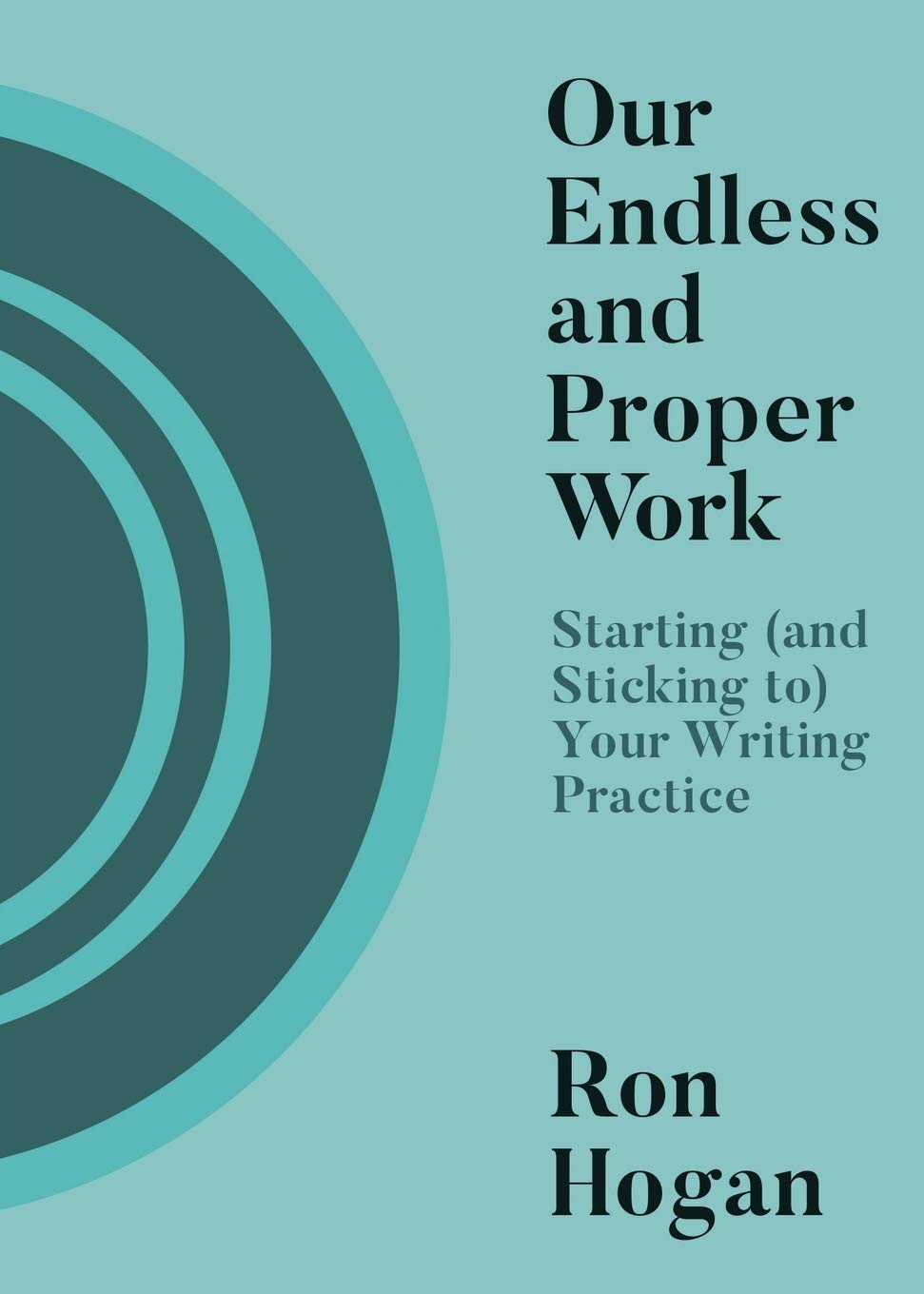 Our Endless and Proper Work is my new book with Belt Publishing about starting (and sticking to) a productive writing practice.