Daniel Grandbois and the Trickster Gods of Short-Short Fiction
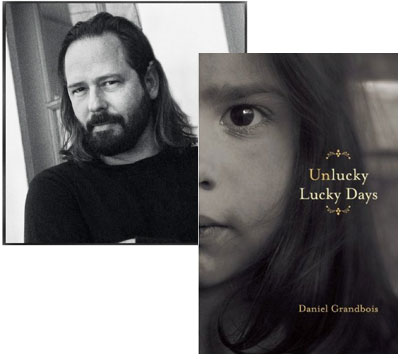
You can read just about any of the stories in Daniel Grandbois’s Unlucky Lucky Days in under three minutes; while a few spill over onto a second page, most are just a few paragraphs. Here, for example, is the entirety of “The Tunnel”:
A man and a woman stepped into a tunnel. It was lighter inside than they had expected. In fact, the deeper they went the lighter it became until the light was so bright that it blinded them both.
The worlds in which these stories take place bear little resemblance to the ones in which their readers live… but there may be other relations to consider. In this essay, Grandbois discusses the magic he’s found in such tightly compressed narratives.
As Cairn terriers were bred to get into the crannies of Scottish cairns and root out little beasties, the short forms of literature scare such vermin of the human mind into the light. These places can’t be reached by the Great Danes, English Foxhounds, and French Poodles of the long forms, to whom the frantic little terrier may look like only a plaything. A step back reveals it is needed no less equally by the man.
Long forms make their homes most often in what is called realism, a natural setting for something of their size. Planets, for example, live, by comparison, in a more realistic place than do subatomic particles—at least when tallied by human common sense. Yet, each locale is buzzing with indispensible activity. In many ways, the short forms, like the subatomic realm, are the trickster gods, come to mess up the hair of anyone believing the pinnacles of artistry or knowledge are within reach. They expose the conceits of realism, not with malice (when working at their best) but with humor—a wink, a nod, or a hairy-assed moon—for we are all in this together.
“Everything you can imagine is real,” said Picasso; it’s become my standard answer to questions framed to suggest high literary art can be summoned only by the incantations of realism and the character-driven long forms. Misconceptions like these keep the literary arts decades behind the visual and the auditory, and light-years behind scientific discovery.
25 August 2008 | selling shorts |
Bill Folman: Making Do When Life Imitates Art Imitating Life
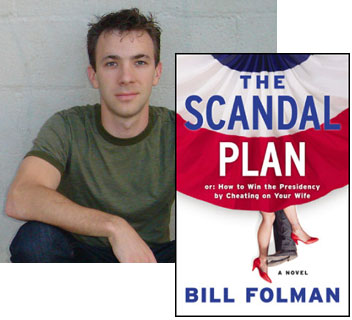
Every fiction writer dreams about having real-life current events unfold that mirror the themes underlying their just-published novel—but as Bill Folman reminds us in this essay, most dreams are just a few steps away from becoming nightmares. If what he has to say about trying to sell a novel about a presidential candidate whose contrived sex scandal gets out of hand while the media is obsessed with a presidential candidate with an out-of-hand sex scandal, you might want to check out the electronic preview of The Scandal Plan.
I’ve been waiting for a good sex scandal all summer long. No, I’m not a voyeur or a pervert or a committed schadenfreudist—at least not any more than is socially acceptable—but I am a political satirist with a novel to sell, and as such, the financial and humanitarian sectors of my brain are frequently in conflict.
The Scandal Plan, or: How to Win the Presidency by Cheating On Your Wife, is—not surprisingly—about a sex scandal. A fake one. It’s the story of Senator Ben Phillips, a straight-laced, over-qualified, under-exciting Democratic presidential candidate in the tradition of Al Gore and John Kerry. He’s got great ideas, but you wouldn’t want to have a beer with him—and that’s why he’s getting killed in the polls. His campaign’s brilliant solution is to invent a sex scandal. Not a big one. Just a long-ago indiscretion that can be discovered: something the senator will have learned from, something he can bounce back from, something that can humanize him, something that might make him the tiniest bit cooler. Needless to say, nothing goes as planned.
To write a political satire is to be constantly looking over your shoulder. Is my story still relevant? What if Candidate X wins? What about Candidate Y? How does today’s news affect my story? Jon Stewart has it easy. He takes yesterday’s headlines and skewers them on tonight’s show. Guaranteed freshness. With my book, it took four and a half years for the original idea to travel from conception to publication—the satirical equivalent of firing a bullet into a time machine and crossing your fingers. I don’t recommend it.
21 August 2008 | guest authors |
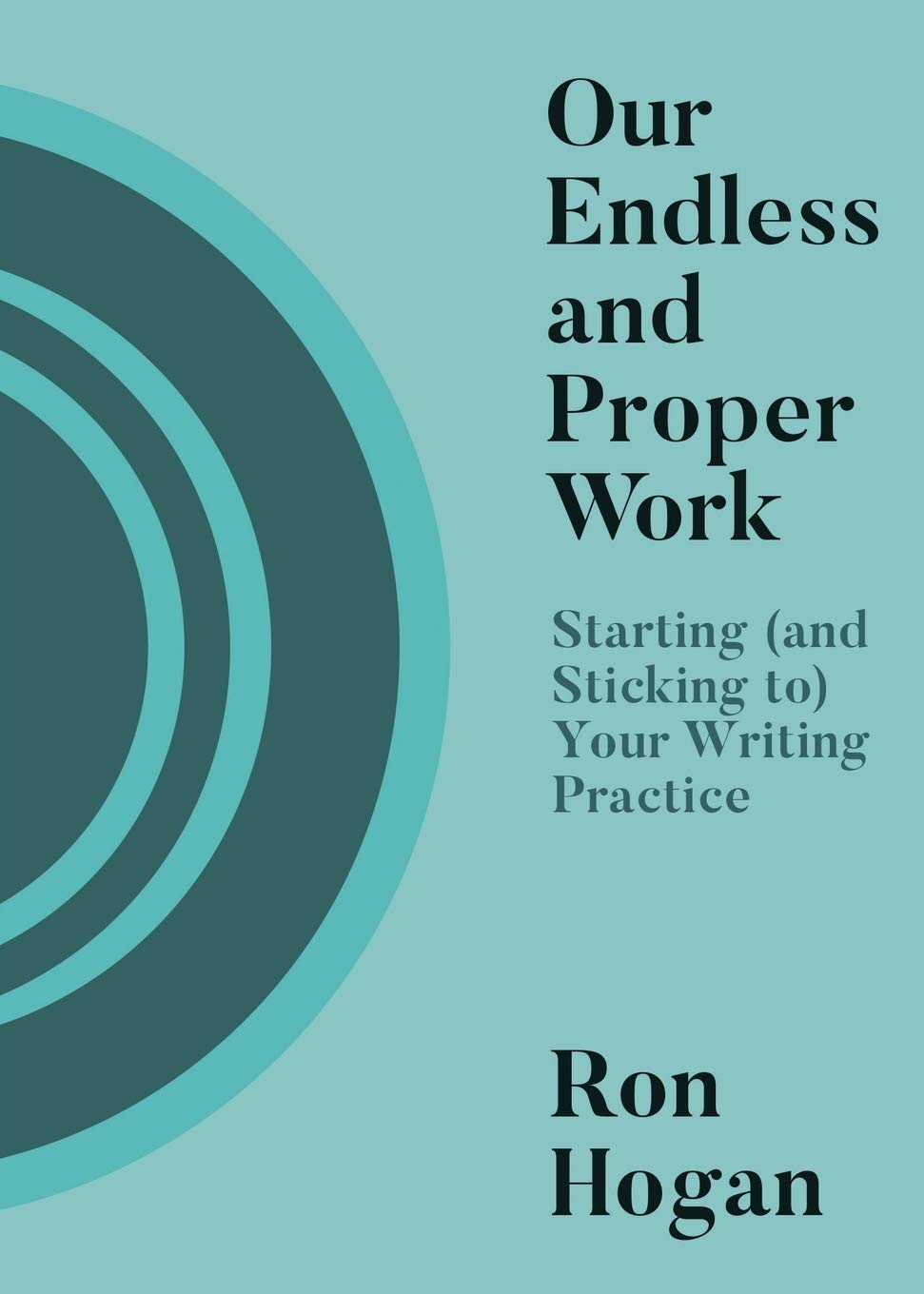 Our Endless and Proper Work is my new book with Belt Publishing about starting (and sticking to) a productive writing practice.