
Debra Monroe: Choosing Real Life over Easy Myths
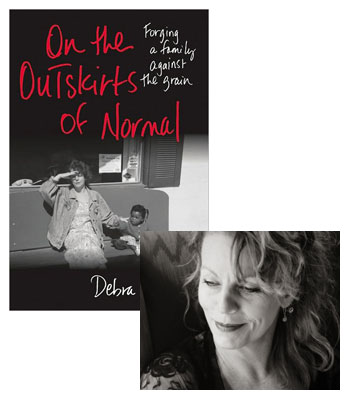
When SMU decided to suspend operations of its university press earlier this year, I tried to put a spotlight on some of the remarkable work that press had done publishing short stories, but that’s not all they do. Debra Monroe‘s memoir, On the Outskirts of Normal, is that rare university press title that makes a big splash in the mainstream book reviewing media, including a recommendation from Oprah magazine. Monroe’s voice is a storytelling natural, conveying her experiences not in the order in which they happened but in a way that makes the most emotional sense. But it almost didn’t turn out that way.
At one point, Monroe took an agent’s suggestion and hired a freelance editor to impose a tighter chronological order on the story of a single white woman adopting a black child. “I would never have agreed at any other time in my life, because I don’t spend money that way,” she told me, but an editor at a large publisher had committed to taking another look at the manuscript if it were revised into a slightly more conventional form. “At the time, I was selling my house, and decisions amounting to a few thousands dollars were going on daily… Well, I did it, but pulled out when it was getting too expensive. (Plus, the freelance editor had started in with the New York-centric conversations about toothless racists in the Texas countryside and the ‘age of Obama’ crap.)” The problem was that the new, linear narrative was, in Monroe’s own estimation, discursive and rambling. “The central conflict was lost because the central conflict had been not-understanding-my-fears (life as chaos) vs understanding-my-fears (life as a story),” she recalled. “Telling the story as the search for meaning required some chronological manipulation.” The agent who’d recommended the freelance editor in the first place declared the results boring, then suggested Monroe juice up the story by emphasizing the racial elements.
So Monroe walked, and when she showed her original manuscript to Kathryn Lang at SMU, “she kept the organization as it was, with the central conflict between life-as-a-series-of-accidents and life-as-a-tale-that-means-something. We worked a bit on more ‘glue’ for the structure, but stayed true to it.” As Monroe explains in this essay, her memoir isn’t a story about transracial adoption, but one in which that experience shapes a much broader transformation.
Fact: My daughter is black, and I’m white. I adopted her when Angelina Jolie was a fashion model, not a movie star or UN ambassador or adoptive mother. The Multiethnic Placement Act had just passed, and ours was the first transracial adoption my agency handled. I was a novelist. I used the advance on my third book to pay my adoption fees. Then I started writing nonfiction. I’d endured a crisis or two. I wanted to revisit these years—certain moments incandescent, others blurry and obscured—and find a plot, not invent one. Love. Death. Illness. Ordinary trouble. I write books because of the way I read: I want my books to get some reader through one of those dark nights of self-doubt.
I’d published previous books with both small and large presses. In my experience, small presses provide the most intelligent, passionate editing on the planet, but they have few resources for distribution and publicity. Because large presses have more of the latter, they deliver more readers. So I hoped to sell my book to a large press. People really liked the concept: white woman, black child, small Texas town. I felt racial and geographical assumptions falling into place. During long phone calls and protracted emails, the phrase “the age of Obama” came up. So did market exigencies.
But the advice that stopped me in my tracks was to emphasize race more; an agent described inconceivably huge advances if I would. But how? We encountered worse problems with racism and. . . I taught the town a lesson? I overcame racism? The needle on my moral compass went haywire.
21 July 2010 | guest authors |
Alix Strauss: The Luxury Hotel as Literary Platform
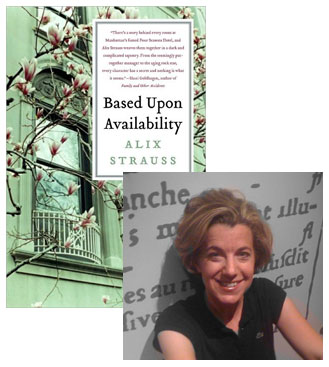
It’d been nearly a year since the last time I saw Alix Strauss, which had been the launch party for Death Becomes Them, so I was delighted to meet up with her recently to chat about her second novel, Based Upon Availability—which is a bit like her debut, The Joy of Funerals, only “run backwards” as Alix puts it; where that book told the stories of several women and then tied up all the narrative threads with one longer story at the end, this one starts out with the story of Morgan, a manager at the Four Seasons in Manhattan, as she encounters a batch of women through the course of her work, then backtracks to explore what brought each of those characters to the hotel.
“I was fascinated by hotels and the idea of anonymity,” Alix said of the novel’s origins. “I love the idea that you could be anybody from anywhere, check into a hotel, and then the minute you check out, that room is wiped clean and any presence of you is erased.” Why the Four Seasons? “It’s signature, it’s branded, everybody understands it—there was that instant recognition of the hotel, but also an instant recognition of the kind of person who stays there.” For research, she spent a lot of time in the hotel’s lobby and restaurant, and relied on her previous experiences writing about it in a journalistic capacity, then spent a night in one of the rooms, “channeling” one of her multiple protagonists—in this case, a middle-aged rock star whose publicist has checked her into the hotel to go through withdrawal. “I ran around naked, had an unlit cigarette dangling from my lips, slapped on some fake tattoos, brought a bottle of vodka with me,” she recalled. “I ended up laying on the bathroom floor like my character does, trying to induce this psychotic lapse into inebriation and lunacy.”
So what does the Four Seasons think of its latest literary recognition? “I got a call from the PR person, who I’ve known for a number of years,” Alix told me. “She said, ‘We can’t stop hearing about this novel, can we get a copy?’ And that was a couple of weeks before it came out. I’ve not heard from her since… but I hope that they embrace it in the sense that it was meant, which was as a huge tribute to the hotel. Yes there are a lot of shenanigans that go on, but what hotel doesn’t have that?” In the meantime, she’s been doing readings in a number of other hotels in Manhattan and other cities; tomorrow night (July 21), for example, she’ll be at the Liberty Hotel in Boston.
20 July 2010 | interviews |
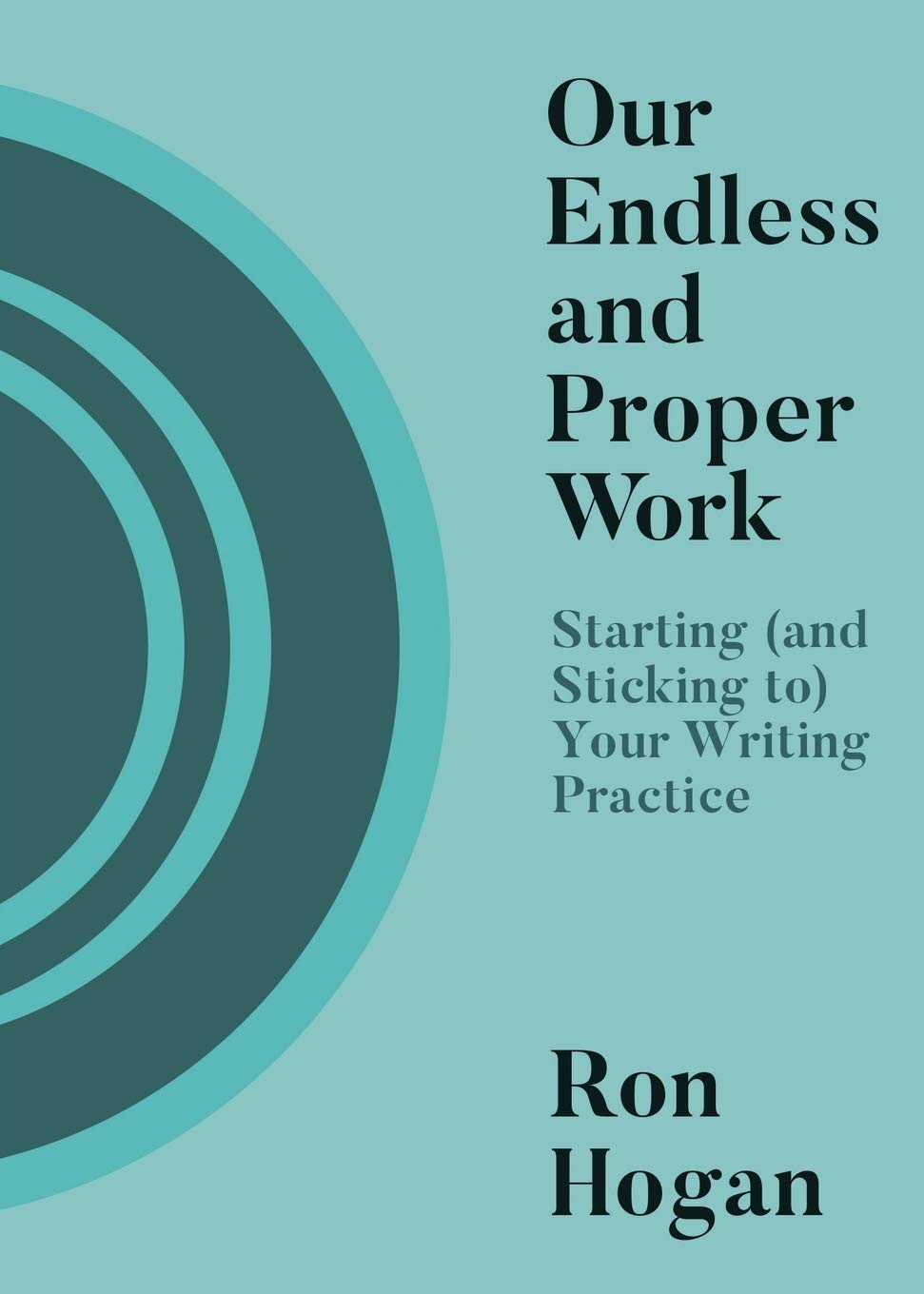 Our Endless and Proper Work is my new book with Belt Publishing about starting (and sticking to) a productive writing practice.