
Thomas Sayers Ellis, “Audience”

Imagine a door, a door
with a sign on it, a sign that excludes you.
Not a symbol of you,
but the real birth you: erased, gone.Through the door,
something you think you want,
something you were told was in books,
a false wholeness: Europe.And if you are lucky… a seat on one
of its not so murderous seas,
surrounded by listeners
who are “kind of” open.So you go, alone in the mind, often,
despite the sign on the door
and the signs inside,
and you never come back.You are rewarded for this, in public,
and accepted onto
their realm of podiums.
Disliked, by a few, too.
Skin, Inc. is the long-awaited second collection from Thomas Sayers Ellis. He describes it as “identity repair poems,” elaborating for Publishers Weekly: “The ‘publishable’ American poem seems to have skipped over a certain amount of honesty, boldness, and activism in the name of ‘craft.’ An identity repair poem is one that acknowledges that many of the tools in the ‘taught toolbox’ need cultural improving… If there’s an ideal reader, I guess it would be someone—black, yellow, white or red—interested in literary time travel, so that we don’t end up here again in a place where there hasn’t been an Asian or Latino or Native American poet laureate.”
Skin, Inc. also includes “Race Change Operation” (from the Split This Rock blog). And, in 2005, I hosted Ellis in conversation with Lyrae Van Clief-Stefanon, during which he showed us an excerpt of the poem “The Return of Colored Only.”
29 September 2010 | poetry |
Read This: Hub Fans Bid Kid Adieu
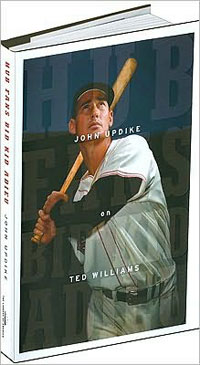 Fifty years ago, Ted Williams played his last major league baseball game; “on an impulse,” John Updike would recall years later, “I bought in for a few dollars… and the park was two-thirds empty. I was moved to write about the events of that game, in part because his departure, taking with it the heart of Boston baseball, had been so meagerly witnessed.” The essay Updike wrote, “Hub Fans Bid Kid Adieu,” was published in The New Yorker a month later, and has been widely praised not only as one of the author’s best nonfiction works, but as one of the greatest pieces on baseball by any author. Earlier this year, it was republished in a commemorative Library of America edition, which is itself a fine bit of publishing. (Be sure to take off the Chip Kidd-designed dust jacket, even if only for a moment, to look upon the photograph reproduced on the book’s casing.)
It’s not a long essay, but Updike managed to fit a lot of tribute into it—recounting not only Williams’ performance in his final appearance at Fenway Park, and the reactions of Updike’s fellow fans, but also the exemplary features of the slugger’s long career in Boston, as well as his contentious relationship with the local press. It is a partisan account, but not belligerent in its advocacy, and though a bit florid in spots (“After a prime so hassled and hobbled, Williams was granted by the relenting fates a golden twilight”), it holds up as one of the most genuine expressions of fandom I’ve had the good fortune to read.
28 September 2010 | read this |
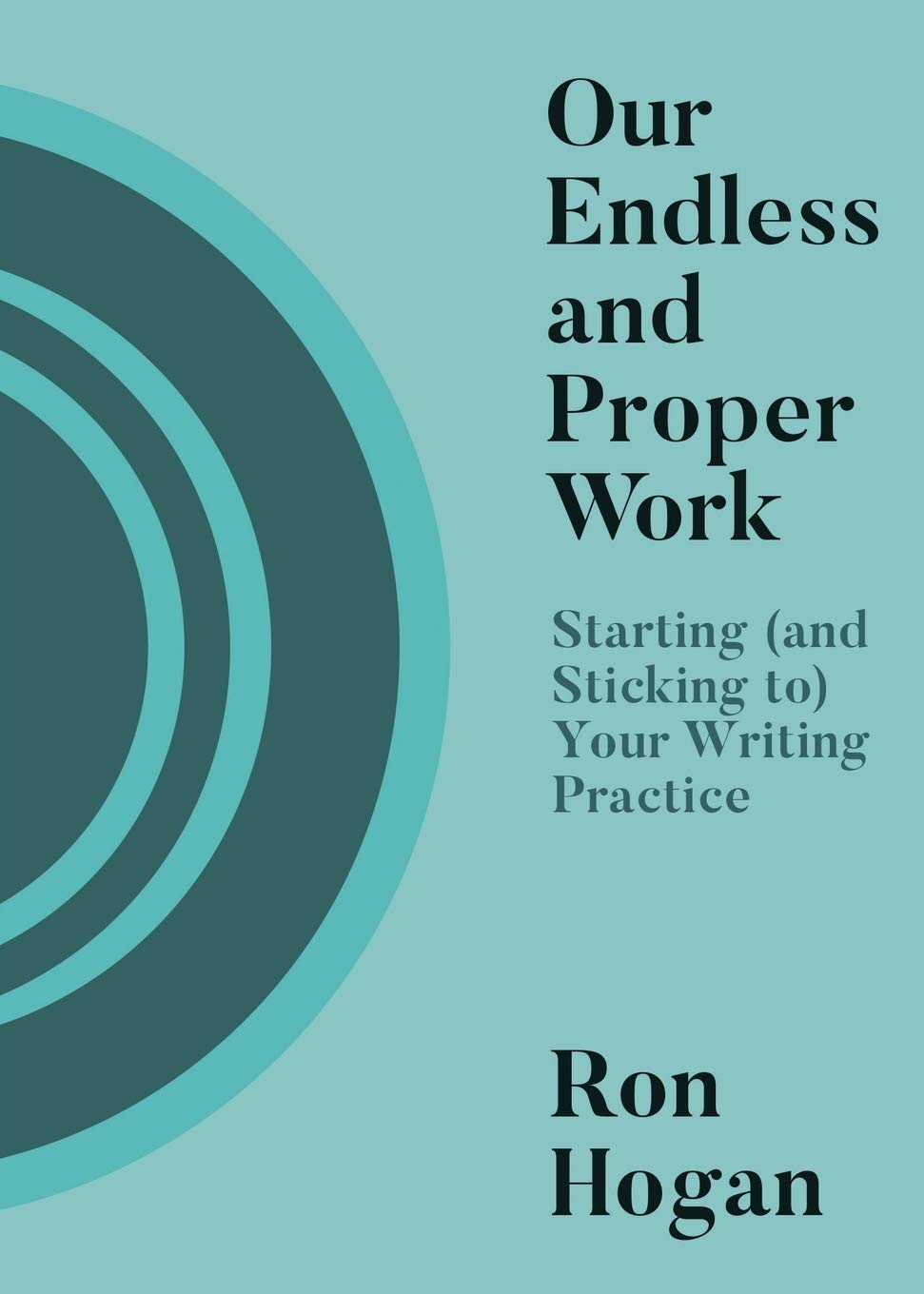 Our Endless and Proper Work is my new book with Belt Publishing about starting (and sticking to) a productive writing practice.