
Michael Emmerich & The Manazuru Tuning Fork
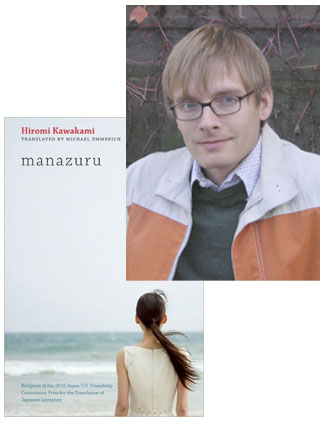
The biggest reason for people in the U.S. to read more translations is that there’s a hell of a lot of amazing stuff being written… all around the world,” Michael Emmerich told The Quarterly Conversation a while back. “Most of us have, at least one point in our lives, come across writers or books that really changed the way we think, or feel, or what we like or something else about us. There are a lot of terrific writers working in English, of course, but there are even more writing in other languages. Who knows, maybe a book has already been written in some other place, in some other language, that would really change my life and the way I look at things, if only I knew about it?” It could even be that Manazuru, the latest of Emmerich’s translations of contemporary Japanese literature, could be that book. Hiromi Kawakami’s novel is a (haunting? unnverving?) story about a woman who’s still working through the disappearance of her husband twelve years earlier, drifting through her present relationships and occasionally becoming unmoored from the world around her. It’s not, as Emmerich explains in this essay, an easy novel to translate, but he’s found a very powerful solution.
From a translator’s perspective, not all books are equal. Some are a joy to translate, some are not. Some books seem to struggle with all their might against being rewritten in English, while others seem almost to have been waiting for a translator to appear, to complete a metamorphosis that has already begun, in some mysterious way, in the language of the original. It is not always easy to tell beforehand which type, or combination of types, a certain book will be: extremely difficult to translate and not at all fun, or difficult and rewarding, or easy and dreadfully dull.
Translating Hiromi Kawakami’s Manazuru was a startlingly easy joy. I remember that when I first read this novel, before there was any discussion of my translating it, I found myself thinking that it would be all but impossible to create an English echo of its terse, resonant, and subtly strange prose. Kawakami has a penchant for words that don’t sit easily in modern Japanese—classical vocabulary that feels slightly odd, that refuses to blend in, and yet somehow also feels precisely right. The Japanese language has a long history, and every so often Kawakami will use a thousand-year-old word that is recognizable, if it is recognizable, only because of the slight family resemblance it bears to a modern descendant. In Manazuru, Kawakami also uses unusual punctuation: she puts commas and periods in places where one would not normally expect to find them, and leaves out expected quotation marks. She also exploits to the full the inherent tendency of Japanese prose to drift effortlessly back and forth between what would usually be thought of, in English terms, as past and present tense.
Manazuru‘s prose was odd and wonderful. It urged readers to read slowly, and rewarded them if they did. A good translation, I thought, would have to create a voice in English that breathes the way the prose of the Japanese does. It would have to be quirky and unsettling, but at the same time convincing. It would be hard to pull off, especially given the culture of translation in the English-speaking world, in which many readers and reviewers seem to expect translations to be written in some fantasy “standard English.” In order to translate Manazuru effectively, one would have to create a voice in English so compelling, so alive, that even readers accustomed to faulting translators for each and every apparent “irregularity” in their English rewritings of foreign texts would be persuaded to accept the odd rhythms, startling word choices, peculiar punctuation, and sudden shifts in tense. They would have to be convinced to see the strangeness, not as a lack of smoothness, but as part of what makes this novel, Manazuru, so rich.
9 October 2010 | in translation |
Inject Some Horror into a Harlequin Romance
Earlier this week, romance novelist Janet Mullany came to Lady Jane’s Salon and read an excerpt from her new novel, Jane and the Damned, which is sort of like Abraham Lincoln, Vampire Hunter except that Jane Austen isn’t hunting the Damned, she’s joined their ranks, and together they’re fighting off French invaders.
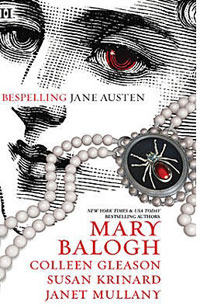 The scene she read was entertaining, so I’ll be interested to see how Mullany fares adding a paranormal twist to a modern retelling of Emma, which is the theme of a novella called “Little to Hex Her” that she’s contributed to a new anthology of supernatural-tinged, Austen-inspired stories called Bespelling Jane Austen. To celebrate its publication, Harlequin and Diesel eBook Store have launched a genre mash-up contest (watch out for the automatic audio file) where contestants take the plot summaries for novels like Whisper of Scandal and The Bride’s Bodyguard and load them up with monsters.
Each day the contest runs, Harlequin and Diesel will pick one semi-finalist to be featured on Diesel’s Facebook page; those fifteen entries will then be narrowed down to six by a jury that includes yours truly and Sarah Wendell of Smart Bitches, Trashy Books—and those six entries will be read in front of a live audience at a “mash-up meet-up” at The Brickyard (785 9th Avenue) on Thursday, October 28, which I’ll be emceeing. (The ultimate grand prize: The winner’s choice of a Kobo or Nook reader, both of which, non-coincidentally, Diesel has ebooks ready for you to purchase.) See the contest page for full details, and if you decide to come to the party, be sure to say hello!
7 October 2010 | events |
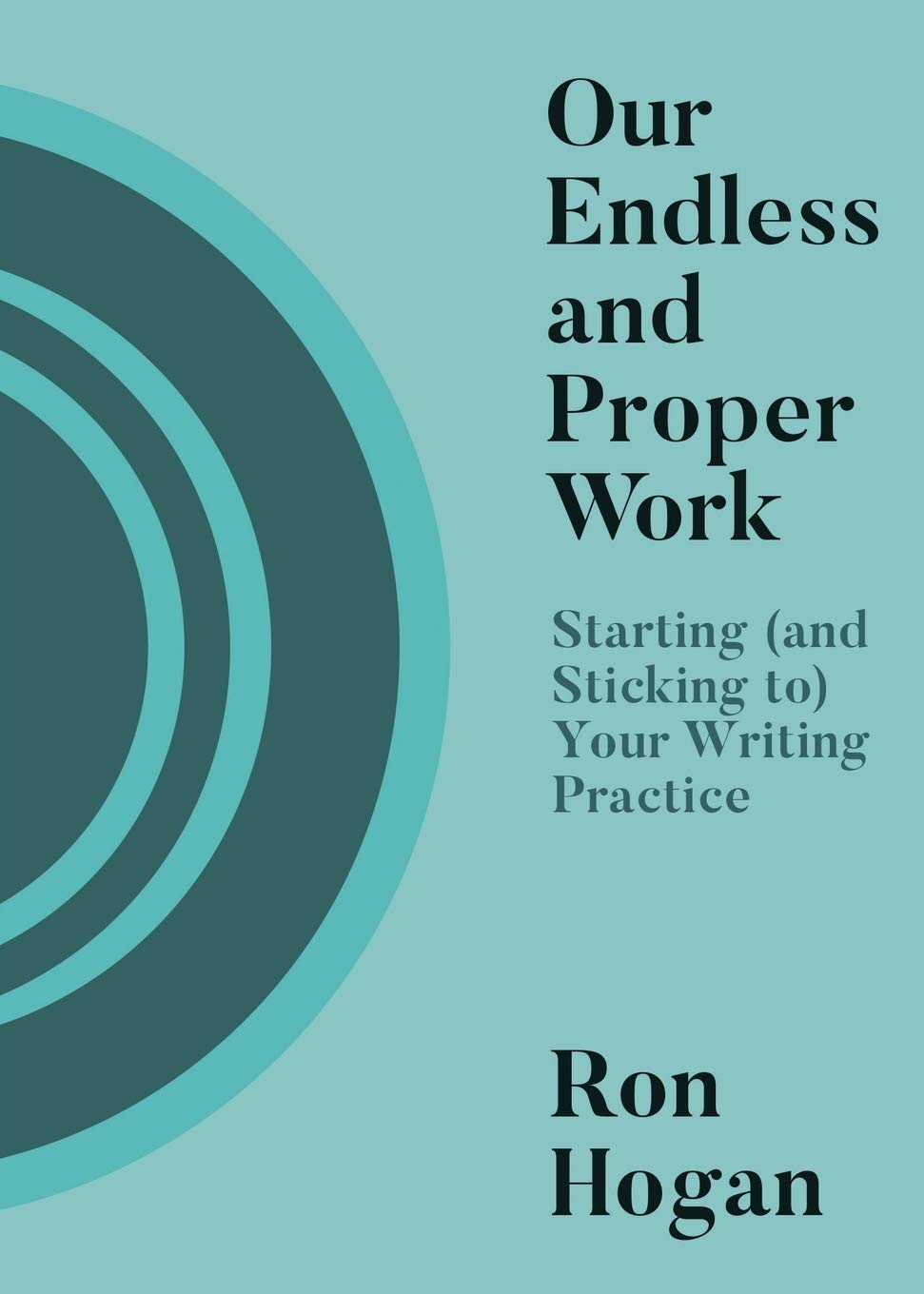 Our Endless and Proper Work is my new book with Belt Publishing about starting (and sticking to) a productive writing practice.