Ignore NaNoWriMo Scoffers & Keep Writing
A little over five years ago, John Scalzi observed that “the seven most damaging words in the English language for the reputation of any novelist might very well be ‘I just wrote an article for Salon.'” The same might be said of its regular “literary” columnists, whose own contributions to the site’s status as, in Scalzi’s words, “that miasmic hole of self-regard” is not insignificant. Two nights ago, for example, Laura Miller belittled National Novel Writing Month along with just about every aspiring writer who participates in it:
“Nothing about NaNoWriMo suggests that it’s likely to produce more novels I’d want to read… The last thing the world needs is more bad books. But even if every one of these 30-day novelists prudently slipped his or her manuscript into a drawer, all the time, energy and resources that go into the enterprise strike me as misplaced.”
Miller goes on to describe NaNoWriMo as a particularly nasty symptom of what she calls “the narcissistic commerce of writing,” which is basically her way of saying she heard secondhand about some people who said they wanted to write books but didn’t actually read much. She then remarks that “there are already more than enough novels out there—more than those of us who still read novels could ever get around to poking our noses into, even when it’s our job to do so.” Now, she’ll grant you that there’s some value to continuing to write books, even if we already have plenty to read, because her favorite authors might come up with something new; heck, she’s even willing to concede that somebody she’s never heard of before might be able to write a book she would like. It’s just that NaNoWriMo probably isn’t going to produce anything like that, so what’s the point, really?
4 November 2010 | theory |
Ben Greenman Revisits Chekhov’s Barber
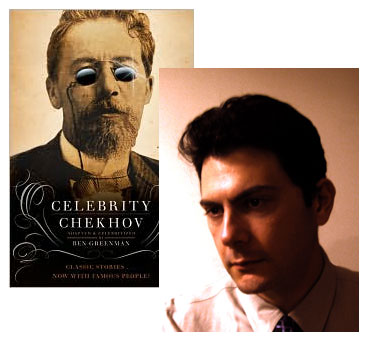
I’m a big fan of Ben Greenman, and I’ve been trying to get him to do a guest essay for the “Selling Shorts” series for a while. The arrival of his latest short story collection, Celebrity Chekhov, gives us the perfect opportunity. It’s a book with a fantastic, near-Barthelmian “gimmick”: Ben takes twenty-some stories by Anton Chekhov, removes the original characters, and replaces them with contemporary celebrities. (In the story he’s about to discuss, for example, the customer has become Billy Ray Cyrus.) The stories take on new meaning when readers invest them with their acquired attitudes towards the famous personages who’ve been added into the mix—but their original impact is not lost, as Ben explains while telling us about one of his favorites.
Chekhov is one of a handful of short-story writers who I come back to time and time again: the others include Mary Robison, Stanley Elkin, Jorge Luis Borges, Ernest Hemingway, and Joy Williams. It’s not a long list, this set of regular destinations. There are dozens upon dozens of short-story writers I love, obviously,and nearly as many novelists, and I don’t mean any direspect to anyone else. What I mean, I think, is a certain specific kind of respect to these writers. There’s something in their work that I love stealing. For some of them, it’s the way they kick off their first paragraph. For some, it’s the way they draw characters. For some, it’s the way they manage dialogue. For some, it’s the rhythm, or the boldness of their language, or the clarity of their ideas.
Chekhov is one of a handful of short-story writers who I come back to time and time again. This time, I came back to him holding a stick of dynamite, like in a Warner Bros. cartoon. Celebrity Chekhov comes after a series of books that people/critics have read as serious works of straight-faced literature, and because this one isn’t like the others, people are eager to classify it as humor. It isn’t, except in the sense that the original stories are. Sometimes, of course, Chekhov’s original stories were sad, and in those cases I tried to preserve the melancholy, or moral agony. Just as often, though, the originals are comic, perfectly assembled little clockworks of human folly.
Take “At the Barber’s,” an early Chekhov story and one of my favorites. It’s just a touch over 1,200 words, and relates two brief conversations that, between them, take maybe ten minutes. There is only one setting, the barbershop of the title, and only two characters: a young barber and an older customer, both men. But from that potentially claustrophobic formula Chekhov manages to produce a universal tale of hope, greed, and pride. It’s important to add that it’s also an entertainment: the ethical points are made, and made clearly, but the piece never sacrifices its sense of briskness or absurdity.
3 November 2010 | selling shorts |
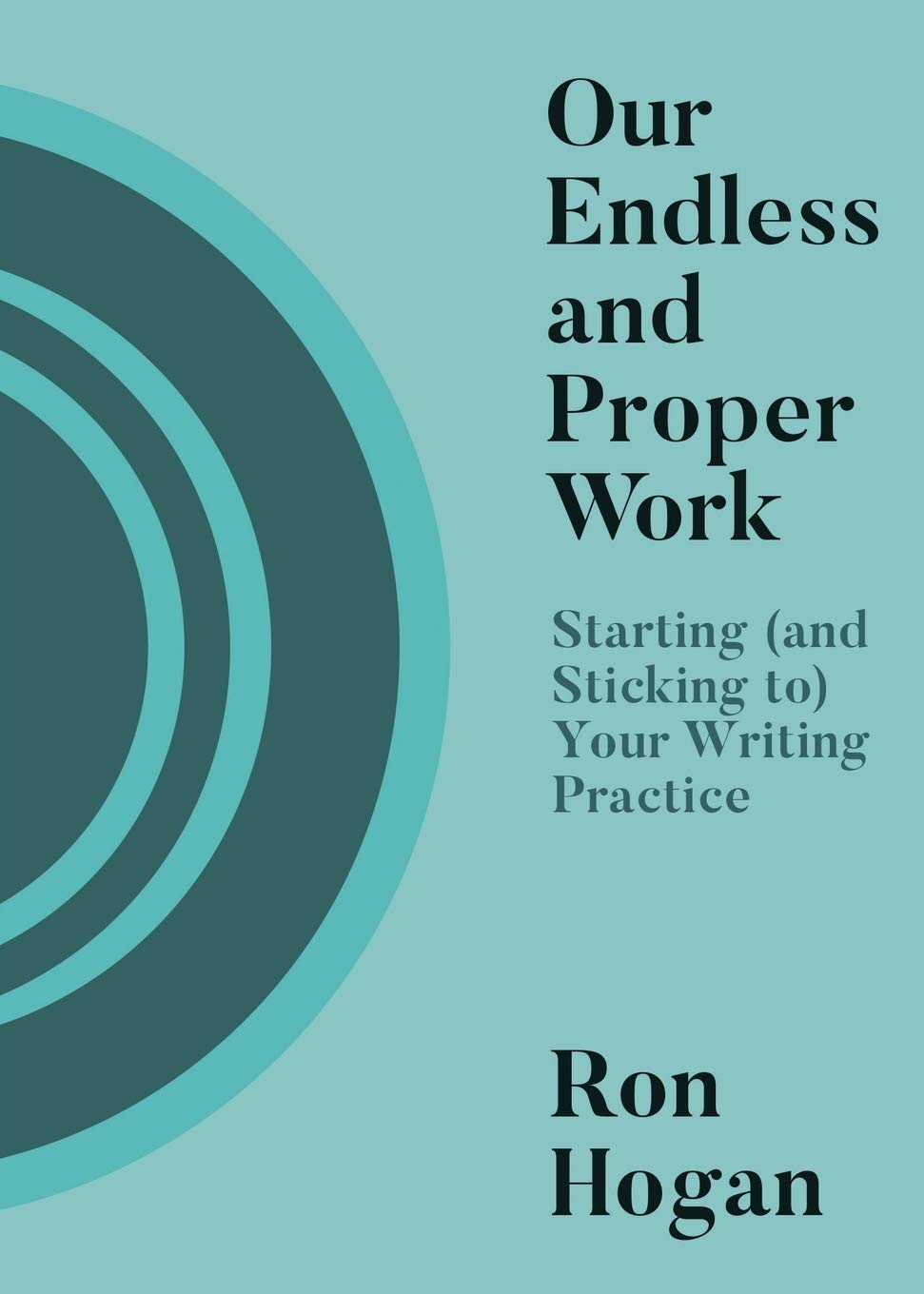 Our Endless and Proper Work is my new book with Belt Publishing about starting (and sticking to) a productive writing practice.