
More Thoughts on Amazon’s Bad Book Problem
Some follow-up thoughts to my recent “We Are All Book Banners Now” post, occasioned by an interview with GalleyCat I did Monday morning…
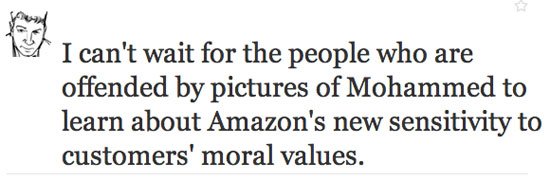
As several observers predicted, when Amazon appeared to cave in to consumer demands to remove That Book, it emboldened people to demand more items be pulled from Amazon’s inventory, and not just books and videos considered in the same territory as the original offender. Now PETA has gotten into the act, issuing an open letter to Jeff Bezos and asking him to remove books about dogfighting. Frankly, I don’t see any reason why devout Muslims shouldn’t take this opportunity to petition Amazon to stop selling books that contain pictures of the prophet Mohammed, or even novels that feature him as a character, if we’re all serious about taking widely held cultural values seriously enough that we would ask bookstores to willingly help suppress books that contradict those values as a contribution to the public good.
16 November 2010 | theory |
Tiphanie Yanique: The Tone of “Near-Extinct Birds”
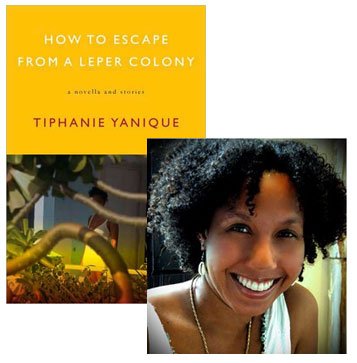
Tonight, Tiphanie Yanique will be honored by the National Book Foundation as one of the “5 Under 35,” their annual tribute to a select group of promising young writers. She’s being recognized for the strength of How to Escape a Leper Colony, a fantastic collection of short stories that have already earned her an award from the Rona Jaffe Foundation as well. The breadth of Yanique’s storytelling is quite impressive—be sure to read the novella “The International House of Coffins,” which takes one encounter between three people and spins it in three very different directions—and, as she explains in this guest essay, that’s a quality that she consciously strived for. Don’t just take my word for it, though: You can read the title story, which won the Boston Review fiction prize, and if you like that, pick up the book and try the rest.
I love Ben Fountain’s Brief Encounters with Che Guevera for many reasons, but in particular because of something his collection does that many collections just don’t do: range. Range is one of the things I think a story collection can do more easily than a novel, and yet it’s something that collections often refrain from attempting. When a collection does attempt range often reviewers and readers just don’t know what to do with it.
By range, I mean that each story in a collection attempts something different. Fountain’s title story is mostly realist, about an Ameircan kid working in furniture delivery. Another story, “Fantasy for Eleven Fingers,” about a piano savant with an extra finger, is filled with fancy. Some stories are from inside of a culture as with “Bouki and the Cocaine,” told from the perspective of Haitian fisherman, and others are from the outside looking in, as with “Rêve Haitien,” told from the perspective of an American expat in Haiti. The stories are set in the Caribbean, South America, North America, Asia, Europe and Africa. While most of the stories are from the male perspective, there are standouts from women characters. Most of the stories are third person and from a white American perspective, but not all. This range is something I attempt in How to Escape from a Leper Colony in part because Fountain’s collection allowed me to know it could be successful. I didn’t realize how perilous this might be.
15 November 2010 | selling shorts |
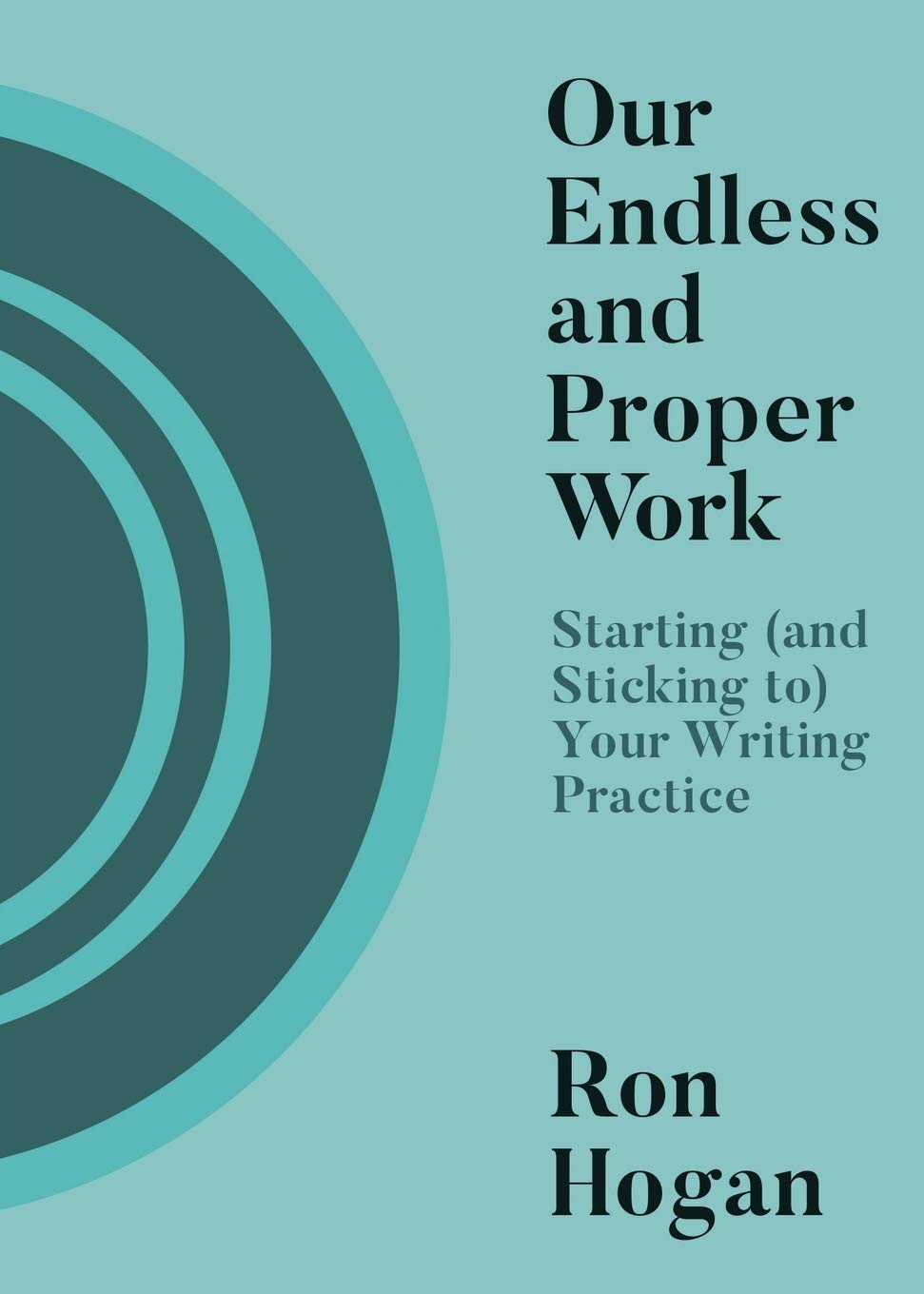 Our Endless and Proper Work is my new book with Belt Publishing about starting (and sticking to) a productive writing practice.