Get Ready to Read This: A Moment in the Sun
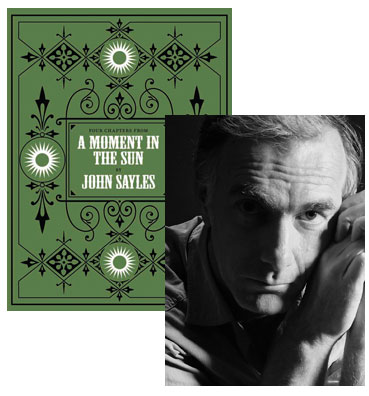 Nearly two years ago, I did an interview with the Los Angeles Times about an unsold John Sayles novel about late 19th-century America, which was then called Some Time in the Sun—Given that Sayles was already a well-respected fiction writer, in addition to his film career, the question they had for me was: Why weren’t New York’s top publishers interested? Although I only had one direct quote in the final story (“You’d think there would be some editor who’d be proud to say, ‘I brought the new John Sayles novel to this house'”), some of the things I said to the reporter came though in other subtle ways, like the notion that “the real challenge in selling a quality title now is not getting an editor to say yes, but overcoming the many ways a skeptical house can say no.” And the fact that Sayles’ manuscript was about 1,000 pages long seemed like an easy reason for editors at the most commercial houses to stop the conversation, no matter how much they might like the story on its literary merits.
At the time, I suggested to the reporter that Sayles should forget the plan he and his agent, Anthony Amove, were trying to execute—”land a deal with a deep-pockets publisher who can promote the sprawling, epic tale about racism and the dawn of U.S. imperialism,” as the Times put it—and start talking to smaller, independent literary houses that would be willing to pour the majority of their passion and their energy into publishing such a novel. So here we are in 2011, and A Moment in the Sun (maybe not a great title, but a better title, at any rate) will be arriving in May from McSweeney’s Books. “We were swimming against the stream trying to place a novel of this scope,” Amove told the Wall Street Journal recently. And though this means Sayles collected a smaller advance, and will fewer marketing dollars allocated, than if the novel had been placed at one of the bigger publishers, McSweeney’s still has significant plans for the book, including a 24-city book tour.
I have a two-volume galley of A Moment in the Sun, which I’m looking forward to reading this spring. After all, the last 1,000-page novel I read from McSweeney’s was Adam Levin’s The Instructions, and I hope we all remember how much I loved that book…
1 March 2011 | read this |
Mike Sacks and His Naked Admiration
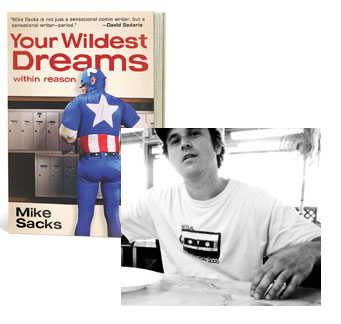
There’s a copy of Mike Sacks’ Your Wildest Dreams, Within Reason somewere in this apartment, and if I could track it down I would quote for you verbatim from the piece within it that had me laughing out loud on the 7 train, especially since it was about the 7 train, at least glancingly. Oh, wait, that particular joke is online: “Kama Sutra: The Corrections.” (Note: Totally NSFW, which made reading it on a rush-hour subway train a bit of a challenge; eventually, I flipped back to “The Rejection of Anne Frank,” which Sacks co-wrote with Teddy Wayne; it’s actually probably even more outrageous, but at least not visually so.) And then there’s “IKEA Instructions,” which just flat out reduces both me and my wife to tears of laughter… Anyway, suffice to say Mike Sacks is my type of humor, and in this essay, Sacks pays tribute to one of his favorite humorists.
David Sedaris is always mentioned by both readers and writers as being one of their favorite humorists, and for good reason. Technically, I find him one of the best writers currently working, in humor or any other genre. All of his books are top-notch, but for the sake of this mini-essay, I’m going to mostly concentrate on his 1996 book Naked. And I’m going to talk about two things that impress me about his writing: his endings and his dialogue.
First, endings. Sedaris is a master at creating endings that end on just that perfect note of pathos and optimism (not an easy combination). This ending is from his story “Ashes,†a beautiful piece about the loss of his mother:
“Our mother was back in her room and very much alive, probably watching a detective program on television. Maybe that was her light in the window, her figure stepping out onto the patio to light a cigarette. We told ourselves she probably wanted to be left alone, that’s how stoned we were. We’d think of this later, each in our own separate way. I myself tend to dwell on the stupidity of pacing a cemetery while she sat, frightened and alone, staring at the tip of her cigarette and envisioning her self, clearly now, in ashes.â€
I don’t know many writers, in any genre, who can end a story on such a darkly poetic note without sounding maudlin.
28 February 2011 | selling shorts |
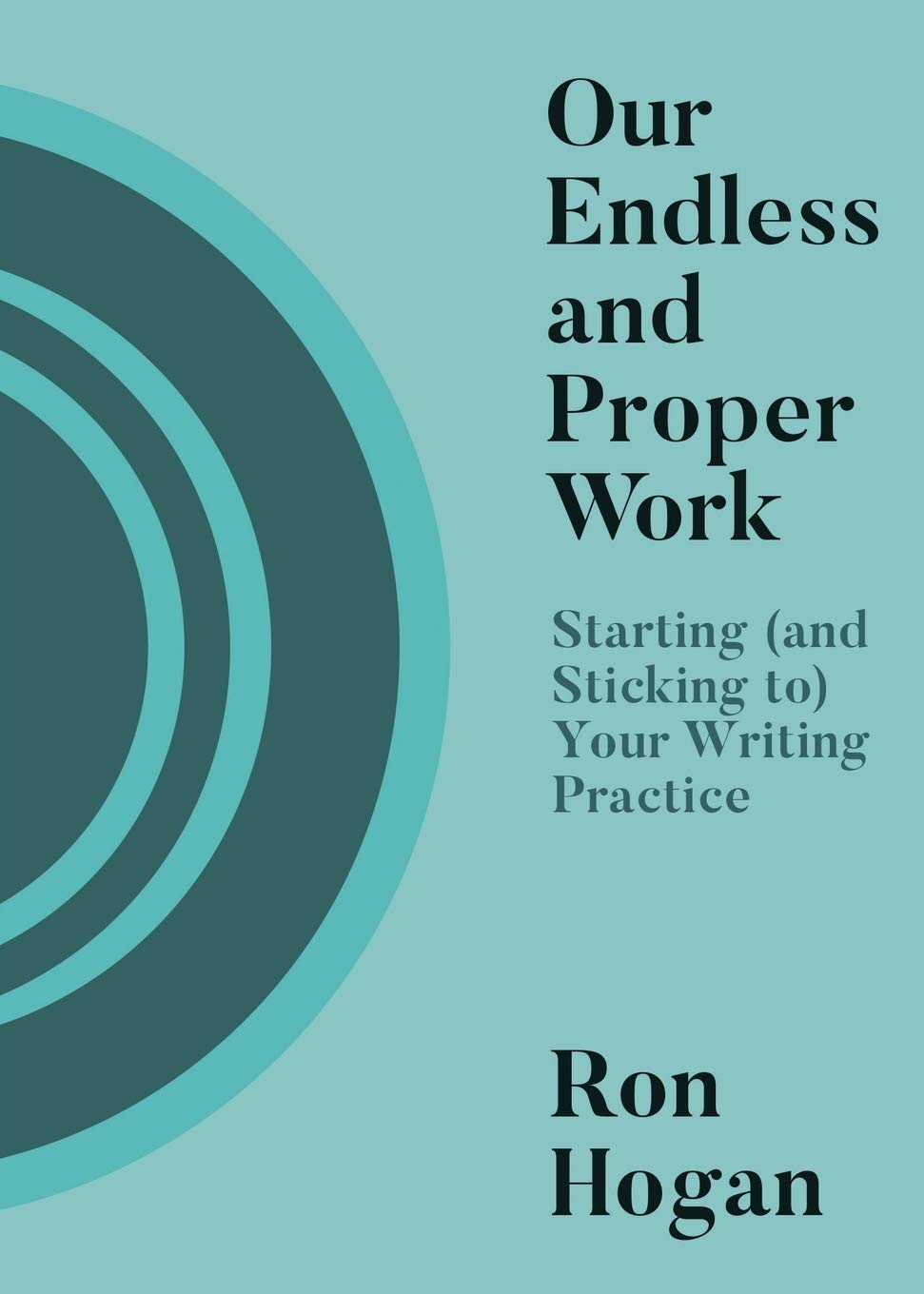 Our Endless and Proper Work is my new book with Belt Publishing about starting (and sticking to) a productive writing practice.