Civil War Book Club: Adam Goodheart’s 1861
When you get off the train in downtown Richmond, Virginia, you’re just a half-block from the site of that city’s former slave market; reading the plaque that explained this bit of local history, and looking across Main Street at the Slavery Reconciliation Statue, I was forcibly reminded of one of the main reasons I wanted to start the Civil War Book Club—While I may know quite a few things about the Civil War, there’s still much of it I don’t fully understand. The 150th anniversary, which began last week, is a good opportunity to expose myself to this history, and hopefully to share it with others.
I had come to Richmond to meet Adam Goodheart, the author of 1861: The Civil War Awakening, a book that does a fantastic job of exploring how the months after the presidential election of 1860, and the early months of the war, were not a simple matter of “North against South,” but a personal crisis of conscience for every American citizen: Where did our loyalties lie? What did we hold most dear about our nation? Were we willing to fight for it? Adam and I came to Fountain Bookstore to talk about these volatile months for a small but appreciative audience. In the clip above, you’ll hear him read for about fifteen minutes from his account of the last moments in the Confederate assault on the troops stationed at Fort Sumter.
20 April 2011 | civil war 150, interviews |
Read This: The Great Night
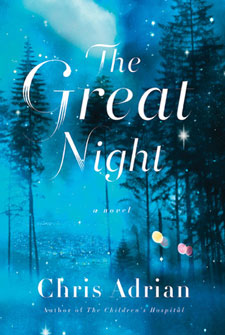 In my latest Shelf Awareness review, I tackle The Great Night, the new novel from Chris Adrian, which expands upon “A Tiny Feast,” his New Yorker short story about Oberon and Titania, the fairy king and queen, in the modern world, with a changeling boy being treated for leukemia. The novel begins a year or so after that story—their marriage has been torn apart by grief over the child’s death, and Puck has seized an opportunity to take revenge upon the entire fairy court, which in this day and age is located in the middle of San Francisco’s Buena Vista Park. You will not be surprised to learn that a small number of mortals get caught up in these events.
The plot’s structure is loosely borrowed from A Midsummer Night’s Dream, though Adrian uses Shakespeare less as a template than as a springboard. About the most “faithful” transposition is the Bottom subplot, re-imagined as a troupe of homeless men and women who are corralled by their leader, Huff, into performing a musical version of Soylent Green. (Huff is acutely paranoid, and has his reasons for believing this is political theater.) Otherwise, Adrian spins the story in directions of his own choosing—leaving several clues to the subtle connections between his three primary human characters. I read The Great Night through the prism of literary fantasy, and in that frame of mind I quite enjoyed it: A bit slow in spots, and anticlimactic, but still quite a good story.
19 April 2011 | read this |
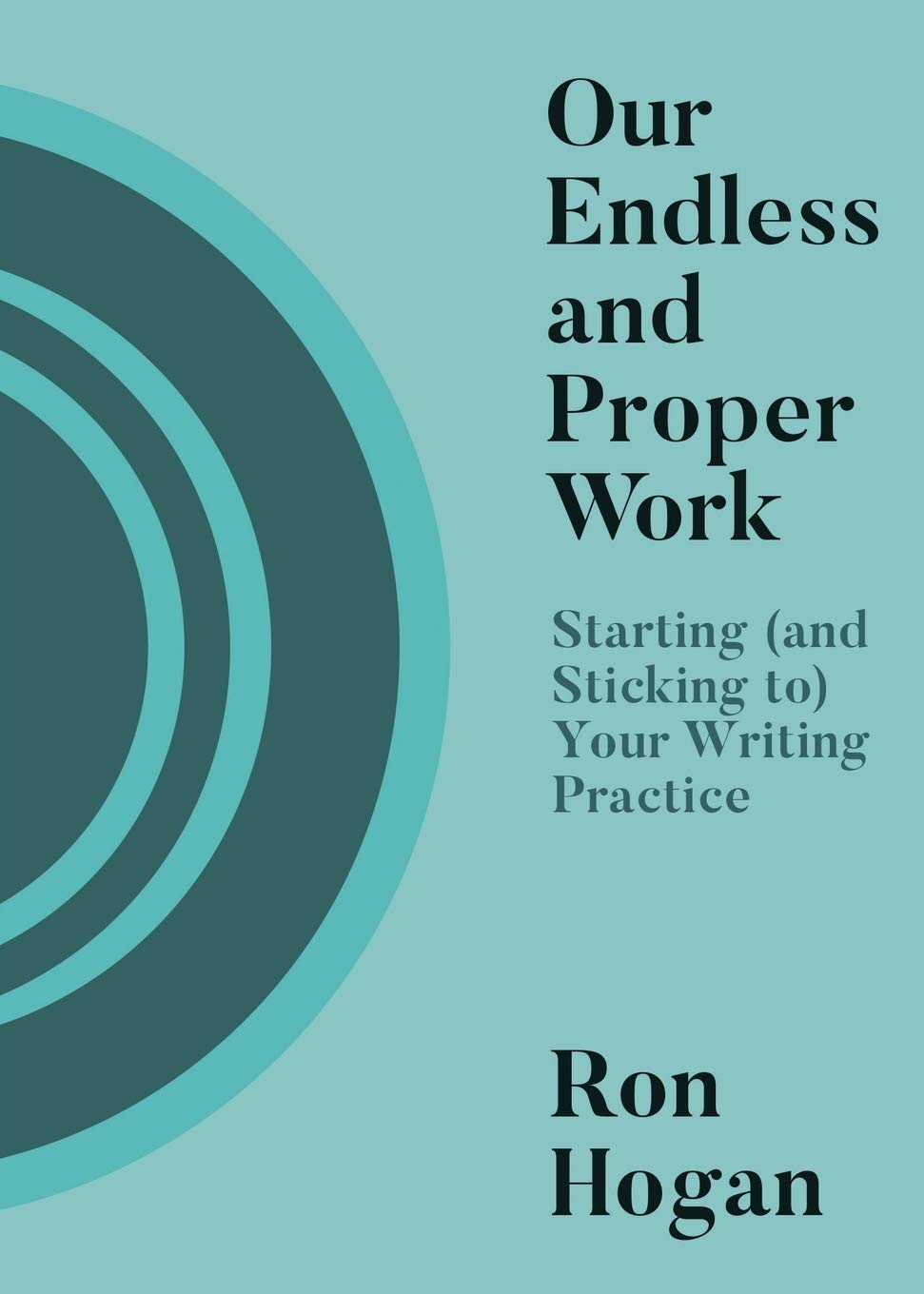 Our Endless and Proper Work is my new book with Belt Publishing about starting (and sticking to) a productive writing practice.