
David Rivard, “How Else to Say It”
And the guilt that must be got rid of
all one’s life
how does my neighbor feel about that?
these appearing but feckless days
vain or proud
with riverine lavender & lupine in hand
a true lion of Judah is what
he is
while waiting for a light snow cover
and insulin
there’s slush on his G-Unit sneakers
muffin crumbs on his scarf
an aging incendiary
cosmopolitan but unfussy
back from an early morning Mass
and Holy Communion.How else to say it
except that it’s not such a bad way to make a living
bringing home
some sign as unshakeable as ashes
on this particular Ash Wednesday’s forehead
the quiet clear reminder of a smudged thumbprint
above his eyes
but in those eyes
a shine like the feeling inexplicable
to anyone lacking the sweet understanding
of a dog in boyhood
that to pee against the mossed bark of Juniper pine
is to be real in your soul.
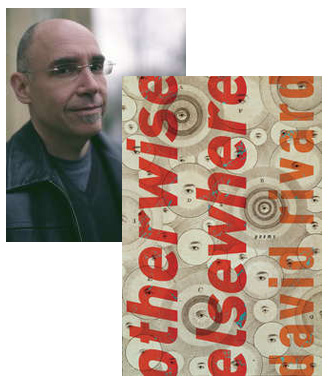
Otherwise Elsewhere is the fifth collection of poems by David Rivard. You can read “Forehead” and “Lives” at Rivard’s website; the Academy of American Poets has “Plural Happiness.” The collection also includes “Townie Gossip (Since You Asked)” (AGNI Online)” and, of course, “Otherwise Elsewhere” (although the version published in American Poetry Review is markedly different than the one in the book). And the literary website Numéro Cinq posted four more poems.
“What I’ve always been interested in is moods—my own and the world’s,” Rivard said in a 2006 interview, “and, often, that is about as close to subject matter as I can get now. And anyway, our emotional lives are so complicated, rich, and full of illusions and blind spots. So the purpose of writing a poem in some ways is to be surprised by discovering this thing that you didn’t know about yourself or the world. In that case, the stories you tell yourself are the least interesting thing about you. And almost always untrue. Or not true enough.”
19 May 2011 | poetry |
Read This: Embassytown
 I had another review in Shelf Awareness yesterday, looking at the new China Miéville novel, Embassytown. It’s his first “hard” science fiction novel, with aliens and spaceships and everything, but it’s still chock full of his concern with politics and philosophy—in fact, the emphasis in Embassytown on alien linguistics brings philosophical concerns right into the foreground, but without losing any of the story’s dramatic tension.
The novel takes place on a colonial world where the humans have, after much difficulty, established a relationship with “the Hosts,” a race whose language (called “Language”) is only capable of containing true statements. They can’t even use a simile unless there is an actual referent; Avice, the protagonist, was recruited as a child to act out the part of “the girl who ate what was given to her.” As an adult, returning to her hometown, she reluctantly falls in with a group of other similes, at a time when the Hosts are playing with the idea of learning how to lie, which leads into one of the major tensions that sets the Embassytown crisis in motion. Not many science fiction novels are built around linguistics, so the good ones that do exist, like Jack Vance’s The Languages of Pao, and Suzette Haden Elgin’s Native Tongue, tend to stand out, and Embassytown is no exception. As I wrote in my review, “If you had to find a writer who could infuse the creation of demonstrative pronouns with dramatic power, China Miéville would be one of the top candidates.” There’s another powerful grammar shift in the novel as well… but I want you to discover that surprise for yourself.
18 May 2011 | read this |
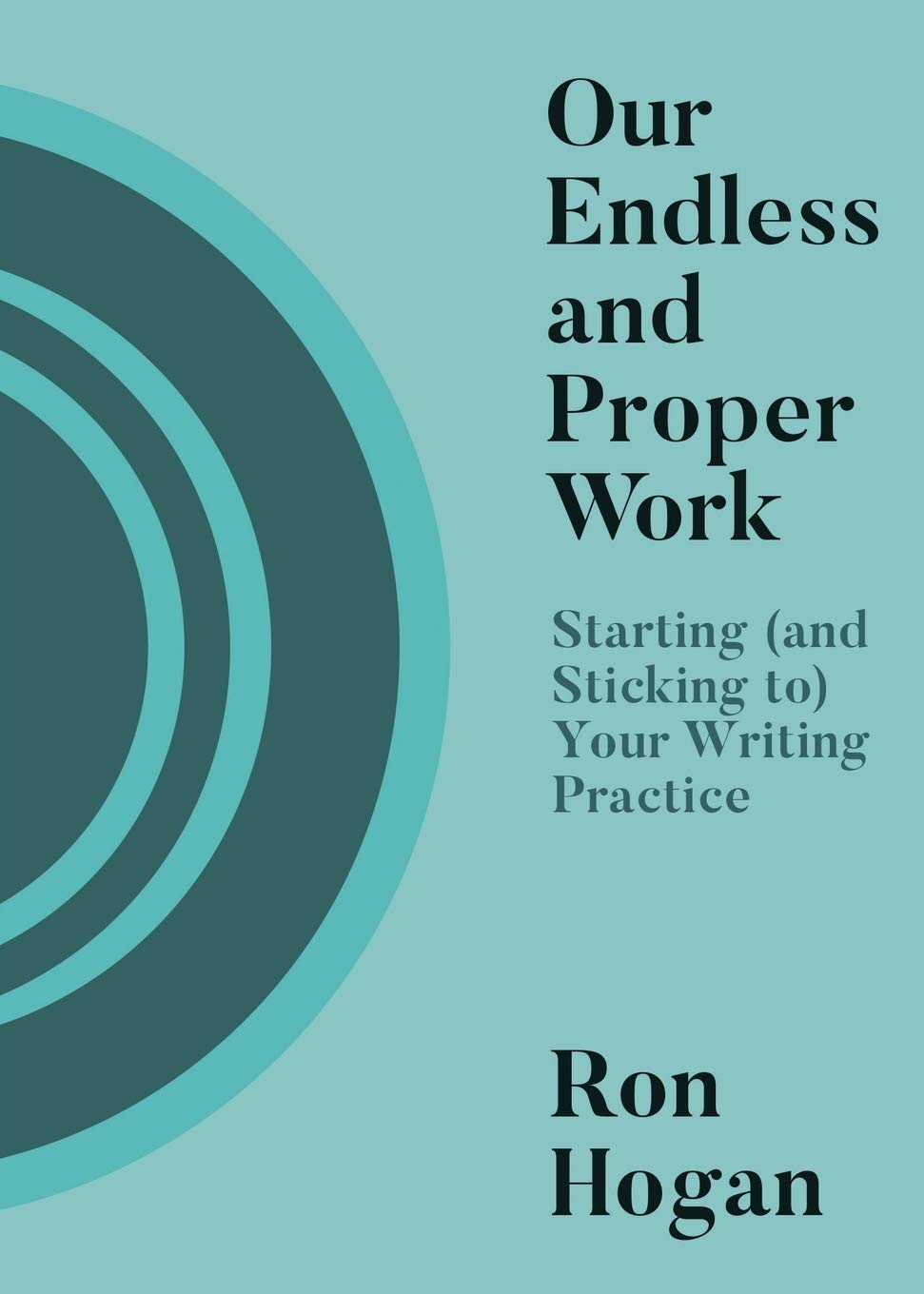 Our Endless and Proper Work is my new book with Belt Publishing about starting (and sticking to) a productive writing practice.