I’m Making Notes in My Ebooks. Come See!
 I recently began consulting with the developers of Subtext, an iPad app that enables readers to annotate Google Books—or any other ebooks formatted with Adobe DRM, such as Kobo—and then share those annotations with their friends who also have the app, or with the entire network. When Subtext launched last month, they had several books pre-annotated by the authors themselves, including Lev Grossman’s The Magician King and Frances Mayes’ Under the Tuscan Sun. David Ulin shares his thoughts on Nathanael West’s Miss Lonelyhearts, and while George R.R. Martin himself was unavailable, editors of some of the leading Song of Ice and Fire fan sites provide expert commentary on A Game of Thrones. My role is to focus on introducing even more authors and publishers to Subtext and encourage them to get involved, not just as a way to enhance their ebooks but to make real connections with readers through the dialogues that these marginal notes can spark. As the PaidContent article on the app’s launch suggested, “Here’s how social reading might actually work.”
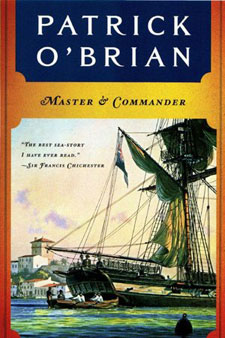 After taking the app out for a test spin with The Magician King—replying to some of Lev’s notes, and adding some of my own—I decided to take advantage of the recent release of Patrick O’Brian’s novels about Jack Aubrey and Stephen Maturin in their first electronic editions to embark on a huge annotating spree. So, starting with Master and Commander, I’m going to try to annotate one book a month until I’ve reread my way through the entire series. Here’s what it looks like in-device:
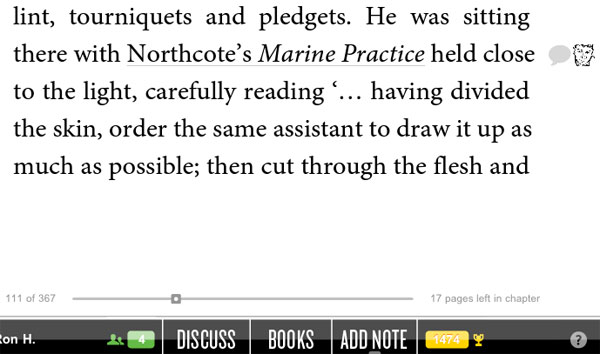
I’m not explaining every one of the sails on the great ships—there’s charts at the beginning of the book for that!—but every time I run across a historical reference I don’t quite get, I look it up, and I share what I find out. And when I come across a passage I particularly like, I talk a little bit about why. (And I do love O’Brian’s language so—an amazing blend of 19th-century voice with modernist innovations like stream of consciousness and cinematic jump cuts.) I’m also a big fan of the way that I can insert images or audio/video files into my annotations, so if an actual historical personage like Lord Keith makes an appearance, I can call up his Wikipedia portrait.
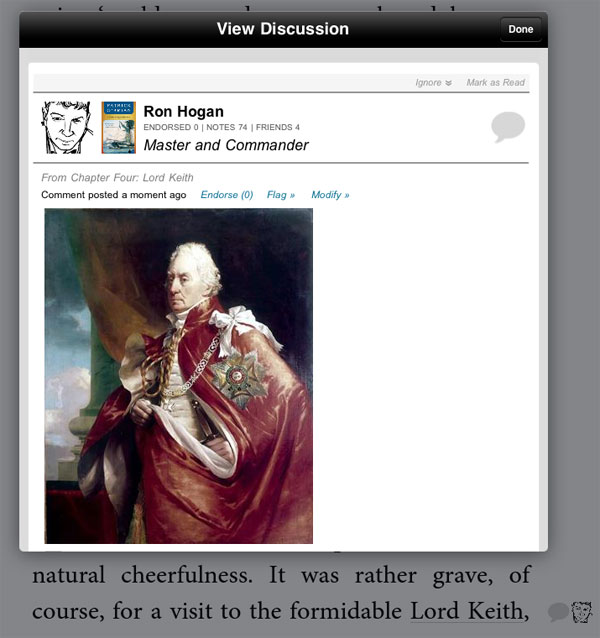
(W.W. Norton isn’t involved in this project in any way—it’s just something I’m doing because I love the books, and I want to show people Subtext’s fantastic potential.)
If you have an iPad, I encourage you to download the free Subtext app and start using it. Come hang out in the pages of Master and Commander; if you become my friend, you’ll find out whenever I start annotating another book. If you own that book, too, you can read my notes for free—and just as in most online bookstores, you get to read a sample before you commit to buying your own copy of the book. Oh, and if you’re an author or a publisher, and you think this is something you’d like to get involved with, get in touch with me, and I can put you in touch with the folks at Subtext to discuss ways to promote any books you begin annotating. And on that note, I’m hitting the books again…
16 December 2011 | uncategorized |
Book Culture, Social Media, & Monetization
Over the last few weeks, there have been some provocative discussions about people using social media (and other online tools) to monetize literary culture. The debate basically kicked off because of FridayReads, which started out about a year and a half ago as a fun hashtag meme that my friend Bethanne Patrick came up with. Simple premise: If you’re on Twitter on Friday, take a moment to tell people about the book you’re reading, and include a “#fridayreads” in the tweet so it’s easy for people to find in a search. It took time to build traction, but gradually it got to the point where thousands of people are participating each week.
At some point, Bethanne saw the base audience that had grown around the hashtag, and hit upon the idea of getting publishers to pay her to promote books to that audience. With our mutual friend Erin Cox as sales director, FridayReads began running publisher-supported giveaways and author chats. Not everybody knew this was the case, however, and even people who did know about it didn’t necessarily know the extent of the business. This went on until, as I say, a few weeks ago, when Jennifer Weiner called attention to FridayRead’s paid promotions, and one position that emerged from the hue and cry that followed was, in essence, that any reader participating in FridayReads was feeding Bethanne’s marketing machine, rather than supporting an organic book culture.
(It’s worth nothing here that I’m also friends with Jennifer; my respect for people on both sides of this issue enables me to see not just that each has merit, but that each is operating in good faith.)
The short-term solution was easy: Bethanne implemented more overt disclosure practices, making the business nature of FridayReads more apparent. Obviously, that doesn’t comfort people who are outright opposed to people making money off other people’s participation in what they expect to be friendly and non-commercial social media, but short of dismantling the financial operations, little would. To me, the question isn’t so much should Bethanne (or anybody, really) be making money off other people’s willingness to talk about their love of books online, but rather will they do so in as non-exploitative a manner as possible?
On that front, I didn’t have a problem with FridayReads. Once you know about the marketing component, it’s a straightforward proposition: You tell the world what book you’re reading, and there’s a chance—no guarantee—that you might be one of the handful of people who gets a free book. It’s not like Klout, where (as John Scalzi observed, among others) people were told, “Hey, how’d you like a prize for participating in Klout?” and then, when they went to claim that prize, basically told they hadn’t earned it yet. Sheesh.
14 December 2011 | theory |
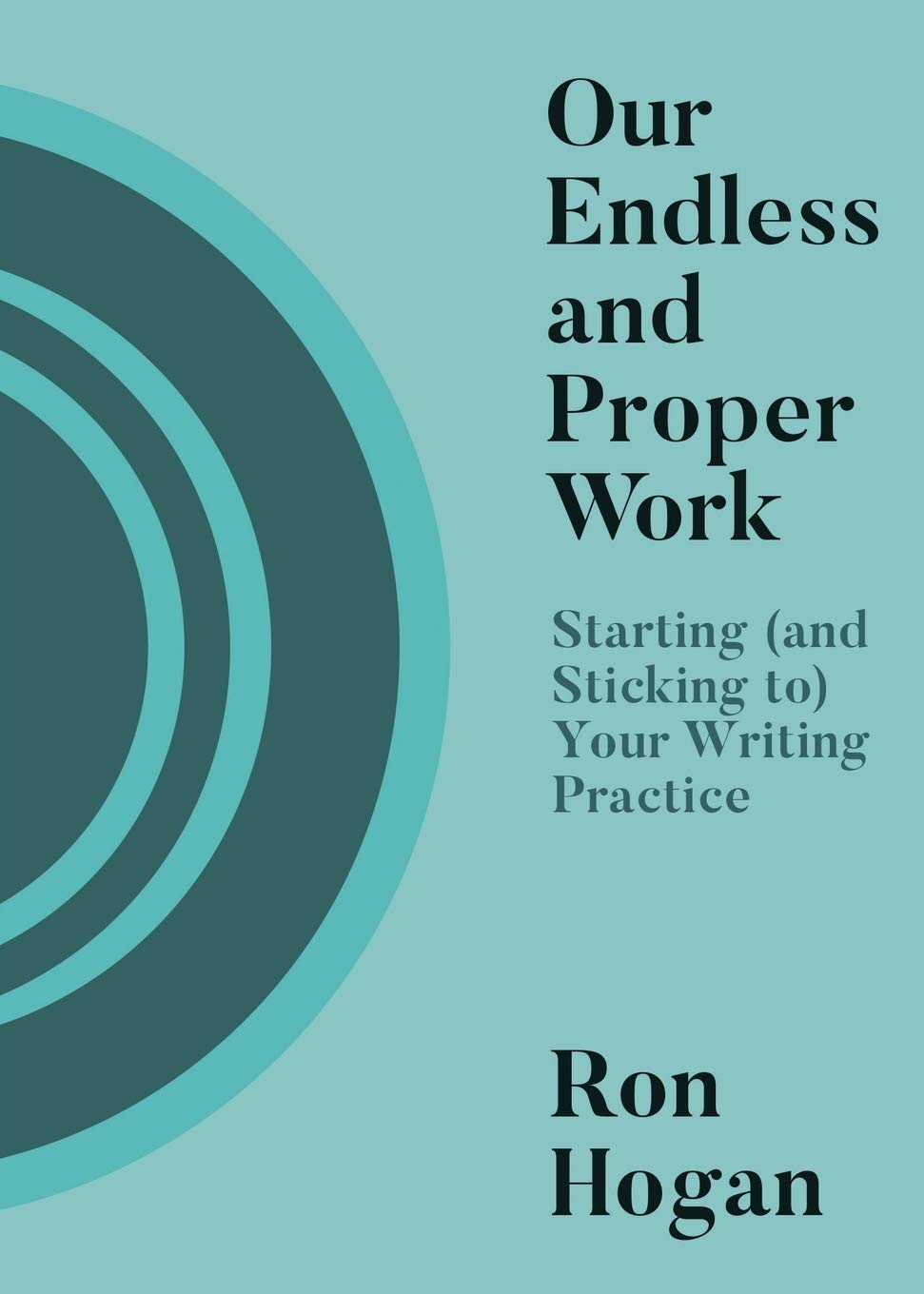 Our Endless and Proper Work is my new book with Belt Publishing about starting (and sticking to) a productive writing practice.