
Read This: Inside and Signs and Wonders

Emma Dodge Hanson
In the summer of 2007, Alix Ohlin wrote a “Selling Shorts” essay for Beatrice, which I mention up front as an acknowledgment that I have subjective reasons for being predisposed to like Ohlin’s fiction. And yet, even though I’d known since early in 2012 that Ohlin was simultaneously publishing a new short story collection, Signs and Wonders, and a new novel, Inside, this summer, I hadn’t cracked either one of them open—with all the other books that I’d taken on a professional obligation to read, they’d gravitated to the stack I set aside for, among other occasions, plane and train rides when I finally have a stretch of time in which to read for undistracted pleasure.
They moved to the top of my must-read pile after I read the New York Times hatchet job on Ohlin, which is not so much a book review as an opportunity for William Giraldi to share his pretentious theories on What Makes for Beautiful Prose Stylings with a large audience. How pretentious? The man namechecks Thoreau and Pound in his opening lines:
“There are two species of novelist: one writes as if the world is a known locale that requires dutiful reporting, the other as if the world has yet to be made. The former enjoys the complacency of the au courant and the lassitude of at-hand language, while the latter believes with Thoreau that ‘this world is but canvas to our imaginations,’ that the only worthy assertion of imagination occurs by way of linguistic originality wed to intellect and emotional verity. You close Don Quixote and Tristram Shandy, Middlemarch and Augie March, and the cosmos takes on a coruscated import it rather lacked before, an ‘eternal and irrepressible freshness,’ in Pound’s apt phrase. His definition of literature is among the best we have: ‘Language charged with meaning.’ How charged was the last novel you read?”
“Emotional verity”? “Coruscated import”? “The lassitude of at-hand language”? Somebody’s clearly getting a lot out of his word-a-day calendars! But let’s revisit those first few words: “There are two species of novelist…” Take away the high-falutin’ vocabulary, and you know what you’ve got? You’ve got a “There’s two types of writers” lead, and anybody who’s going to open with “There’s two types of [anything]” should probably just shut the hell up about “the lassitude of at-hand language.”
Nevertheless, Giraldi continues in this vein, attacking everything about Ohlin’s books up to and including their titles; Inside, for example, is “a forgettable moniker that suggests everything and so means nothing.” Mostly, he’s bothered by what he sees as “an appalling lack of register” in her prose, “language that limps onto the page proudly indifferent to pitch or vigor.” He tosses out plenty of examples, and then adds a curious closing paragraph about the “recent parley, in these pages and elsewhere, about ‘women’s fiction’ and the phallic shadow it has been condemned to live in.” He appears bringing this up expressly to ward off the suggestion that there might be any misogynist angle to his evisceration of Ohlin and “her leaden obsession with pregnancy, dating and divorce.” We’re no anti-feminists here at the Times, the logic runs, we just love the English language, and believe in “the writer’s ‘moral obligation to be intelligent’—in John Erskine’s immortal coinage.” (Note the continued namechecking, along with the “immortal coinage;” as Ezra Pound might say, “Way to keep it new, dude!”)
18 August 2012 | read this |
Lisa Dillman: Finding Me‘s Voice
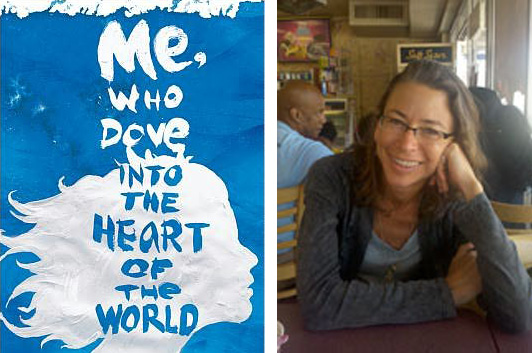
photo via Words Without Borders
Translating a first-person narrator into English from another language can be a challenge under any circumstances, but when that narrator has a non-standard emotional and mental profile like Karen, the autistic protagonist of Sabina Berman’s Me, Who Dove into the Heart of the World, the work gets harder. Lisa Dillman rises to the occasion, though—and, in this guest essay, reminds us that when we think, before we even open a novel, that we know what it and its characters are going to be about, that’s when we’re most likely to be caught off guard by the author’s real plans.
When I first read Me, Who Dove Into The Heart of The World, I became obsessed with the idea of translating it, and a year later I was thrilled to get the opportunity to do so. The novel tells the story of Karen, a highly-functioning-autistic-cum-bluefin-tuna-industry-magnate. She starts the novel as a mute, feral, wild-child eating wet sand in Mazatlán, Mexico and ends up in a Tokyo penthouse surrounded by multiple laptops. In case it’s not immediately apparent, this is a highly unusual novel. And one I fell in love with for multiple reasons.
To begin with, there is Karen’s unique voice. She speaks—and writes—in clipped sentences devoid of “standard human” frippery. Karen is a literalist. When out on a fishing boat with an Italian sailor who claims God gave humans license to kill, she wants to see the license. She lacks inflection and eschews metaphor, euphemism and fantasy, all of which she classifies as lies used by “standard humans” in the name of deceit and self-delusion. Euphemism, for instance, is employed in order to disguise a terrible thing as a good one. Providing a run-down on her classes at college, where she studies animal husbandry, Karen gives us one of numerous examples of human idiocy, informing us that “the methods course on killing… animal species was called Meat Industry.” Throughout the novel, readers get the chance to experience Karen’s forthright, direct way of thinking, seeing and feeling the world, and this proves an excellent way to reconceive of our own “standard” modes of action and interaction through fresh eyes.
17 August 2012 | in translation |
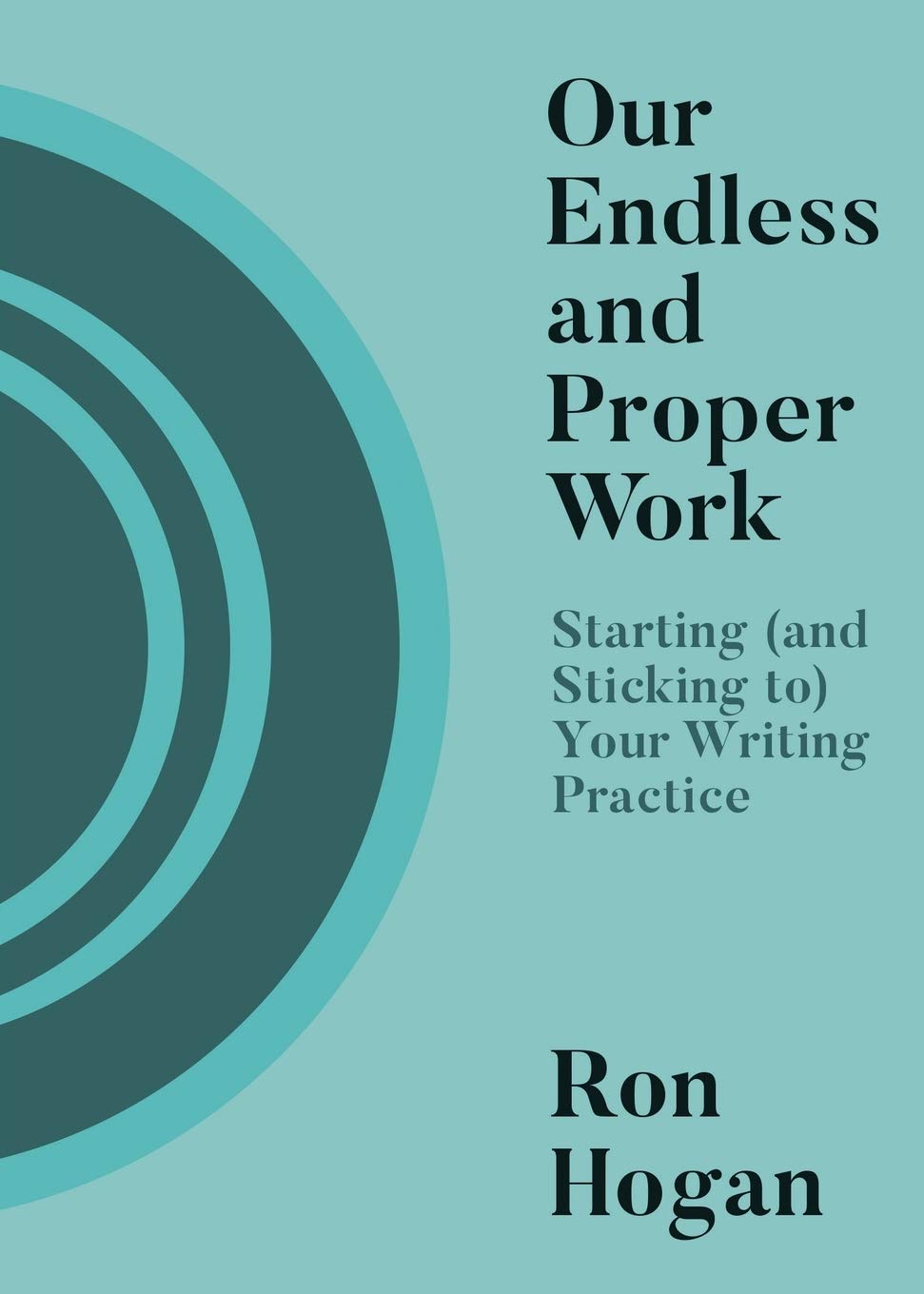 Our Endless and Proper Work is my new book with Belt Publishing about starting (and sticking to) a productive writing practice.