Come Meet Me in Nashville (or New Jersey)
 On Sunday, October 14, I’ll be moderating a panel at this year’s Southern Festival of Books in Nashville, Tennessee. I’m looking forward to chatting with novelists Julianna Baggott and Michael Knight, along with literary publicist Julie Schoerke, for a panel we’re calling “Love It or Hate It? Authors and Social Media.” As we dig into why some authors are embracing the online world and others choose to keep it at a distance, I’m sure we’ll talk about the wrong way to engage readers online, the really wrong way to engage readers online, and whether enthusiastic readers are ruining literary criticism. Among many other topics!
I’m definitely aiming to keep this conversation lively for a general audience, but I’m also hoping that it will deliver a lot of practical advice both for writers and for readers who want to play an active role in an online “literary culture.” And, if you’re at the Festival and following me on Twitter, I’ll very likely be coming up with some sort of incentive to encourage folks to purchase signed copies of Getting Right With Tao after the panel.
The whole weekend of programming looks really great, and I wish I were actually going to be there for all of it. But before I fly down to Nashville, I’ll be doing something just as fun: On Saturday, October 13, I’ll be at the New Jersey Romance Writers conference in Iselin, hosting a special Lady Jane’s Salon program with my fellow co-founder, Hope Tarr. It’s going to feature readings by Mary Jo Putney, Susan Wiggs, May McGoldrick, and Heather Graham—a really fantastic all-star lineup, with several authors I’m excited to be meeting for the first time. This is more of a writers’ conference than a book festival, but if you’re an aspiring romance writer in the tri-state area, they’ve got a bunch of great writers coming to share their expertise, as well as the chance to talk with agents and editors. It should be an excellent learning opportunity.
If you’re at either event, say hello!
8 October 2012 | uncategorized |
Think Before You Answer Your Critics
I recently attended a conference that Digital Book World put on about “discoverability and marketing” for the publishing industry, where one of the speakers was novelist Elle Lothlorien, who was there to discuss her belief that authors should respond to negative online reviews. For Lothlorien, who comes at this with the philosophy that a writer is also a businessperson and a reader is also a customer, this is simply attentive customer service. As she would later explain:
1) You are not responding to negative reader reviews in order to get the reader to alter their review in any way.
2) You are responding to negative reader reviews in order to neutralize the negative feeling the customer has about Business You (often known as “the authorâ€) and Your Product (better known as “your bookâ€).
Lothlorien’s specific advice for authors when they choose to engage people who’ve reviewed their books negatively online includes several sensible guidelines about how to conduct yourself graciously and succinctly—listening, acknowledging, and moving on. It’s a great contrast to the bullying tactics of some insecure authors who actively seek to shame and harass critics on even the least possible slight. It also dovetails neatly with the recent discussions in literary circles about whether critics need to be more critical and what happens when criticism turns ugly.
I thought about her advice earlier this week, when an author took it upon himself to respond to my wife’s criticism of one of his books.
Mrs. Beatrice (which is what I call her in these pages, to protect her privacy) is in a monthly book club; last year, they read a book that totally did not work for her, and she explained why in exacting detail over at Goodreads. There was a solid concept for a book somewhere in there, she thought, but the author did a terrible job of executing that concept.
(I’m not going to tell you who the author is, or what the book is, either, because I want to focus on the underlying principles, not the gossipy bits. I’ll also be paraphrasing as much as possible, and I’d even ask you to refrain from trying to find the answers on Google; again, the point isn’t for you to identify all the players, or to put this author on the spot, but to think about the dynamics involved.)
7 October 2012 | theory |
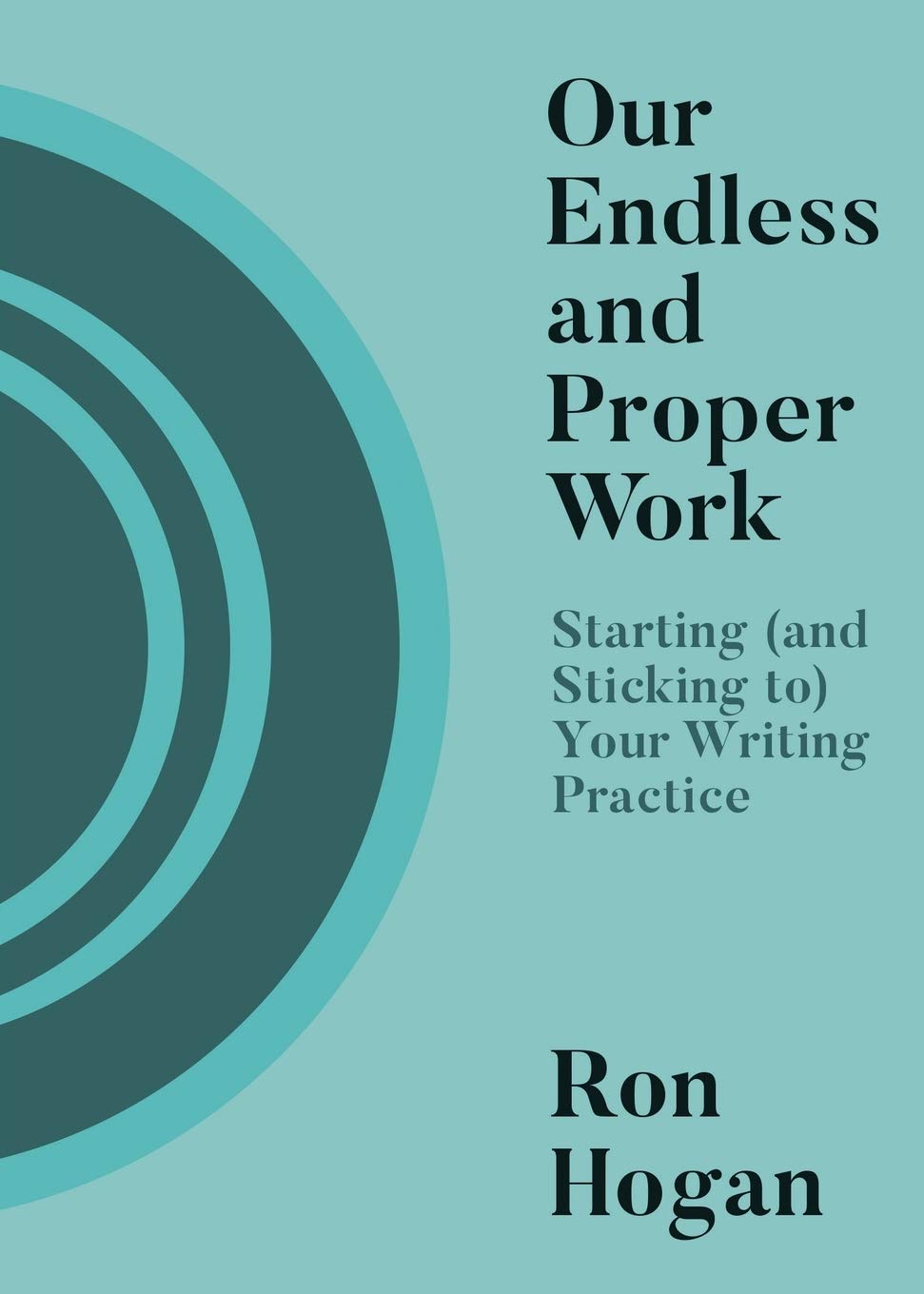 Our Endless and Proper Work is my new book with Belt Publishing about starting (and sticking to) a productive writing practice.