Life Stories #19: David Esterly
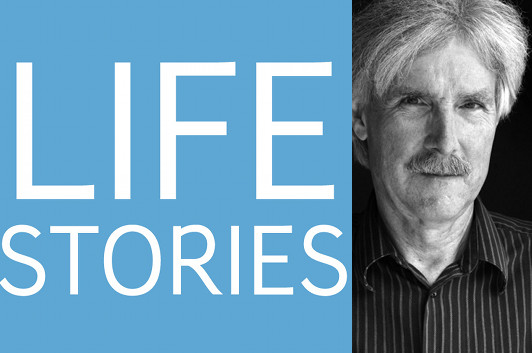
photo: Gentl Hyers
Welcome to the first 2013 episode of Life Stories, the podcast where I talk with memoir writers about their lives and the art of writing memoir. This episode features a conversation with master woodcarver David Esterly about The Lost Carving, which on one level is an account of the year he spent at London’s Hampton Court Palace in the late 1980s, recreating a wall hanging by the late 17th-century carver Grinling Gibbons that was destroyed in a fire. But the memoir is also a meditation on the creative process, a consideration of the sometimes tense relationship between artists and patrons, and an investigation into how Gibbons achieved some of his technical accomplishments.
One of the things that fascinated me about the book, and that I made sure to talk about with Esterly, was that he had not originally set out to become a visual artist, let alone a decorative woodcarver. His first reaction to seeing Gibbons’ work was that he wanted to write about the artist; then, he says, at some point he hit upon the notion that in order to really understand what Gibbons had accomplished artistically, he should try his hand at carving. When we met, decades after that revelatory moment, Esterly had just opened a brief exhibit of some of his most recent work at a Manhattan gallery, so I had an opportunity to see some of his intricately detailed still lives up close—it drove home another point that comes up during this conversation, namely the way that “realism” in art is often achieved through profound artifice…
If you’re at all interested in making a life for yourself in the creative arts, or around whatever creative practice it is that gives you fulfillment, I encourage you to listen to this conversation and to read The Lost Carving.
Listen to Life Stories #19: David Esterly (MP3 file); or download the file by right-clicking (Mac users, option-click).
23 January 2013 | life stories |
Listen to This: How Was Your Week?
 For a while now, I’ve been meaning to talk about one of my favorite podcasts, Julie Klausner’s How Was Your Week? and how it’s helped me sort out my own approach to podcasting. I’ve been a big fan of Julie’s since we met a few years back, shortly before she sold her memoir, I Don’t Care About Your Band, and it’s been kind of cool to see her become increasingly visible in the last year or so—with the podcast, I think, being a significant turning point for her. It’s entirely possible, for example, that you’ve already heard about Julie from the interviews she’s given to outlets like NPR or The New York Times.
How Was Your Week? has two primary components: Julie’s monologues are a showcase for what the Times called “her literate sensibility and affection for showmanship,” an opportunity for her to sit in front of the microphone and riff about whatever’s on her mind. Then, in her interviews, she gets to dig deep into other people’s creative lives. In an article for The A.V. Club, Julie picked some of her favorite episodes; in the context of her conversation with Sharon Needles, she mentions how “there are over-the-top types that are attractive to me, and to be able to connect with them the way that you’d ideally want to be able to connect to any person once they stop performing for you…is something I definitely aspire to.”
That ability to break through public personas is definitely one of Julie’s strengths, but I’m also particularly impressed by episodes where she interviews writers like Alex Stone (Fooling Houdini) or Jon Ronson (The Psychopath Test), because those segments spotlight her intense curiosity and her ability to drill down into a topic, making her presence felt but allowing the interviewee’s expertise to be the focus of our attention.
Because I’ve spent the last year developing my own podcast interview series, I tend to listen to How Was Your Week? with an ear towards what it can teach me about the craft, and I’ve learned a great deal from Julie about becoming more comfortable with yourself “on the air”—there really is a difference between having a one-on-one conversation with another person, and having that same conversation knowing that untold others are going to be listening in. But I’ve also been inspired by the ways the podcast has grown to a point where Julie can do live tapings in performance venues in Brooklyn and San Francisco, and has also put her on the radar of people who can offer her other creative projects. As she told NPR, “I don’t make money doing my podcast. I’ve learned that people want to hire creative people who are already doing something when they approach them.” That’s why one of my goals for 2013 is to raise Life Stories (and the Beatrice ebooks) to a level that will create a space where other creative projects can flourish.
19 January 2013 | listen to this |
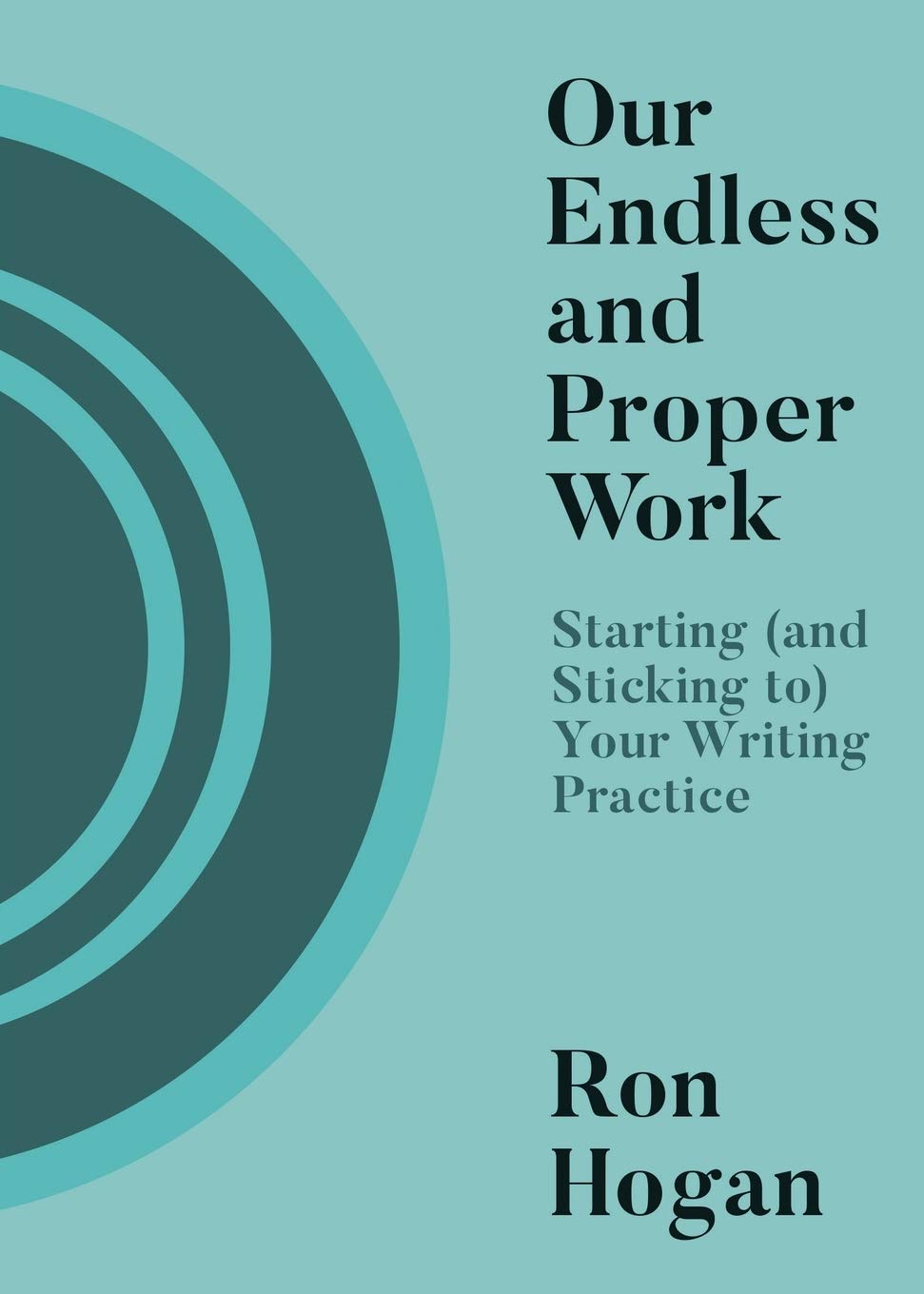 Our Endless and Proper Work is my new book with Belt Publishing about starting (and sticking to) a productive writing practice.