The Writers Who Aren’t Getting Paid
The argument over people writing for online media outlets without compensation has been going on for a long time, but it recently became more pronounced thanks to a highly publicized email exchange between freelance journalist Nate Thayer and an editor at the Atlantic website. TL;DR: She asked if he’d be willing to edit down a piece he published elsewhere so she could run it as an Atlantic blog post—noting, “We unfortunately can’t pay you for it, but we do reach 13 million readers a month”—and he strongly objected to that offer; to paraphrase his subsequent comment to an interviewer, exposure doesn’t pay the bills.
Over the next few days, it’s felt like everybody’s had a response to this incident. Another digital editor at The Atlantic, Alexis Madrigal, sympathizes with Thayer—having been a struggling freelance writer himself—but argues that, right now, the best business model online media’s been able to come up with is one that puts writers at serious disadvantage. “In most cases, even great reported stories will fizzle, not spark,” Madrigal writes, speaking specifically of the traffic those stories generate and the extent to which they sell ads. “They will bring in 1,000 or 3,000 or 5,000 or 10,000 visitors. You’d need thousands of these to make a big site go.” And who can afford to pay for, and publish, thousands of those stories?
“Even a small blog, with one person at the helm, is going to need, say, 100-150 posts a month,” he continues. I think this is debatable, but it’s definitely a model that’s out there for a certain type of news/issue-oriented blog, so let’s go with it. Next, I’m going to toss some numbers out here, rather than the specific numbers he uses: Let’s say a 250-word blog post is worth $40-50, and go up to $100-150 for a longer (500-600 words) piece, of which you’ll run one a day, and we’ll assume 20 publishing days to a typical month. If you relied strictly on freelancers, this could put your monthly editorial budget anywhere between $5200 and $9500—although since you’d be likely to set aside at least one-third of the blogs to be produced in-house, let’s say $3500 to $6300 a month. Can you guarantee your advertisers $6300 worth of visibility each month? And keep in mind: I’m just talking about pieces that are no longer than a typical magazine sidebar or, at most, a one-page article—we haven’t even come close to the longform journalism of which Thayer’s article would have been an example.
Madrigal explains the shortcomings with this model well, and as the conversation gets around to “well, what if we didn’t pay some of the writers?” he offers some justifications, including exposure—later in the week, in a separate Atlantic post, Ta-Nehisi Coates admitted upfront he’d accepted exposure in lieu of cash for his earliest appearances at that blog, and he was upfront about why it worked for him: “I could not convince editors that what I was curious about was worth writing about. Every day I would watch ideas die in my head… What the internet offered was the chance to let all of those ideas compete in the arena, and live and die on the merits. And [The Atlantic] was offering a bigger arena.”
9 March 2013 | theory |
Tom Folsom’s Odyssey in Hopperland
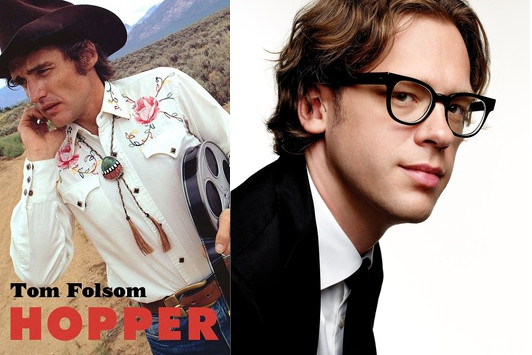
photo via TomFolsom.com
Hopper: A Journey into the American Dream is a new biography of actor/director Dennis Hopper by Tom Folsom, who I’d previously known for The Mad Ones, a book about New York organized crime figure Joe Gallo. So that’s an interesting mix for a young author, right there… As the author of a 1970s Hollywood retrospective, I’m going to be very interested in learning what Tom was able to uncover about The Last Movie, which notoriously derailed Hopper’s directing career for nearly a decade—but which has since been re-assessed by many as an artistic triumph, although it’s hard for the rest of us to judge since it’s still not available on DVD. Maybe this book can light a fire under that process…
It’s a dangerous headspace to be in, Dennis Hopper’s, where I’ve been for the past three years, writing my unconventional biography on the legend, icon, actor, director, and Hollywood outlaw. Now that I’m back from the front lines of HopperLand (and thankful I didn’t have to check into rehab), I’ve got a road-weary traveler’s bent to discuss my travails through his world. Perhaps I should nail up a sign: Abandon all hope, ye who enter here.
Unfortunately, I never got to met the man as planned because Hopper passed away in May 2010, just months after I began the book—but my first steps into his story made it clear we’re talking about someone who, as his buddy Kris Kristofferson put it in his song about Dennis, was: “a walkin’ contradiction, partly truth, partly fiction.”
This motto would make a traditional biographer scream. (Or perhaps sit in the middle of a ring of dynamite and light the fuse, as Hopper did as a stunt in the 1980s.) Luckily, I never intended to spend three years churning out cotton candy for the mill, or write a typical Hollywood biography. I set out to capture the distinct literary quality of someone who lived his life like a modern day Don Quixote, always pushing the edges of his outer envelope, in search of his peculiar American Dream.
5 March 2013 | guest authors |
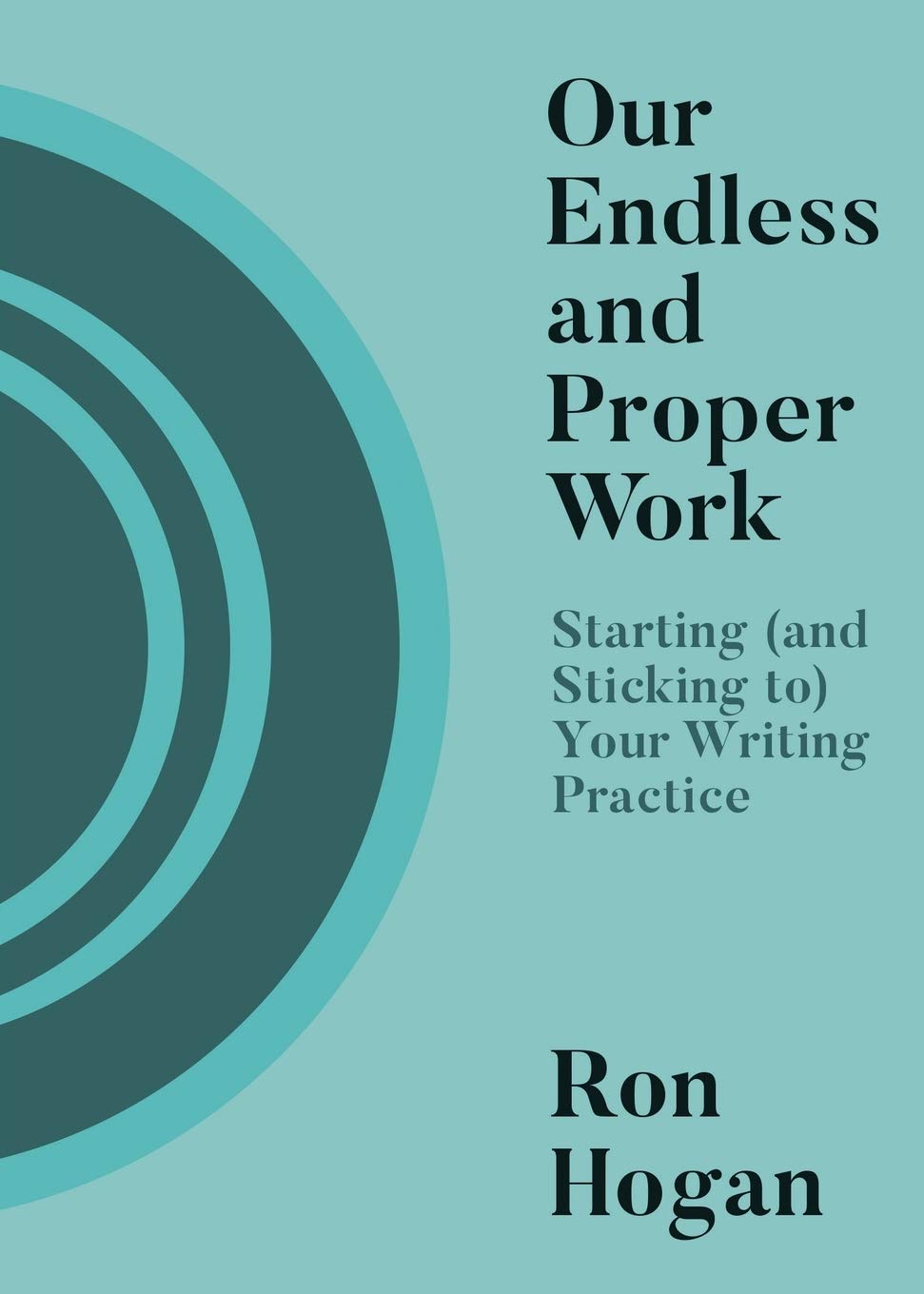 Our Endless and Proper Work is my new book with Belt Publishing about starting (and sticking to) a productive writing practice.