Life Stories #28: Domenica Ruta
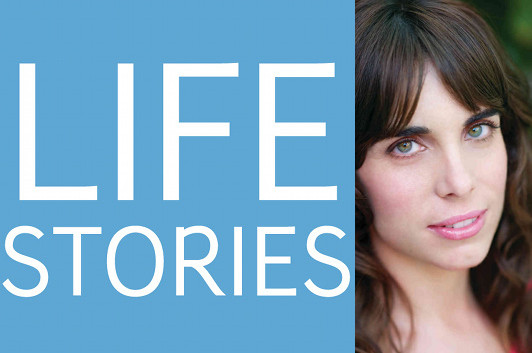
photo: Meredith Zinner
In this episode of Life Stories, the podcast series where I interview memoir writers about their lives and the art of writing memoir, I talk with Domenica Ruta about With or Without You, in which she describes being raised by a single mom who gave her her first OxyContin pill when she was ten years old, and the full blossoming of her alcoholism in her twenties. We talk about recovery, and the differences between writing drunk and writing sober, and how she found out what her mom—with whom she hasn’t spoken in seven years—thinks of the memoir through the New York Times.
During the conversation, I also made a reference to “the James Frey thing,” which is to say writing a memoir about addiction and recovery in the wake of the A Million Little Pieces controversy, and how enough time has passed that this maybe isn’t as much of an issue as it was in 2006 and immediately after. Ruta had a wonderful response:
“I think for better or for worse, and I think it’s a little of both, he has opened a door for memoirists to really explore what it means to have memory and to retell a story and to do that with craft. Part of the experience of recovery is trying to parse out what of my life is valid, what is invalid? What of my life is an emotional projection, what is real?
“I actually owe a debt, a great debt to James Frey for starting that conversation, as painful as it probably was for him—and I can only imagine—he started a really interesting conversation that I at least was engaged in in my head while I was writing this, which is, you know, when I get to points that I don’t remember clearly, how about I just dive head first into that uncertainty? How about I highlight the gaps in my memory? … I point out the moments when craft is taking over, when I paint something a certain color in the writing of the memoir, because I don’t exactly remember what color it was, but this is the color it needs to be in this truth. I don’t know how he wrote, how people wrote memoirs before that door was opened, so I’m really grateful for that.
Listen to Life Stories #28:: Domenica Ruta (MP3 file); or download the file by right-clicking (Mac users, option-click).
24 March 2013 | life stories |
The Images That Stick with Sarah Gerkensmeyer
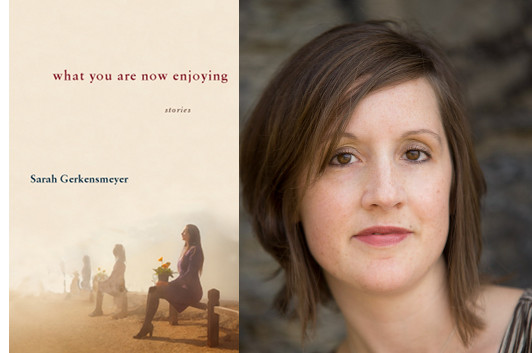
photo: L. Deemer
Many of the stories in Sarah Gerkensmeyer‘s What You Are Now Enjoying, like “Dear John,” unfold with a dreamlike logic; even a story like “My Husband’s House,” which seems relatively grounded, has a hallucinatory quality to it—we wander through in a bit of a daze, much like her protagonists. Yet the “surreal slant” in her fiction “has been somewhat of a mystery for me,” she told an interviewer; maybe, as she theorized, it has something to do with her midwestern routes: “There is magic and mystery there. Something like heat lightning, I guess. Or crouching beneath a utility sink in the basement while a tornado roars by like a train. There is a sense of the unexpected creeping up out of the familiar and the ordinary and the mundane. I think I try to encapsulate that same aesthetic in my own work.” And, as you’ll see, when she finds examples of that aesthetic in other people’s stories, it stays with her.
New Yorkers will be able to see for themselves when Gerkensmeyer comes to read at Pen Parentis on April 9, 2013.
In a red river: a small child drowning, tugged below the surface by a swift current—a piggish man in pursuit.
On a train: a mother righting her baby daughter in her seat after she’s toppled over—a white-haired stranger with a cigar hovering above them, grinning.
In a restaurant in Moscow: a starving boy pulled in from the street and offered oysters—the salty, slimy crunch when he bites into the shell.
It’s the images that haunt me most. The red water and the piggish man in Flannery O’Connor’s “The River;” the toppled-over baby in Shirley Jackson’s “The Witch;” the moldy crunch of teeth against oyster shell in Anton Chekhov’s “Oysters.” And when I come back to these stories years later and come face-to-face with the exact, horrible context of each of them once again, the bigger picture is haunting, too, of course.
In “The River,” a little boy who has sudden, skewed ideas about religion drowns as he tries desperately to baptize himself. In “The Witch,” a stranger on a train tells a young boy a horribly inappropriate story about how he also had a little baby sister and he strangled her and chopped her up into pieces. In “Oysters,” a starving boy with a sick father is pulled off of the streets of Moscow and into a fancy restaurant, where he is offered oysters as a joke.) But that’s the whole story, something I usually forget relatively soon after I’ve set a book down. It’s the images I carry with me. It’s the images, I think, that push me to write my own stories.
20 March 2013 | selling shorts |
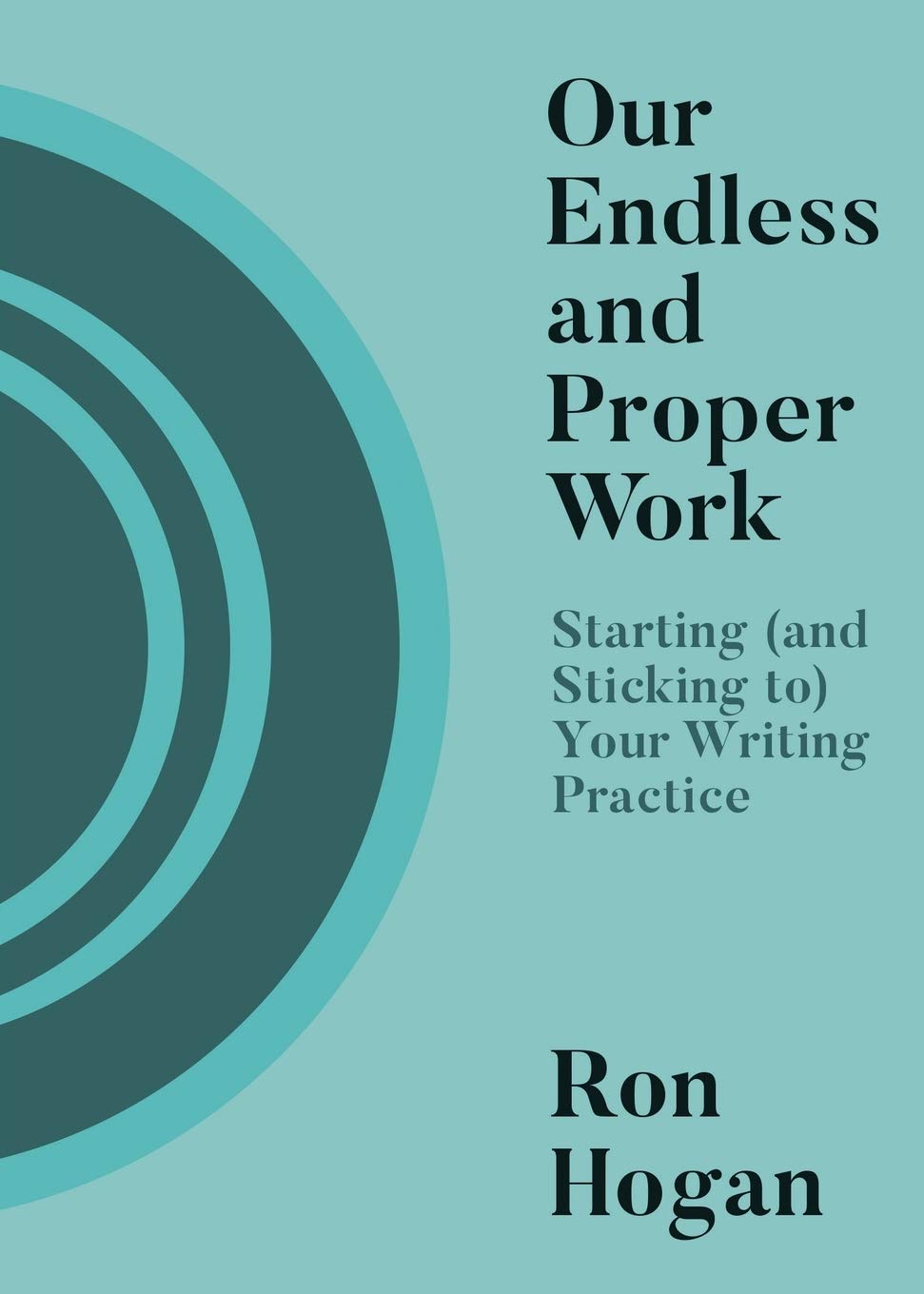 Our Endless and Proper Work is my new book with Belt Publishing about starting (and sticking to) a productive writing practice.