
Life Stories #34: Josh Hanagarne

photo: Suzy Steed/A Moment’s Reflection
My guest for this episode of Life Stories, the podcast series where I interview memoir writers about their lives and the art of writing memoir, is Josh Hanagarne, the author of The World’s Strongest Librarian. It’s a fantastic book with a lot of amazing stories bundled into it: Josh has Tourette’s Syndrome, so he writes about dealing with that, but that aspect of his life also overlaps with the story of his withdrawal from the Mormon faith of his childhood and early adult years and the story of how he zeroed in on weightlifting—and, from there, other forms of intense physical training—to cultivate a strong sense of self-control, and of course the story of his work as a public librarian in Salt Lake City. And none of these stories plays out the way you might expect.
Josh experienced a few instances of Tourette’s-related symptoms while recording this conversation; in many cases, I edited those moments out the same way I excise awkward pauses and “ums” and “you knows” from any other interview. At times, however, just as I can’t always get out every “um,” his vocalizations couldn’t be removed without affecting the clarity of what was being said, so you will hear some unexpected noises during the interview. We actually touched upon this point tangentially during our conversation, when he discusses how he handled his tics in the writing of the memoir, wanting to depict their effects honestly but not wanting them to overwhelm the text—at one point, he essentially says, unless I explicitly say otherwise, just assume any of the tics I’ve mentioned are happening on a regular basis, even if I’m not writing about them.
We also talk about the generosity Seth Godin showed Josh in the early stages of his writing journey, the fan mail he wrote to Cheryl Strayed, and how his library patrons are reacting to his celebrity moment—among plenty of other topics.
Listen to Life Stories #34: Josh Hanagarne (MP3 file); or download this file directly by right-clicking (Mac users, option-click). You can also subscribe to Life Stories in iTunes, where you can catch up with earlier episodes and be alerted whenever a new one is released.
10 June 2013 | life stories |
Read This: Thieves of Book Row
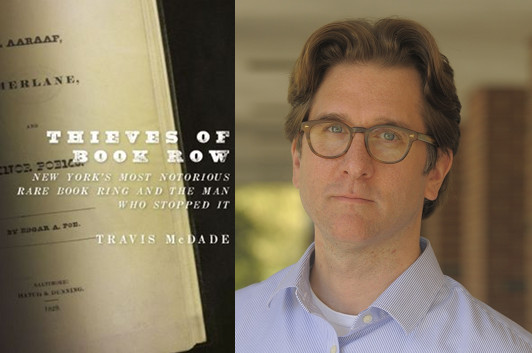
photo via Travis McDade
Recently, I did an interview for Shelf Awareness with Illinois law professor Travis McDade about Thieves of Book Row, his history of how the New York Public Library (among other institutions) took on a network of professional book thieves that targeted libraries across the northeastern United States, filching early Americana and other important first editions, often selling them to Manhattan book dealers. There’s a lot to talk about in this book—more, in fact, than I could fit into the Shelf Q&A. So here’s a bonus excerpt from our exchanges…
You’ve written that “getting away with [book theft] is harder than ever” today. A century ago, how seriously did the criminal justice system treat theft from libraries?
Everything I’ve written, and am writing, has punishment as a component—not surprising since I come at this from the legal perspective first, and the special collections perspective second. So I think about this a lot, and it’s more complicated than people think. It has always been, and remains, a question of getting the authorities to treat it seriously. In Thieves of Book Row I showed that, if libraries get a good prosecutor and an understanding judge, there will be significant punishment for these crimes. (Sing Sing prison!) Otherwise, it’s the traditional slap on the wrist. I’m happy to say that it is not as bad as it once was, but it is still true to an extent. Prosecutors have an incredible amount of discretion when it comes to these things. They need to be shown how important these books, documents, maps and manuscripts are. When that happens, we see good results. When it doesn’t, we get probation.
Another thing I show in the book is that the press, a hundred years ago, was a lot more draconian in its attitude toward these thieves. Newspapers, reflecting public sentiment, advocated punishments of the sort that—how shall I say this?—would not pass Eighth Amendment muster. By the latter part of the 20th century, on the other hand, newspapers routinely announced punishment for theft of extremely valuable books with a lame joke about library overdue fines, and just as routinely trotted out the canard that these thieves were suffering from bibliomania.
9 June 2013 | read this |
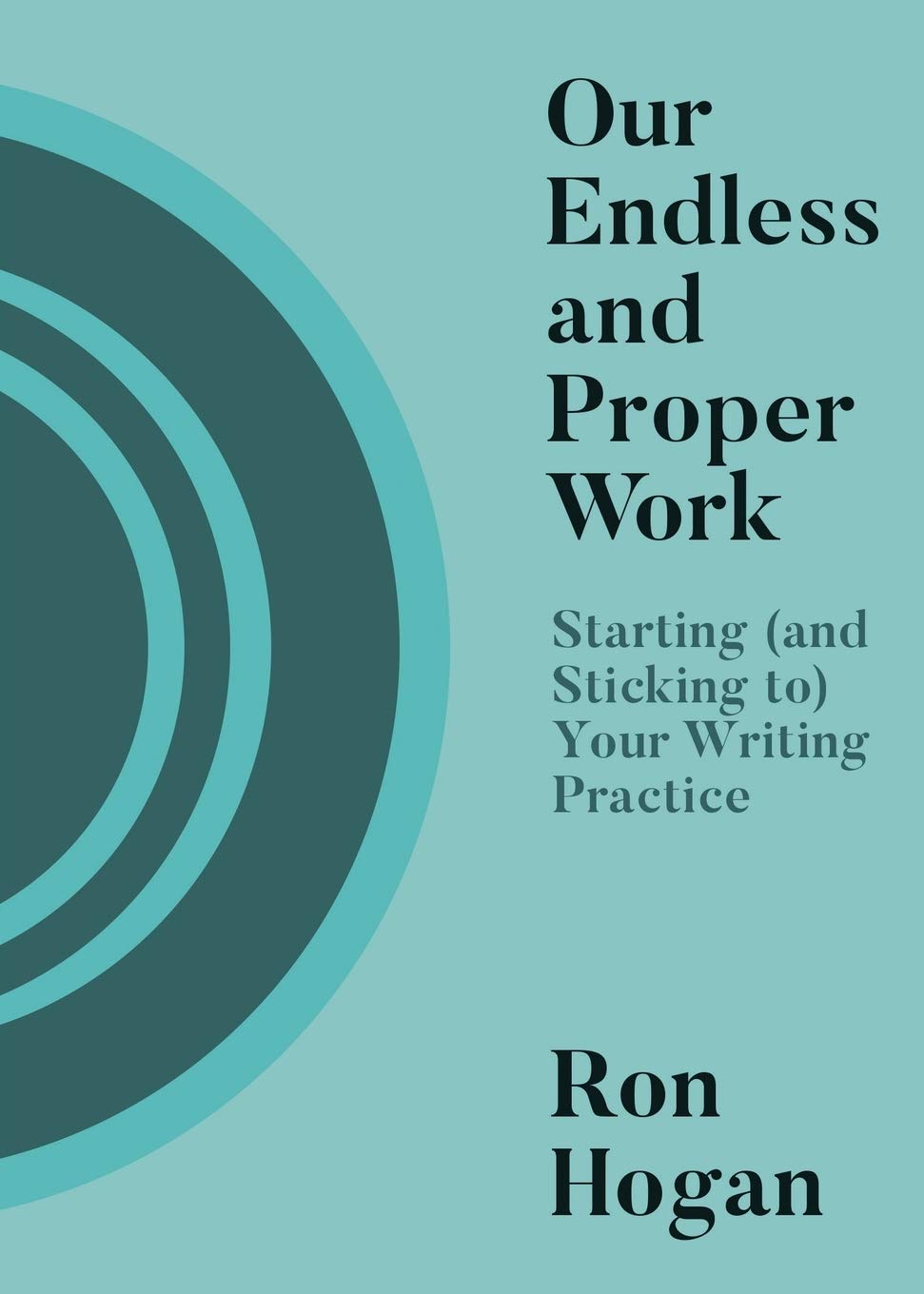 Our Endless and Proper Work is my new book with Belt Publishing about starting (and sticking to) a productive writing practice.