Tara McCarthy: Read It in Spite of Yourself!
 You might remember that post this summer where I mentioned the website for the Sparks Sisters, the fictional conjoined twin pop sensations who star in Tara McCarthy’s novel, Love Will Tear Us Apart. Well, now Tara’s come along to tell Beatrice readers a little more about her book and about a problem she didn’t anticipate having in getting people to read it. It just goes to show Oscar Wilde was right: The only thing worse that being talked about really is not being talked about.
Some of you may remember me. I wrote a book—Been There, Haven’t Done That: A Virgin’s Memoir—back in 1997. I was on the Howard Stern show; Leno made jokes about me; People magazine put me on their top ten worst books of the year. Radio interviews, print publicity, local news crews in my very own apartment . . . Ah yes, I had it all! But I was naive, unprepared, easily flustered…I thought maybe it was a bit overmuch. I remember crying a lot and wishing that the book hadn’t gotten quite so much attention.
So I toiled away in isolation for years, hid from public life and wrote two bad half-novels and then one complete one that I felt was worthy of publication. Love Will Tear Us Apart was released last month and the media who’d once critiqued every aspect of my non-sex life (“She wants to know why she’s still a virgin? Look at her!”) couldn’t have cared less.
Like most first-time novelists, I now spend a good portion of my days marveling over the near-complete lack of publicity I’ve managed to scare up with this book. In addition, I bemoan that my fifteen minutes were used up by a sensational memoir that lacked artfulness and literary merit. I’m saddened that my novel—so much more interesting than the memoir to talk about, as far as I’m concerned—is struggling now to be “a sleeper hit” or “word of mouth sensation”… if it’s lucky.
1 November 2005 | uncategorized |
Kitty Fitzgerald on Discovering Pigsense
 If you saw the NYTBR review for Kitty Fitzgerald’s novel Pigtopia yesterday, you’ve caught a glimpse of the remarkable voice that Fitzgerald created for Jack, a village outcast in the mold of Boo Radley. I was curious about how Fitzgerald created his unique form of speech, so I asked her—and this was her reply.
The story of Jack Plum started life as a radio play called Pig Paradise, which was broadcast by the BBC in 1998. At the time I wrote it, I couldn’t find Jack’s inner voice at all, and didn’t even know if I wanted to, so his character was explored entirely through dialogue with the younger Holly Lock.
It worked well and I felt no loss at not having Jack as part-narrator of the play, which had been the director’s desire. After the broadcast I thought I’d heard the last of Jack Plum but it wasn’t to be. Fragments, images and words kept shoving themselves into my head; I saw an inordinate number of pigs rummaging in fields and at times felt as if someone large was following me when I took the dog for a walk on the moor.
Eventually I understood there was more to be explored in the story of Jack. I sat down and began making plans for turning the play into a novel. This time I knew I had to get right inside his internal landscape.
It wasn’t easy finding Jack’s voice because it wasn’t a technical linguistic exercise; it was a question of being able to hear its nuances inside my head. The creative process is a strange beast. You have to find a way of opening yourself up to possibilities; you have to get rid of your internal censor; you have to listen and wait. And when I finally heard the first sentence from Jack’s inner world, that was just the beginning.
31 October 2005 | guest authors |
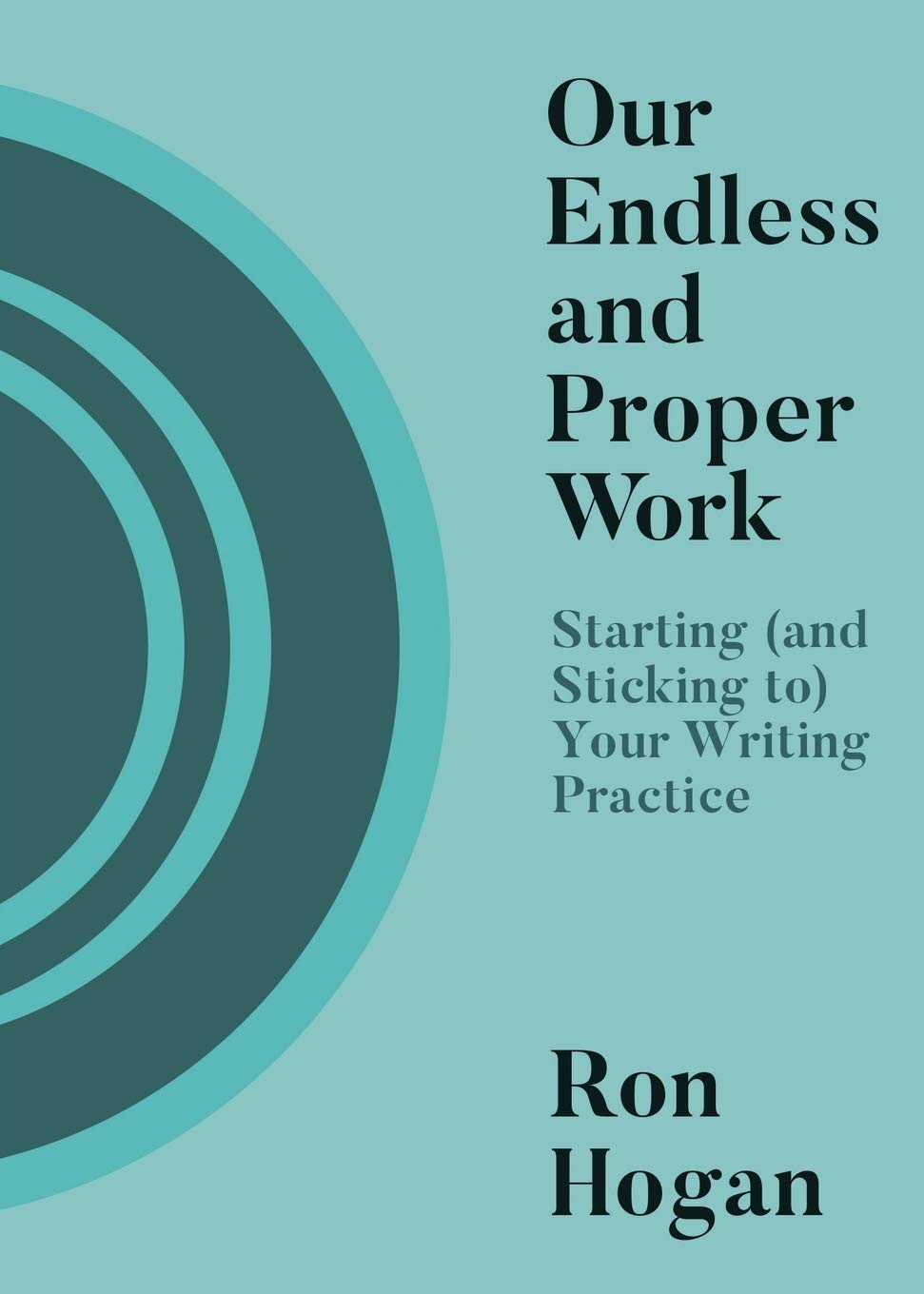 Our Endless and Proper Work is my new book with Belt Publishing about starting (and sticking to) a productive writing practice.