Nasrin Alavi on Mahmood Ahmadi’nejad
It’s only fitting that Nasrin Alavi, the author of We Are Iran, has been making the rounds of bookblogs like MoorishGirl and The Elegant Variation, since her book is a compendium of what’s been said by members of the Iranian blogosphere, where online publishing has created a workaround against political repression and enabled expats to keep in closer contact with their native communities. (There’s about 75,000 blogs being written in Farsi these days; only three other languages command higher writership. Is writership a word? It should be.) In this essay, she explains some of the political situation to which “Blogistani” writers are reacting so vocally.
Since 9/11, when so much of the attention directed at the Islamic world is focused on violence and terrorism, it has become increasingly difficult to see beyond the sabre rattling of fanatics, especially when a representative of an Islamic nation openly calls for the destruction of another country. In a remark that has reverberated around the world, Iran’s new president, Mahmood Ahmadi’nejad, had recently called that Israel should be “wiped out from the map”.
During the 2005 presidential elections, Ahmadi’nejad was promoted as the man of the people. Corruption and cronyism were the vein of popular anger into which Ahmadinejad tapped and he appealed to the minds and hearts of jobless youth and underpaid workers promising food and housing subsidies for the poor. According to Behzad Nabavi, acting chairman of the parliament during President Khatami’s era, the modest looking mayor of Tehran backed by the establishment “was promoted as an anti-establishment figure.” At one stage during his campaign Ahmadi’nejad even falsely complained that the “establishment” had cut off the electricity supplies of large areas of Iran so that his campaign speeches promising a fight against corruption could not be heard by the ordinary people.
Even so, the election result was announced amid accusations of vote rigging by some observers, including three of the candidates. These were not members of the opposition calling foul play, but Mehdi Kahroubi (onetime parliament speaker), Mostafa Moin (ex-education minister), and Ayatollah Rafsanjani (ex-president).

9 December 2005 | guest authors |
Brace Yourself for Narnia!
I’ve written so much about the upcoming film version of The Lion, The Witch and the Wardrobe for GalleyCat that I felt like it might be time to spread the story around a bit. And as you can imagine, with the film coming out this Friday, the coverage is heating up. Claudia Eller of the Los Angeles Times has a look at producer Philip Anschutz, centered around his efforts to make a “wholesome” blockbuster film “that doesn’t rely on sex, foul language or violence to sell tickets.” (The article also gives a sad indication of how little is apparently expected from LAT readers: “He’s considered a contrarian, meaning he likes to operate counter to conventional wisdom.” Time was the average adult might be expected to know the definition of ‘contrarian.’)
Meanwhile, Seattle Times film critic Moira Macdonald provides readers with an introduction to the Narnia series, which she describes as “a sum of the various influences in [C. S.] Lewis’ life.” Guardian columnist Polly Toynbee might agree, but she doesn’t much like what it says about Lewis, then. She’s upset about the religious hardsell and how it may alienate Britons: “Most of the fairy story works as well as any Norse saga, pagan legend or modern fantasy, so only the minority who are familiar with Christian iconography will see Jesus in the lion.” Astonishing if true statistic: “43% of people in Britain in a recent poll couldn’t say what Easter celebrated.” And this is a nation with an official state church, for crying out loud!
Of course, it’s entirely possible that this indifference is entirely Toynbee’s, rather than England’s, as she’s clearly got some religious issues which lead to statements like this: “Of all the elements of Christianity, the most repugnant is the notion of the Christ who took our sins upon himself and sacrificed his body in agony to save our souls. Did we ask him to?” And talk about your harsh assessments: Aslan is for this critic “an emblem for everything an atheist objects to in religion.”
5 December 2005 | watch this |
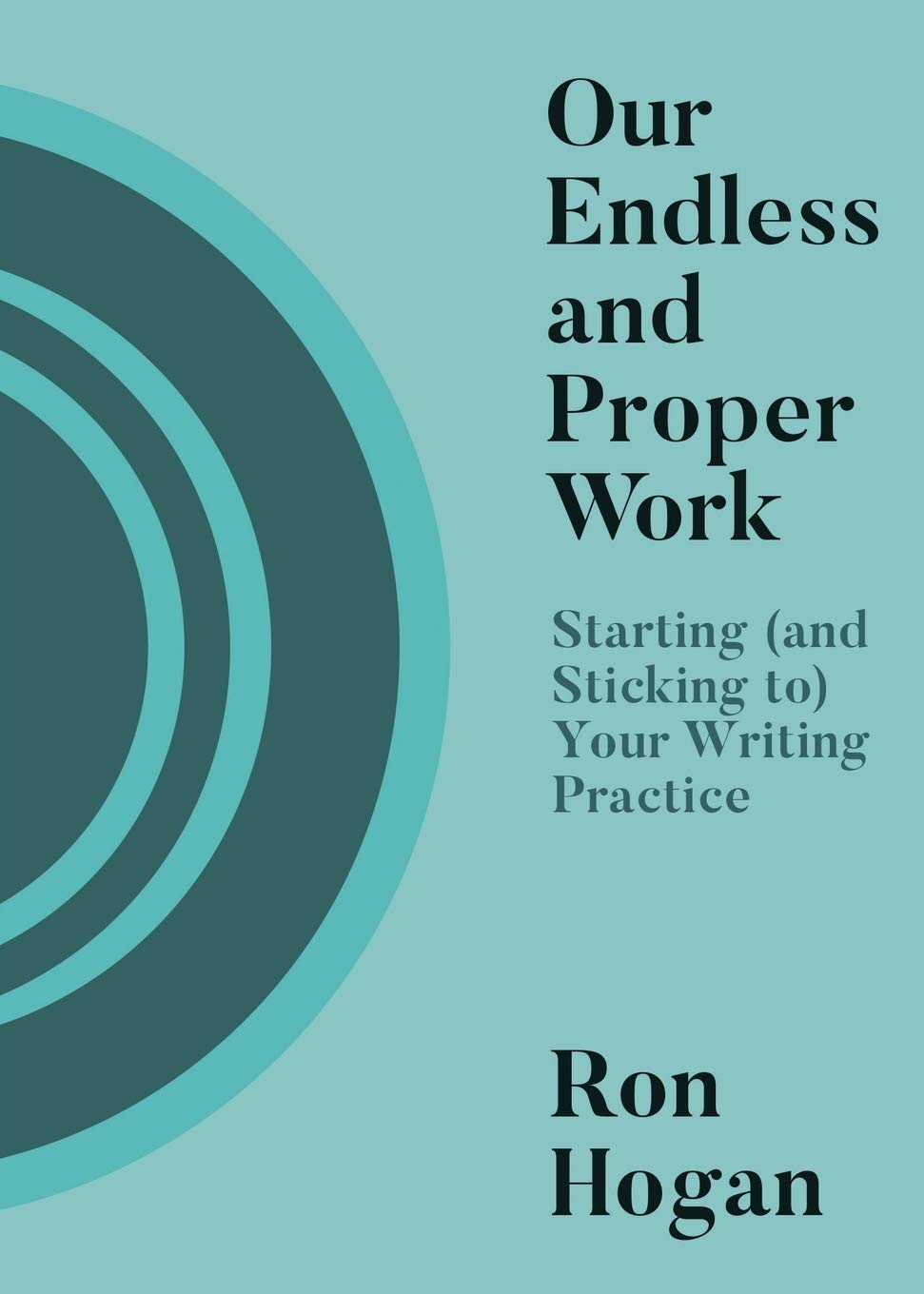 Our Endless and Proper Work is my new book with Belt Publishing about starting (and sticking to) a productive writing practice.