Cristina Henriquez Reaches for “The Sun, The Moon, The Stars”
Cristina Henriquez is the author of Come Together, Fall Apart, a collection of eight short stories and an eponymous novella. West Coast readers will get a chance to see her in Seattle tonight (at Elliott Bay) and Los Angeles tomorrow (at Dutton’s), and in a joint appearance with Daniel Alarcon at Corte Madera’s Book Passage later this week.
If the task of choosing my favorite short story were akin to choosing some sort of international literary prize, my shortlist would look something like this: “The School” by Donald Barthelme, “Pastoralia” by George Saunders, “Marie” by Edward P. Jones, “Good Country People” by Flannery O’Connor, “Goodbye, My Brother” by John Cheever, and “The Sun, the Moon, the Stars” by Junot Diaz. Then again, if I were on the panel for a prize whose shortlist looked like this, there would probably be murmurs among the other jurors suggesting that I be disqualified as a judge, my bias obvious.
I would try to convince them that I really did love all these stories equally, that they had each influenced me or knocked my socks off at some time. But, like a parent who claims to love all his children the same but whose adoration for one is plain, there’s no denying it: Junot Diaz’ “The Sun, the Moon, the Stars” is my favorite short story. To read my writing, it’s not a surprising choice. Which is why I was loath to pick it when I first started writing this. I wanted to be less predictable. But oh, admit it, I finally thought, “The Sun, the Moon, the Stars” is The One for me.
1 May 2006 | selling shorts |
Christopher John Farley on Bob Marley
Years ago, I read a great novel by Christopher John Farley called My Favorite War. I lost track of him after that, but I’ve recently learned that he became the pop music critic at Time and, from there, an editor at the Wall Street Journal, and that he’s got a biography of Bob Marley pubbing this week called Before the Legend, which he agreed to tell us abouut.
Writing a novel requires you to look inside yourself. Writing a biography requires you to seek out others and convince them to look inside themselves, and Before the Legend presented the most difficult task I’ve ever faced as a writer.
Truth can be stranger, and harder, than fiction. Discovering just who Bob Marley really was required more than three years of research, investigation and writing. Degas once said, “One has to commit a painting the way one commits a crime.” Biography is the same way. Committing a biography is pressure-filled work, full of stealth and danger.
My biography had more than its share.
30 April 2006 | guest authors |
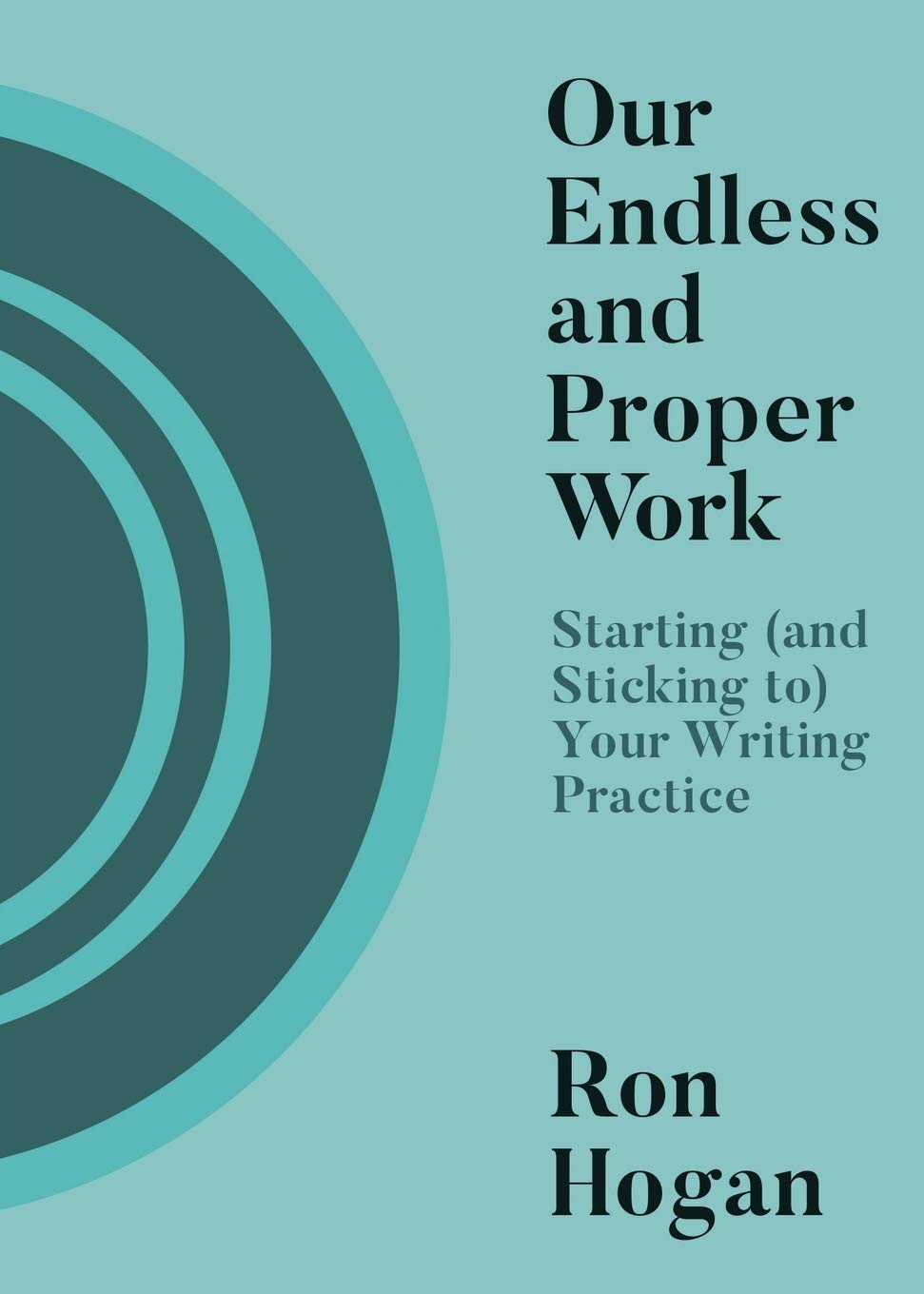 Our Endless and Proper Work is my new book with Belt Publishing about starting (and sticking to) a productive writing practice.