
Ayun Halliday’s Foodie Memoir Pet Peeves
Ayun Halliday kicks off a month-long “Virtual Blog Tour” for her new book, Dirty Sugar Cookies, a compendium of “culinary observations [and] questionable taste,” by talking about some of the things that drive her nuts in other people’s food books. I’m thrilled that Ayun asked if she could start her tour here, and I hope you’ll follow her through her itinerary and keep track of her further gustatory antics on her very own blog.
The autobiographical genre holds a lot of appeal for me, as both a writer and a reader. I often find myself wishing I could erase or reword something in one of my books, but that’s nothing compared to the intense desire to start ripping pages of other people’s books whenever I come across one of my memoir-related pet peeves. Like autobiographies themselves, these gripes are easily divisible for the sake of sub-categorization. For instance, is it not time for a moratorium on “quiet awe” as an acceptable response to one’s first viewing of the Taj Mahal? Adjectives like “poopy”, “yummy” and “soccer” are words for parents and authors who write about their experiences as parents to rage against, not embrace (and while we’re at it, let’s pillory the idiot who coined the term “momoir.” ) As far as culinary reminiscences go, now that I’m a food memoirist myself, my plate’s heaped high with bones to pick:
Exquisite, Miniscule Portions Glistening Like Jewels: This kind of twee description makes me want to storm the Bastille. Unless the author has demonstrated an equal willingness to hork down a heaping helping from a fly-specked, outer-borough street stall, I refuse to stomach such fawning over a $23 appetizer. I’ll take the phrase “glinted malevolently” over “glistened like jewels” any day!
The Picturesque Old Lady Who Presses Her Own Olive Oil: I’ve got no beef with the old lady, per se. It’s more the verbal diarrhea she inspires in the culinary pilgrims who follow her back to the tumbledown villa her family has inhabited for centuries, marveling at every cobblestone and noting the similarities between her gnarled yet capable fingers and the twisted branches in her orchard. I find myself hoping that the old lady will whip out a cell phone and start talking about how much she loves the Olive Garden. “They’ve got the best Early Bird specials and unlimited refills on breadsticks!”
1 June 2006 | guest authors |
Valerie Martin on Chekhov’s “The Duel”
Valerie Martin is in New York tonight to read from her latest short story collection, The Unfinished Novel and Other Stories. As a prelude to her visit, she was happy to talk about one of her favorite short stories by one of the masters of the form.
Anton Chekhov’s story “The Duel” concerns a number of characters, all residents of a hot seaside town in the Caucuses, who pass their time in light “official” duties and in conversation with and about one another. Ivan Andreich Laevsky, a young man who works for the finance ministry, lives unhappily with his mistress, Nadezhda Fyodorovna, a married woman who has run away with him, forsaking her husband and causing a rift between Laevsky and his mother who “couldn’t forgive me this liaison.” The couple is hard up for money and their passion for each other has turned to dust in the hot sun.
Laevsky is a typical Chekhov character, filled with self-loathing and angst, constantly imagining that he will be happy if he can only make some change in his circumstances. In Petersburg he thought he would be fulfilled by running away to the Caucuses with Nadezhda where they would settle, make new friends and buy a piece of land, “labor in the sweat of our brow, start a vineyard, fields, and so on.” Now, faced with the tedium of small town life and a horror of the fields full of “venomous centipedes, scorpions and snakes under every bush and stone,” all he wants is to leave his mistress and return to St. Petersburg. “If I were offered two things, to be a chimney sweep in Petersburg or a prince here, I’d take the post of chimney sweep.” He confides this to his friend, Dr. Samoilenko, a soft-hearted, peaceable man, “infinitely kind, good-natured, and responsible,” who advises Laevsky to take pity on his beautiful, intelligent mistress and offer her respect and indulgence. “Marry her, dear heart!” he concludes. But Laevsky cannot endure the notion that he has any duty to Nadezhda, and goes away with one thought in mind—to escape—though he isn’t sure how to do it. “In my indecision I am reminiscent of Hamlet,” Laevsky thinks as he goes out for a game of vint. “How rightly Shakespeare observed it! Ah, how rightly!”
16 May 2006 | selling shorts |
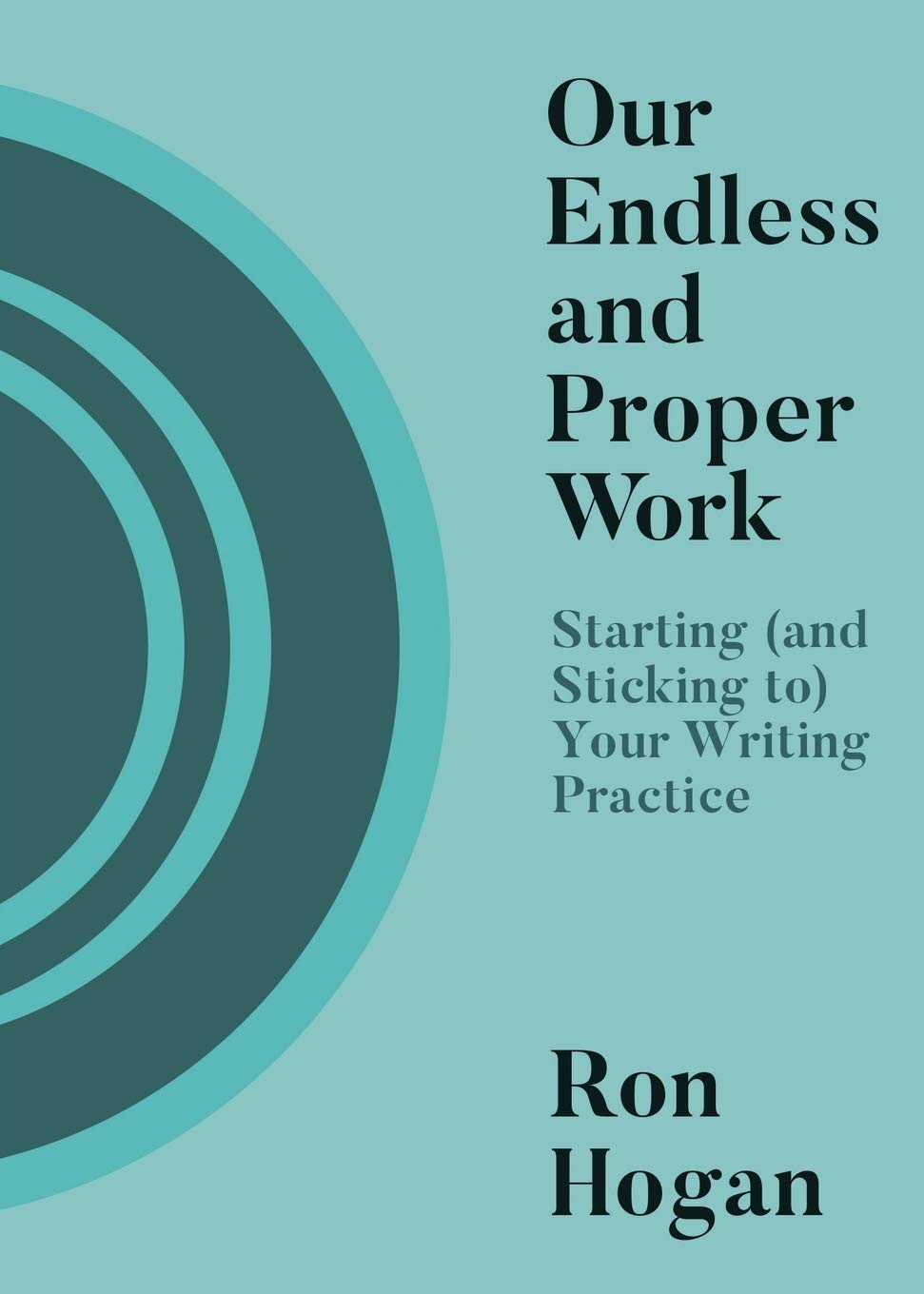 Our Endless and Proper Work is my new book with Belt Publishing about starting (and sticking to) a productive writing practice.