Melanie Wells’s Bumps on the Road to Tupelo
I met Melanie Wells at a book festival in East Texas last month—she’ll tell you a little more about that—and I’ve become a big fan of her series of novels, which center around a psychology professor in Dallas who finds herself at the center of ongoing spiritual warfare, real angels versus demons territory with human souls in the balance. The book’s covers call them “suspense,” I think of them as horror novels with strong religious themes, and you’ll probably find a descriptor somewhere in between once you read them—which you really ought to. (You don’t have to start with When the Day of Evil Comes and work your way up to the latest, My Soul to Keep, but that’s how I did it.) Melanie blogs with her friend, Trish Murphy (who you’ll also hear about in her essay), at a blog called “Thelma & Louise.” Melanie’s Louise.
I did my best to convince them to blog a little bit more often—not about their projects, although those are cool, but about their friendship and their creative lives, because I believe those things make for a compelling story that will convince you that they’re very cool people whose projects are worth a look, and that’s when they’ll really reel you in. Which is pretty much how I feel about blogs for creative people in general…
This is my wacky friend Lynette Shirk‘s idea of a brain explosion prophylactic:
I met Lynette at Girlfriend Weekend in Jefferson, TX, a fantastic blur of leopard print, fuchsia, and well-crafted words, and this headwear would have fit right in. I was there with my best friend Trish Murphy. Do all my friends have websites, you might ask? Only the interesting ones.
Which brings me to the topic of brain explosion. This happens to me regularly, which is why I’m so grateful to Lynette for her suggestion. A more sane person in a more sane profession (read: not a writer) would simply get her life under control rather than risk the ridicule of wearing a rubber headpiece with big orange flowers on it. A sane person would simply learn to file instead of pile. To fold while there’s still fluff. To pack up a trailer and move out of the time management disaster zone. Things of this nature. But this is not my destiny.
Trish, who is a rock star—really—and who, like me, was raised by creatives in a home with no office supplies, where the only snack in the refrigerator was olives (for martinis), and I complain regularly about the perils of the creative life. We talk daily, just to make ourselves feel better about the chronic disorganization that infects every single thing we do. And we buddy-breathe through the creative process. We take writing trips together to jolt ourselves out of the tar pit inertia that comes, for example, when you turn the corner in a novel (for me it’s always around chapter 10) or get your wheels stuck in the middle eight. All songwriters hate writing the middle eight.

17 February 2008 | guest authors |
Alaya Dawn Johnson: What Makes YA Fantasy So Awesome
Alaya Dawn Johnson is a young fantasy writer whose debut novel, Racing the Dark, has been drawing comparisons to authors like Paulo Coelho and Ursula K. LeGuin. You can read one of her shorter works, the novella “Shard of Glass,” at the Strange Horizons website, and in this essay, she explains what attracts her to young adult fantasy, as both a writer and a reader.
I love young adult fantasy. My life underwent a sea-change when I discovered Diana Wynne Jones in sixth grade, and I’ve never grown out of it. What I especially love about young adult fantasy is a certain quality of focus, wherein even epic situations have a very personal orientation. In other words, the world might be about to get destroyed, but instead of hearing the story from the point of view of the king and his advisors and soldiers (the George R.R. Martin model), the young adult fantasy novel focuses on the scribe buried in the library (The Alphabet of Thorn by Patricia McKillip), or the thief falling in love with his greatest enemy (The Thief and sequels by Megan Whalen Turner).
But even better, in YA fantasy the world is frequently not in any danger at all. There’s no more of a “chosen one” in these novels than there is in real life. The problems are closer to those we encounter in our own lives, no matter how exotic the setting. So, in Summers at Castle Auburn by Sharon Shinn, the main character has to confront how she has enabled the slavery of another race. In The Homeward Bounders by Diana Wynne Jones, the main character struggles over nearly a hundred years just to get home.
16 February 2008 | guest authors |
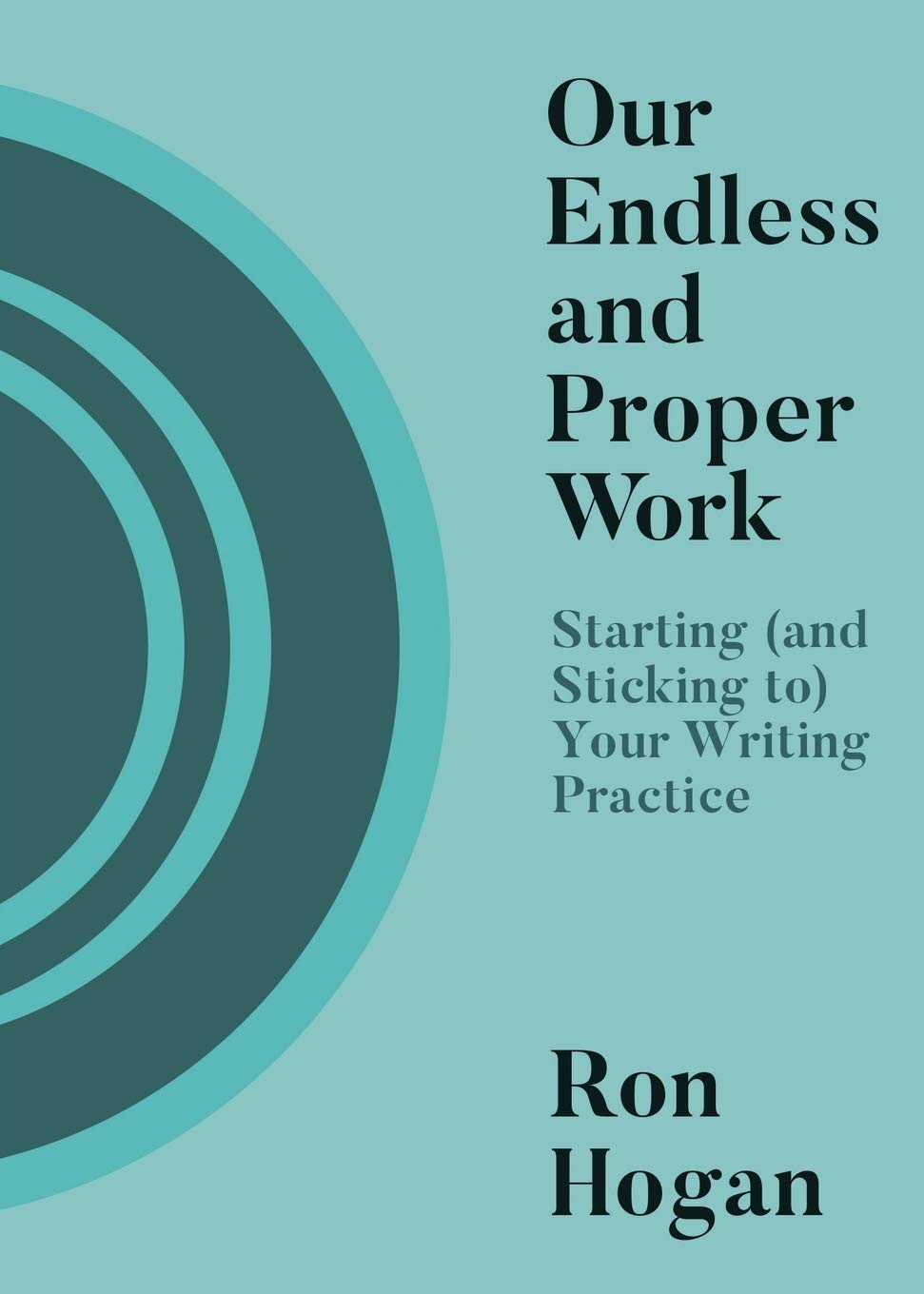 Our Endless and Proper Work is my new book with Belt Publishing about starting (and sticking to) a productive writing practice.