Thomas Lux, “The First Song”
was sung after the first stone was thrown at a beast,
after a spear in a man’s hand
brought down a pile of meat.
Of course we sang of that!
We hardly had a language and we sang.
We sang the stories, which turned into better stories,
which is why stories are told
and told again. Then, when we had more timeand bellies full enough with food,
we sang of love. But it began
with stones and sharpened sticks,
then sharpened sticks hardened
in fire.
 From God Particles, Lux’s eleventh collection. Last month, Elizabeth Hoover observed how “Lux prizes simplicity in language, and his deceptively plainspoken style allows for powerful images,” in a review for the LA Times. In that vein, I love his earlier poem “The People of the Other Village.”
In an interview with The Cortland Review, Lux commented on poetry readings: “A lot of poets don’t read their work well, don’t write their work with the intention of it being read out loud, but they still do readings, for the check, obviously, but nothing is duller than a monotone reading of work that’s essentially incomprehensible—and there’s a lot of that. I would rather have lit matches stuck in my ear.” He’s not like that; you can hear him read “Render, Render” at the Academy of American Poets website.
3 April 2008 | guest authors |
Beth Ann Fennelly, “I Provide for You, Boy Child, Like God”
and like God, I will cast you out.
Your eyes blue as a drowned thing.
Your harshest lesson:
you are no part of me.Learning that
will cost you ages in whichyour eyes take on the human color: grief.
Coming to words won’t even help you
name your suffering.You will embrace
false idols.Yet those women can let you
back in that primal crawl spaceno more than I can.
From Unmentionables, Fennelly’s fourth collection, which she read from today in Alabama. You can hear Fennelly reading from “The Kudzu Chronicle,” one of the longer poems in this book, accompanied by a short animated film.
Other Fennelly poems online include “The Impossibility of Language,”Once I Did Kiss Her Wetly on the Mouth,” and “I Should Be More French. Or Japanese.“
In an essay for the Academy of American Poets, Fennelly wrote of the act of writing poetry, “What exactly is happening in our brains when we cease to become conscious of time? We are narrowing the aperture of our concentration to condense and magnify its power. We forget the daily distractions and enter into the poem so deeply that a more radical forgetting take place—the forgetting of fossilized languages that lead to writing, and thinking in, clichés.”
(Fennelly was a year behind me at Notre Dame, but I don’t think we ever really ran into each other while we were there.)
2 April 2008 | poetry |
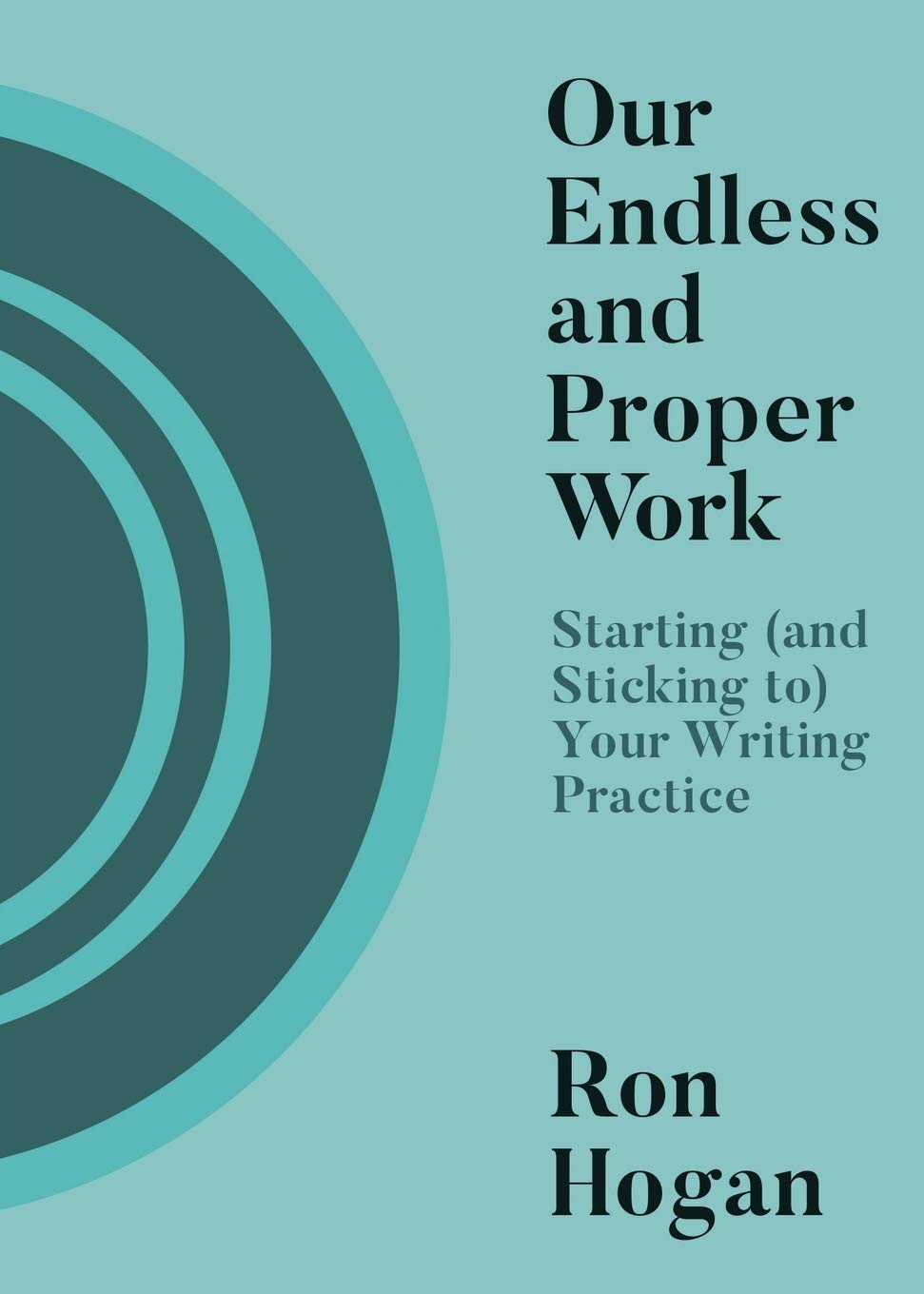 Our Endless and Proper Work is my new book with Belt Publishing about starting (and sticking to) a productive writing practice.