Rita Dove, “Vanities”
As if music were a country,
he’d filled the biggest assembly rooms
on the busiest square of the capital city;
he’d played the best parties,
saw Beau Brummel blast protocol
with a single non-nod of his chin.
That had been during his concert season,
when everyone was buzzing;
he had owned the Pall Mall,
didn’t that count for something?Music: Coach wheels slithering,
giggles jouncing the cream cups
brimming from milady’s bustier;
fear masked as delight. Music:
his Papa, his lost mother tongue.
Music: winds howling down
the four corridors of Fate
as he scrabbles after paper scraps,
tumbles the length of wherever he turned
getting longer, clutching air, crying out
(but soundlessly, a non-shout):I played that once.
I played that once.
I played that once.
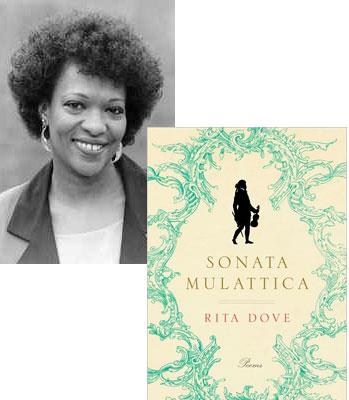
Sonata Mulattica is a book-length sequence of poems inspired by the life of George Polgreen Bridgetower, a 19th-century violin player born to a Polish mother and a West Indian father; Beethoven’s Kreutzer Sonata was originally dedicated to Bridgetower before the composer broke off his friendship with the musician after Bridgetower insulted a woman of Beethoven’s acquaintance. “Ludwig van Beethoven’s Return to Vienna” is also part of this sequence.
Dove has been the poet laureate of the United States and of the Commonwealth of Virginia, and won the Pulitzer Prize in 1987 for Thomas and Beulah. She is, as far as I know, the only Pulitzer winner to appear on Sesame Street, although I’m sorry to say I wasn’t able to find that on YouTube. But I imagine that appearance speaks, in a roundabout way, to something Dove once said in an interview:
“Very often, people who are not familiar with poetry, or don’t know much about it, are operating out of fear. At some point in their life, they’ve been given a poem to interpret and told, ‘That was the wrong answer.’ You know. I think we’ve all gone through that. I went through that. And it’s unfortunate that sometimes in schools—this need to have things quantified and graded—we end up doing this kind of multiple choice approach to something that should be as ambiguous and ever-changing as life itself. So I try to ask them, ‘Have you ever heard a good joke?’ If you’ve ever heard someone tell a joke just right, with the right pacing, then you’re already on the way to the poetry. Because it’s really about using words in very precise ways and also using gesture as it goes through language, not the gesture of your hands, but how language creates a mood. And you know, who can resist a good joke? When they get that far, then they can realize that poetry can also be fun.”
1 April 2009 | poetry |
Ben Kane: From the Vet’s Office to the Roman Battlefields
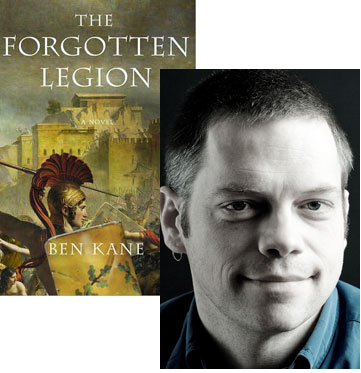
For some reason, this month has seen a boom in novels about the Roman Empire from St. Martin’s Press. There’s Harry Turtledove’s Give Me Back My Legions, Russell Whitfield’s Gladiatrix, and The Forgotten Legion, the debut novel from Ben Kane. Kane’s path to writing the first volume in an military historical trilogy is a great example of how a dedicated writer will find the time to write no matter what else is going on in his or her life, and I invited him to share his story with you.
I’ve been a veterinarian for nearly seventeen years now. Like many people who dream of such a career, I started off with a childhood love of animals. Dogs, cats, rabbits, cows—as a boy, it didn’t matter to me. Discovering the gentle, life-affirming James Herriot books helped build up a mental image of being a “doctor for animals,” as did the fact that my dad was already in the profession. Alongside my love of all creatures great and small ran a deeply rooted love of history. Don’t ask me where it came from, but I devoured any book I could find about the Romans, the Vikings, the Crusades, the Napoleonic wars, World Wars One and Two—in fact any conflict at all! I still ended up putting veterinary medicine number one on my university application form though. The main reason, from what I can remember, is that although I loved history, I couldn’t see myself as a teacher. There was certainly no concept in my mind of being a writer.
As with most people starting out on a career, my job as a veterinarian took over my life. Straight out of college, I worked in ‘mixed’ practice for nearly three years, which meant dealing with cattle, sheep, horses, dogs and cats. Stints in purely ‘small animal’ and ‘exotic’ (snakes, birds, fish) practice followed in the UK, before the need to travel struck home.
In 1997, I went on a solo trip to the Middle East, following part of the ancient Silk Road. During this trip, I visited many of the “stans,” countries which were formerly part of the USSR. In Turkmenistan, I walked the ruins of Merv, an enormous walled city which was attacked and demolished by the Mongols in the 13th Century. As I wandered through the vast site, nearly a mile square, in temperatures of more than 110 degrees Fahrenheit, what became evident was that the city’s history was far more ancient. Merv had originally been founded as Antiochia by Alexander the Great in the 4th century BCE. Furthermore, Roman prisoners of the battle of Carrhae had been taken there by their captors, the Parthians. Fascinated by this, I did some research upon my return. This confirmed what I had read in Merv, and the seeds of The Forgotten Legion were sown in my mind, and I had my first thoughts of writing a military fiction novel.
31 March 2009 | guest authors |
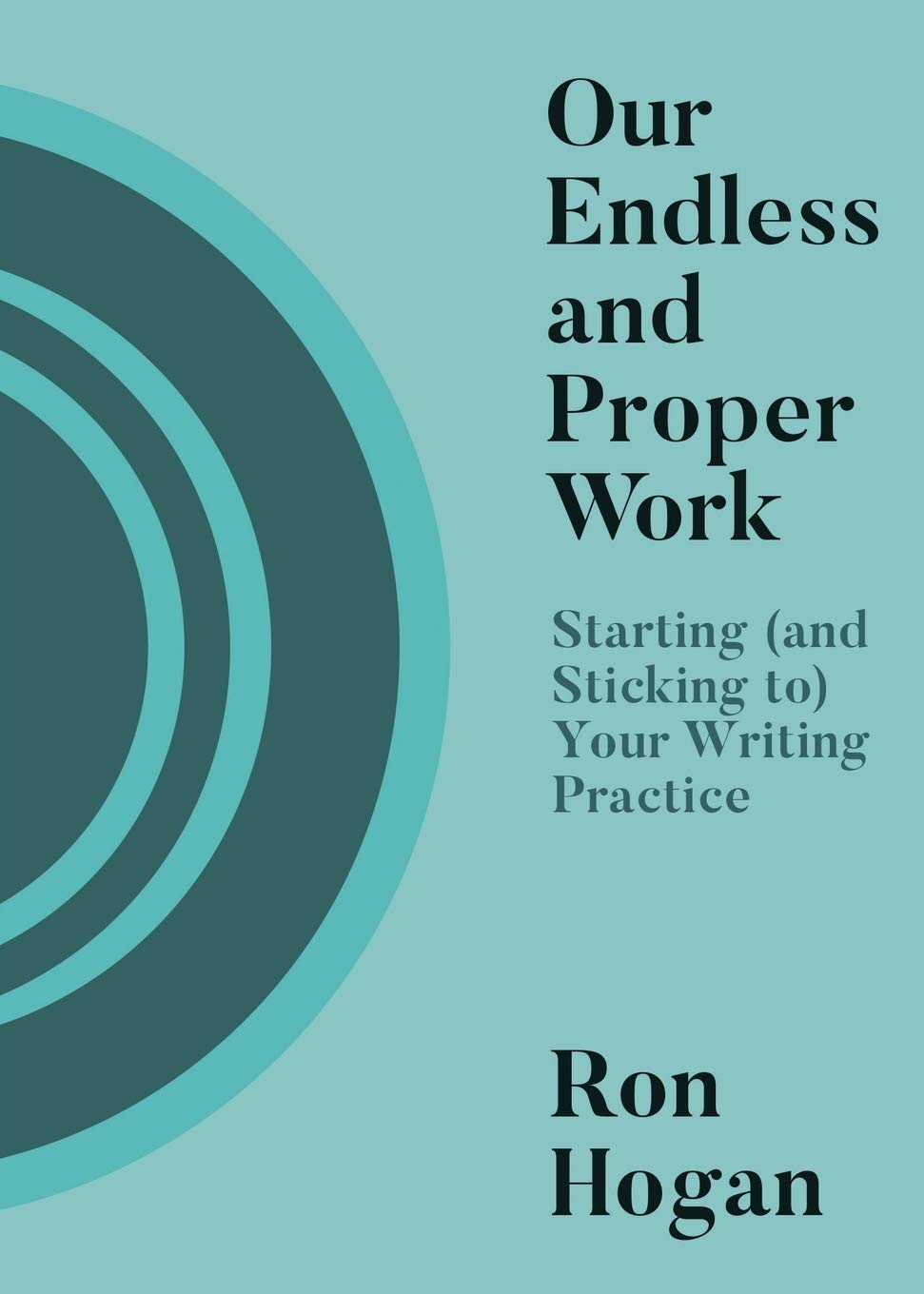 Our Endless and Proper Work is my new book with Belt Publishing about starting (and sticking to) a productive writing practice.