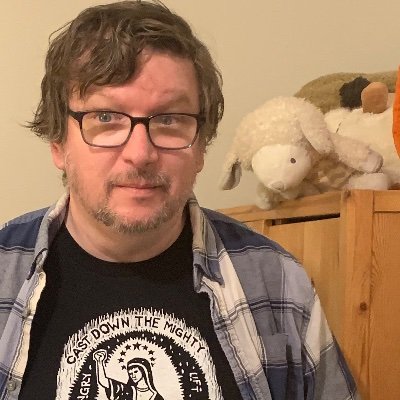
J.C. Hallman, Lost In His Own Funhouse

J.C. Hallman uses a variety of metafictional starting points to set the stories in The Hospital for Bad Poets in motion. In the title story, for example, the critical treatment of an emerging poet is treated as if it were a medical diagnosis; “The History of Riddles” takes a couple preparing to entertain another couple in their home as an opportunity for philosophical reflection upon the ritualistic nature of games and social bonding. Then there’s “Double Entendre,” which is simultaneously an erotic story and a structural analysis of erotic stories—and in this essay, Hallman talks about the classic postmodern short story that inspired him to work within that particular framework.
If I think back through The Hospital for Bad Poets and compile a list of the authors and stories that I was more or less consciously emulating while I wrote, I pretty quickly wind up with the table of contents of an anthology I’d buy given the opportunity:
- “The Hunger Artist,” Franz Kafka
- “The Old Forest,” Peter Taylor
- “Dreams of a Robot Dancing Bee,” James Tate
- “The Swimmer” and “The Enormous Radio,” John Cheever
- “Star Food,” Ethan Canin
- “The Lottery,” Shirley Jackson
…and most important for this essay:
- “Lost in the Funhouse,” John Barth
Excavating one’s own literary heritage is both interesting and problematic. It’s interesting from a critical standpoint—assuming you find origins interesting—and it’s problematic for the same reason that civilizations in Italy are problematic: dig for bedrock and all you find beneath you are the folks who got there first, the ones that beat you to it. Plus, it’s not really supposed to work like that, is it? That is, at least when it comes to fiction, we expect a little imitation early in one’s career—the bush leagues, call it—but eventually you’re supposed to discover your “voice,” sail for terra incognita, volley forth like St. George to wherever there be dragons.
Except it’s never really been like that for me. And I’ve always been a bit jealous of poets in this regard.
19 July 2009 | selling shorts |
Lena Katz & The People You Meet Writing Travel
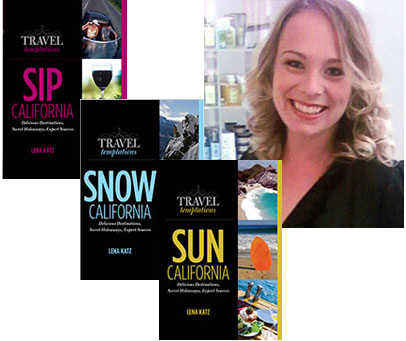
My colleague Tina Dupuy recently introduced me to Orbitz travel blogger Lena Katz, who has just begun publishing a series of “Travel Temptation” guides: Snow California, Sun California, and Sip California. She started emailing me about some of the stories behind putting the books together, and I said, hey, how about you share this on my website? And here we are.
I pitched one travel book and got an offer to write five.
Don’t be jealous. The first advance the publisher offered was so piddly that, if I had accepted and written one book every six months, the money split over 30 months would have barely covered my car payment. Eventually, my agent negotiated a contract for a 3-book deal that would actually enable me to pay not only my car, but my rent too. Bonus!!
By the time I finished all my pre-existing contracts and began to write the first book, I was already a month behind, and my publishers had started to hate me. This would continue until the final edit of Book #3. For a writer, all that business of “exceeding expectations” and “delivering ahead of schedule’ ends when you sign your first book contract. Books invariably take on their own life, and you just follow them as best you can.
In the beginning, I knew I wanted to have a lot of “insider experts” in my books. This quickly evolved to an insane ongoing scavenger hunt, with me collecting interviews by the dozen, going after ever more elusive subjects, and refusing to stop even when my editor said, “Please! If you didn’t do another minute of research on this book, we would be just fine!!”
18 July 2009 | guest authors |
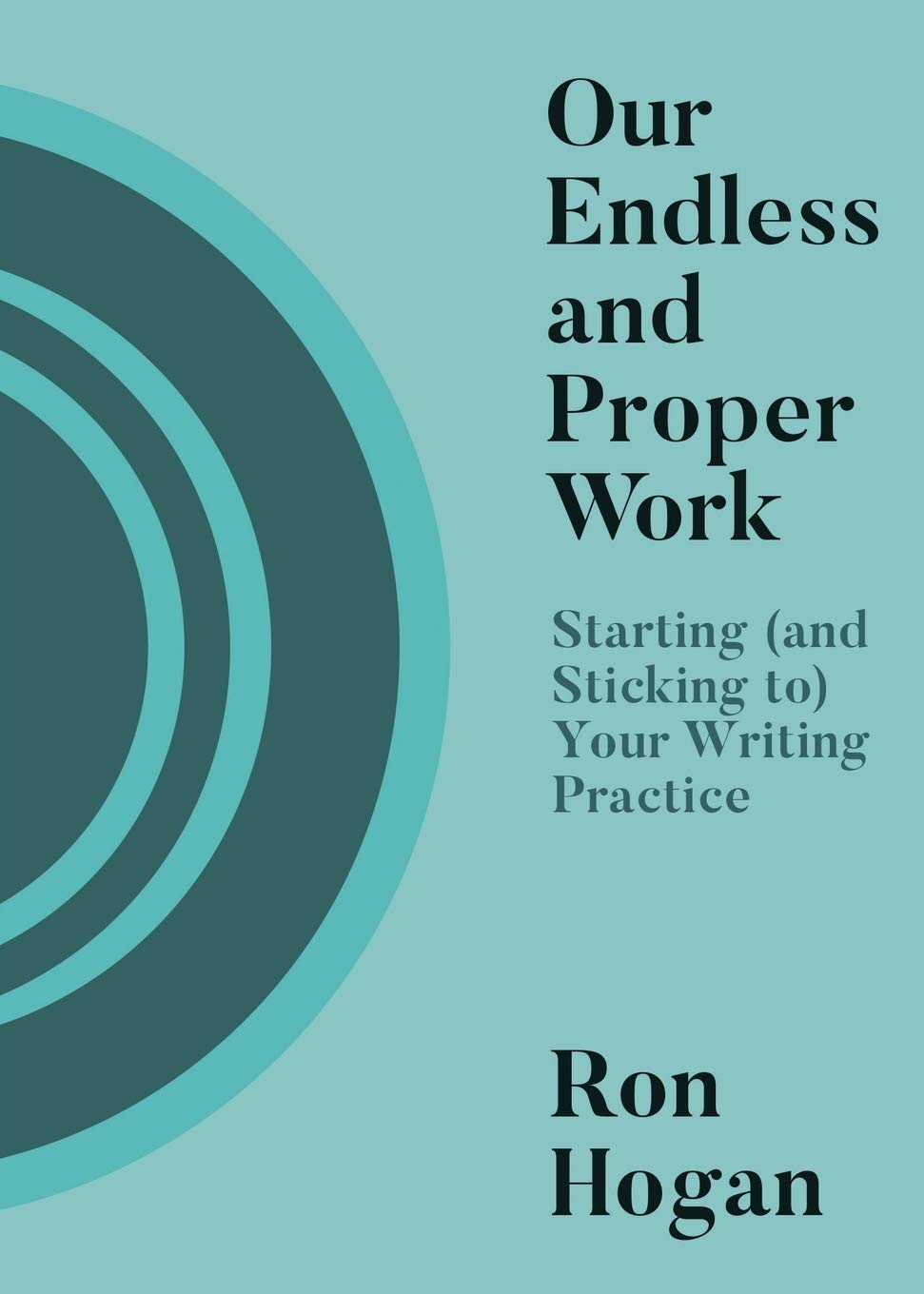 Our Endless and Proper Work is my new book with Belt Publishing about starting (and sticking to) a productive writing practice.