TONIGHT: Megan Abbott & Arthur Phillips

I was sorting through my bookcases recently and I realized why The Song Is You, the title of Arthur Phillips’s new novel, seemed so familiar—another one of my favorite authors, Megan Abbott, had used the same title for her second novel, published in 2007. Now, the two stories are wildly different—Megan’s is based on a real-life missing persons case in 1940s Los Angeles, while Arthur’s is set in contemporary Brooklyn—but I was struck enough by the coincidence of the titles to email them and ask if they would be interested in doing a reading together. And it worked!
We agreed that it would be a great idea to do the reading as a benefit for a music-education program, and, as it happened, Megan volunteers with Union Settlement, an organization offering a variety of community services in East Harlem including music education for young children. So we hope you’ll be able to join us at 7 p.m. tonight (July 28), at the Union Settlement headquarters at 237 East 104th Street (just a 5-minute walk from the 103rd St. stop on the 6 line). We’ll be joined by musician Rob Holub, who’ll be performing the Jerome Kern/Oscar Hammerstein tune from which Arthur and Megan took their titles—and Will Friedwald, the author of Sinatra: The Song Is You, recently confirmed that he’ll be able to make a few remarks at the start of the evening.
Admission is $10, with all proceeds going directly to Union Settlement. We will also have a limited supply of copies of both Megan and Arthur’s The Song Is You (or Megan’s latest, Bury Me Deep) for the first two dozen guests willing to donate an additional $10 (for a total donation of $20). You don’t need to RSVP, but if you want to give me a heads-up, you can check in at Facebook. I’d be delighted to see you there!
28 July 2009 | events |
Nic Brown’s Perfect Storm (For Writing about “People and Some Dogs,” That Is)
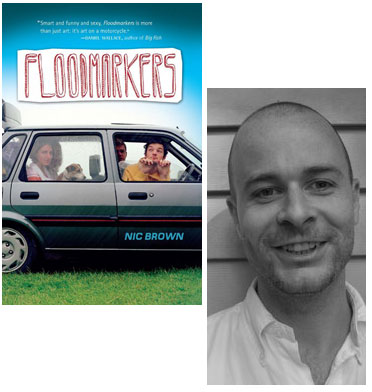
I don’t remember much about Hurricane Hugo; in September 1989, I was already deep into my sophomore year of college in the middle of Indiana, well out of hurricane country. But as Nic Brown points out in this essay about his new collection of “Hugo stories,” Floodmarkers, I don’t really need to know that much about what happened then. I remember what it was like getting stuck in Hurricane Bob two years later—a lot of not-much-happening punctuated by rain and wind—and once you get past that, you can begin to relate to Brown’s characters on more fundamental levels, discovering the variety of responses they have to a simple external event.
In North Carolina, where I live, Hurricane Hugo is never discussed. Hurricane Fran, which devastated the state in 1996, tops the conversational list when it comes to Carolina catastrophe. Hugo hit years earlier, in September 1989, and wreaked havoc on Charleston (which is in South Carolina, folks) and then moved up into Charlotte with a wallop. At the time, it was the most destructive storm since Hazel in 1954. The Katrina of Charleston, I’ve heard it called since (which is hyperbole, of course, but you get the idea). Then Fran arrived, and was worse. I guess this is when Hugo disappeared from conversation.
But if you mention Hugo—if you bring it up directly—everyone here has a story. Rarely are these momentous in the near-death or total destruction sort of way. Usually they’re more like, “I didn’t even know the storm was coming and then a branch landed on my car and the electricity went out and I got in a fight with my brother.” This is why Hugo worked well for my fictional purposes.
Floodmarkers is a linked collection of stories set during the day Hugo blows through the fictional North Carolina town of Lystra. But the book isn’t about Hugo. It’s about the people living in Lystra and the ways the storm changes their daily lives just enough to make room for the singular to occur. Lystra is set in the Piedmont, where only the edge of Hugo reached. If I had set the book in Charleston, or even Charlotte, it would have run the risk of becoming a historical fiction about a Hugo. And I don’t care about Hugo. Because Hugo is a storm, and to tell you truth, when it comes down to it, I really only care about people. And some dogs. So the book is about people. And some dogs.
27 July 2009 | guest authors |
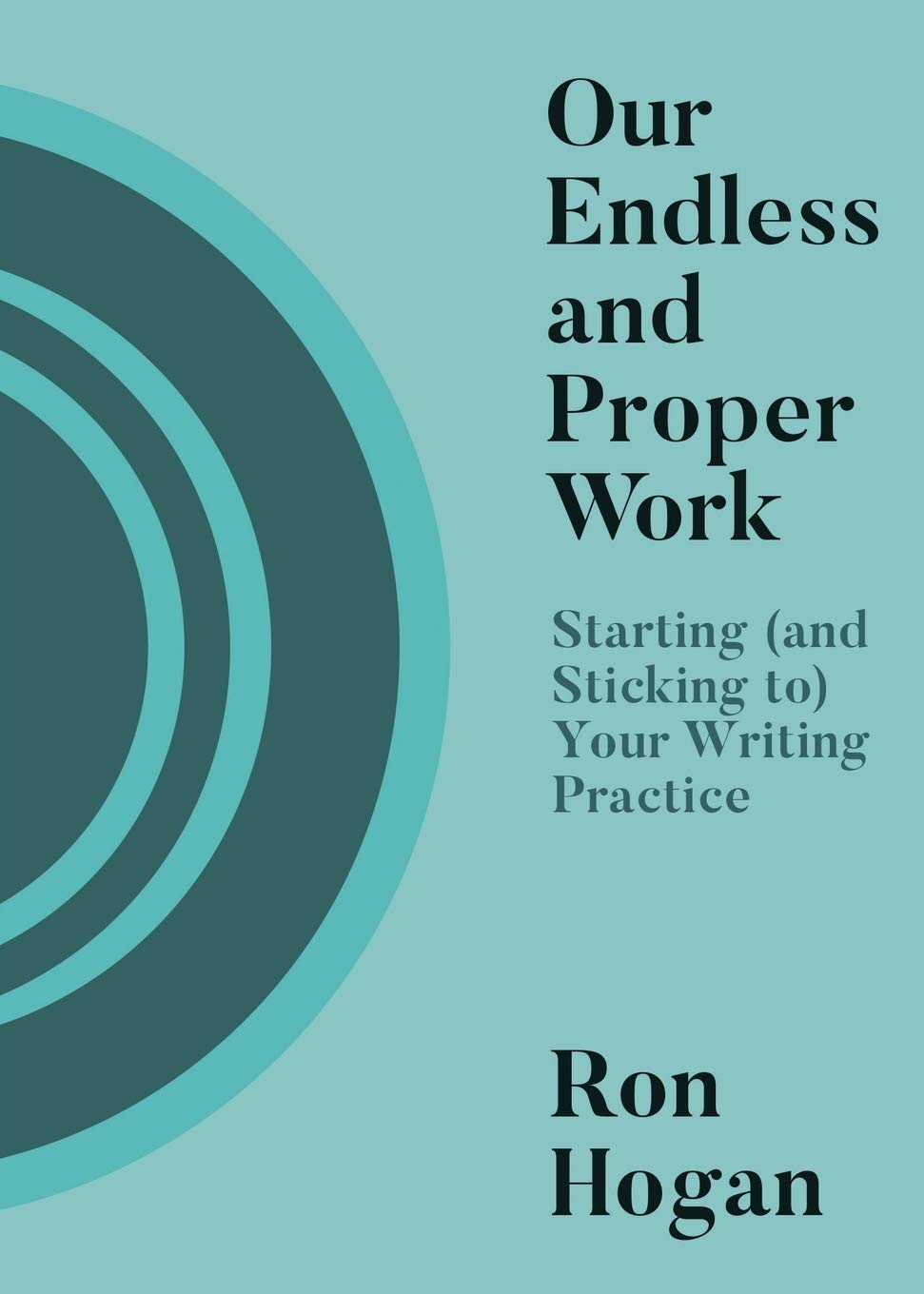 Our Endless and Proper Work is my new book with Belt Publishing about starting (and sticking to) a productive writing practice.