Read This: Scott Pilgrim’s Precious Little Life
For various reasons, it looks like I’m not going to be able to see the Scott Pilgrim Vs. the World movie until after its opening weekend, but that’s okay because it’s giving me some time to re-read the original graphic novels (and to read the sixth and final volume for the first time).

It’s easy to forget, after having the scenes from the movie trailer drilled into my forememory for several months, just how mundane this story can be—by which I don’t mean that it’s boring, just that it’s not all videogame fight fantasies. The opening chapters of Scott Pilgrim’s Precious Little Life are primarily about 23-year-old Scott’s half-hearted relationship with a high school senior, which hardly anybody thinks is a good idea, and his initial encounter with Ramona Flowers. Things start to get a little urban fantasy when Ramona explains that she’s been showing up in Scott’s dreams before he actually met her because there’s a “subspace highway” that goes right through his head, but that’s still just a blip of weirdness in an otherwise normal romantic comedy (complete, as the excerpt above demonstrates, with perpetually put-upon gay best friend). It’s not until Matthew, the first of Ramona’s evil ex-boyfriends, attacks Scott at his band’s concert that the weirdness kicks into high gear—and one of my favorite things about the book is how Bryan Lee O’Malley’s artwork rises to the occasion, bursting into consecutive double-page spreads and layouts influenced by manga fight scenes, but still retaining the rough, deceptively sketchy quality of his lines. In a recent interview, O’Malley discussed his early manga and video game influences and how they were shaped by later reading:
“Obviously, I played a lot of video games when I was a kid, through middle school and high school. I was really into manga too… [But] it wasn’t like I had read a whole lot of shonen manga before then. (Even a Monkey Can Draw Manga) described the structure of shonen manga plots kind of like it’s a shish-kebab, where there’s meatball, meatball, meatball on a stick, with each meatball representing a fight; that’s how it explained what shonen manga really is. So that just kind of stuck in my head… Also, I wanted to do a comic with fights in it, because I feel that comics are good at that, or that comics are supposed to be about fights.”
Note: Shonen is a specific sub-genre of manga aimed at an audience of boys aged 10-18, and in retrospect it’s actually sort of interesting how you can read Precious Little Life in the spirit of a YA novel, as a sort of teenage fantasy version of what life’s going to be like when you’re in your twenties that, about halfway through, kicks into this even trippier fantasy where video game moves are a perfectly natural part of your daily life, such that somebody can point out that Scott is “the best fighter in the province” and nobody thinks that’s at all an unusual statement. It’s a bold shift to make in only the first volume of a six-book series—the question is, will that shift work as the story continues?
11 August 2010 | read this |
Michael Atkinson: Fictionalizing the True Gen
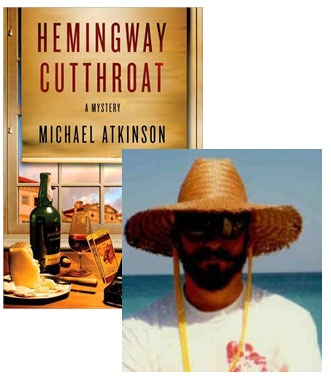
Hemingway Cutthroat is the second mystery novel from Michael Atkinson in which Ernest Hemingway learns of a murder and elects to pursue the truth behind the killing. The setting is Civil War-era Spain: John Dos Passos comes to Hemingway, who’s in Spain on a “discreet” rendezvous with Martha Gellhorn, and tells him that a mutual friend has vanished under mysterious circumstances, and nobody’s talking. It’s not like they’ll tell Hemingway anything, either, at least not at first… So what made Atkinson choose Hemingway for a protagonist? And how do you work with a “character” who’s so familiar to so many people?
It’s a proposition requiring a certain amount of ill-advised nerve—launching a mystery series using a spectacularly famous person as your protagonist sleuth. Double that if your celebrity is a world-renowned writer. There’s no limit to the amount of scat that could fly your way: fans irked, scholars betrayed, traditions subverted, biographers crossed. That fact hasn’t, of course, prevented it from being something of a trend, what with mystery series under way centering on Oscar Wilde, Edna Ferber, Edgar Allen Poe, and Mark Twain. (One shots include Sigmund Freud, H.G. Wells, Jane Austen, Lester Dent, Humphrey Bogart and… Elvis Presley!)
The genre seems to have been pioneered by one George Baxt, a gay pulp novelist and screenwriter from the midcentury, whose paperback series of Hollywood whodunits starred, for one novel each, Noel Coward, George Raft, Dorothy Parker, Tallulah Bankhead, Greta Garbo, Marlene Dietrich, and Alfred Hitchcock. It didn’t catch on then, but who knows, Baxt might be due for rediscovery.
The ground is, as they say, well-trammeled enough. It’s not difficult to fathom the allure of the celebrity-writer-sleuth genre-twist—the heady combustible brew formed by mixing genre violence and structure with the biography and personality of a beloved public artist. Who wouldn’t want in? My choice, which wasn’t a choice at all given the biographical real estate it bought me, was Ernest Hemingway. Search fruitlessly for another writer who has traveled as much, knew as many famous contemporaries, plunged headfirst into as many risk zones and war theaters, pissed as many people off, earned as many devoted friends, took as many women to bed, and still had psychosexual conflicts enough for a cast of Dostoyevsky characters and enough for it to kill him in the end. There’s so much seething stuff there it seemed hard to believe, once I researched it a bit, that no one had employed him as a fictional hero before.
9 August 2010 | guest authors |
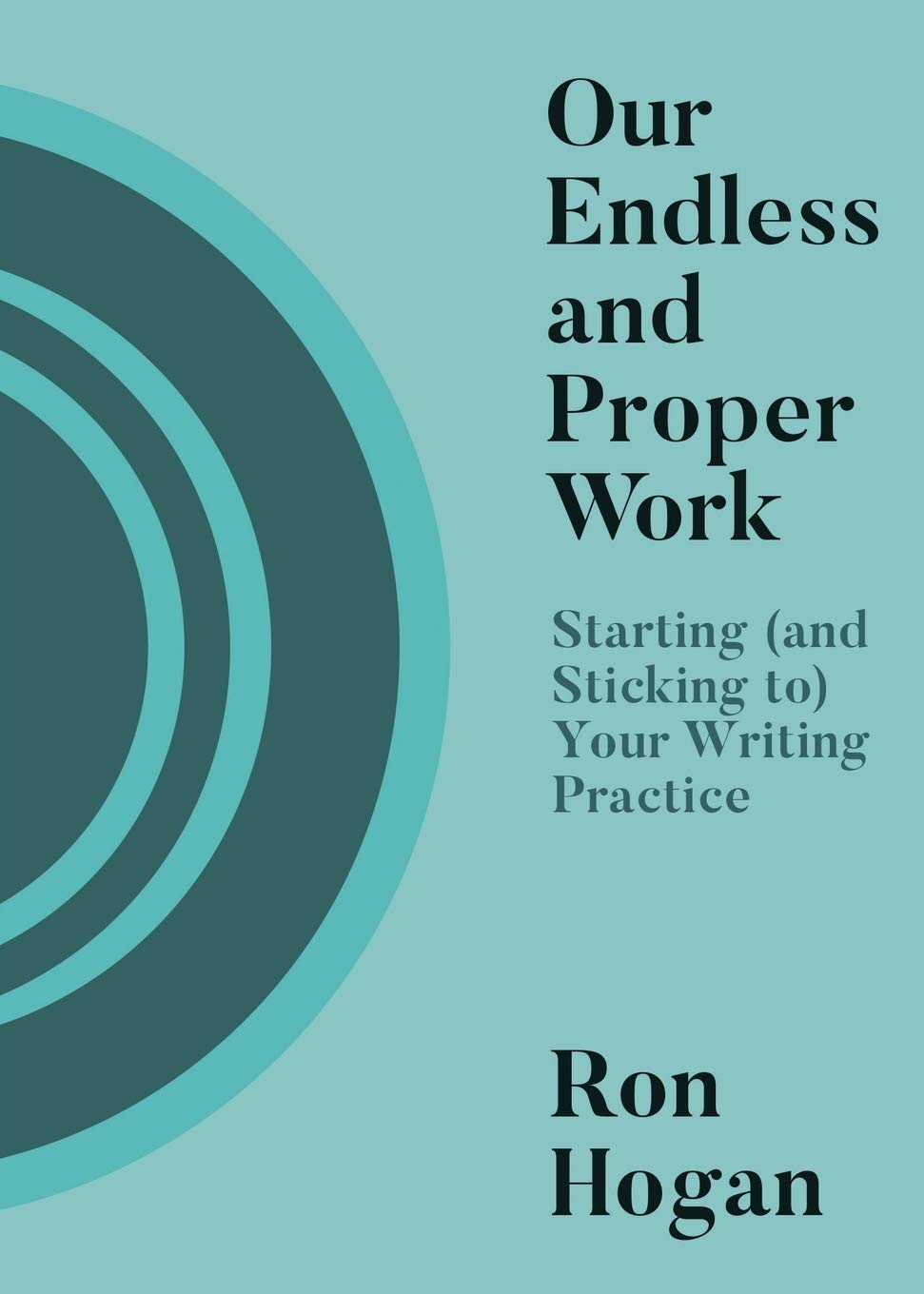 Our Endless and Proper Work is my new book with Belt Publishing about starting (and sticking to) a productive writing practice.