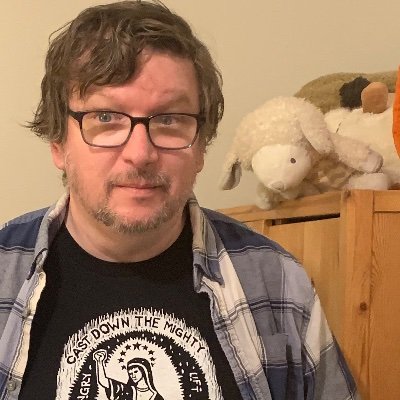
Frederick Reuss: Mapping Out Our Own Territories
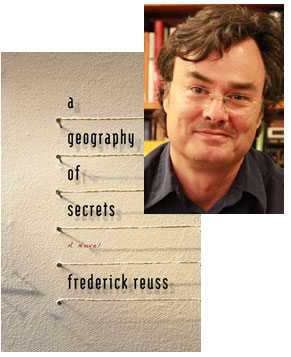
A Geography of Secrets traffics in the territory of international thrillers, but its concerns are much more intimate and personal. Some of it is the story of of Noel, who works at the Defense Intelligence Analysis Center plotting coordinates for the U.S. military to drop bombs in Afghanistan, and is undergoing a serious crisis of faith at both work and home—but it’s also the story of the unnamed narrator, who has only the briefest encounter with Noel and is much more concerned with uncovering the truth about his recently deceased father, who may have been more than a career Foreign Service diplomat. The narrator does have cartography in common with Noel, though, and Frederick Reuss leads each chapter of the novel with the longitude and latitude coordinates for the setting. (You can verify this in Google Earth.) In this essay, Reuss explains how technological capabilities open up literary possibilities.
Growing up, my father always made a game of travel. He called it “exploring.” Whenever we arrived in a new place he’d always go off—usually on his own—and then suddenly reappear with a big “surprise” smile on his face. I came to appreciate his methods when I began my own solo travels. In my twenties, I did my first transcontinental road trip on a motorcycle—inspired, like so many others back then, by Robert Pirsig’s Zen and the Art of Motorcycle Maintenance. Reading a map on a bike isn’t an easy thing to do. I had a compass mounted on the gas tank, vowed to stay off interstates, took only secondary roads and rode around lost much of the time.
You notice things when you’re lost, things that might otherwise go unnoticed—big and little details, features of land and cityscape. There is no better way to discover and become situated in an unfamiliar place than to be lost in it for a time. To draw one’s own map, even a crude one, or trace one’s progress on a printed chart is the ultimate way of connecting to and locating oneself in a landscape.
If my motorcycle trip would have been utterly different with GPS or Google Earth, writing A Geography of Secrets would have been impossible without them. The geo-coordinates that start each chapter form a map of the cartographer/narrator’s quest, a subjective triangulation of the world to bring order and coherence to his life. Geotagging, which has evolved with Google Earth into a kind of hobby and game, is an intriguing new form of self expression—photographic projections, by people, of their presence on the globe. It shows how deeply the urge to locate and be located goes. Satellite photography shows us where we are. (I can see my house from here!)
15 September 2010 | guest authors |
Angie Chau Thinks About “Every Little Hurricane”
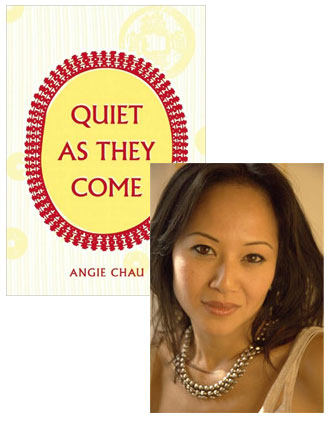
Quiet As They Come, the debut collection by Angie Chau, gives us multiple perspectives on an extended family of Vietnamese immigrants, beginning five months after their arrival in San Francisco, as eight-year-old Elle recalls a Fourth of July during the summer all twelve of them lived in the same three-bedroom house. One of Elle’s aunts, Kim, becomes the focus of the next story, then her mother, Huong, then her father, Viet, and so on, before returning to the adult Elle in the final story. The shifting points of view give us access to a variety of experiences and insights into how we can still feel out of place even after years of living in the same location. In the story she’s chosen to write about for Beatrice‘s “Selling Shorts” series, Chau touches upon similar feelings of existential alienation and a child’s-eye view of an unsettling world all too close to home.
I relish personal stories. In life, I love listening to secrets, confessions, tidbits of gossip. In fifth grade I started a game with my two best friends called True Confessions. My best friend’s father was a jazz musician and had a sound proof studio behind the house. We stood on the make shift stage, turned on the microphone, and announced the one “true confession” that we would never admit out loud at school. The game didn’t last long. I don’t think my friends were as interested in this same sense of exposed purging. To this day, however, I am a good secret-keeper. Friends, neighbors, and coworkers always come back to tell me more.
In fiction, I crave the same kind of intimacy. I want it to be our world, yours and mine, alone. I want to feel like you trust me enough to reveal something untold to others, something you are uncomfortable about. And maybe through your courage, your vulnerability, through your telling of it, I get to admit things I didn’t have the words for before. I can acknowledge a shared fear or shame, I can ask questions I’ve never asked before.
A story that has inspired me is Sherman Alexie’s “Every Little Hurricane,” from The Lone Ranger and Tonto Fistfight in Heaven. Its technical brilliance, dark humor, and sweet sadness, distill a world in all its complexity into one night. Because I had never encountered Spokane Indians or any Native Americans in literary fiction, the story feels otherworldly, both refreshing and haunting. I was immediately struck by how these people were both absolutely foreign, yet somehow familiar.
14 September 2010 | selling shorts |
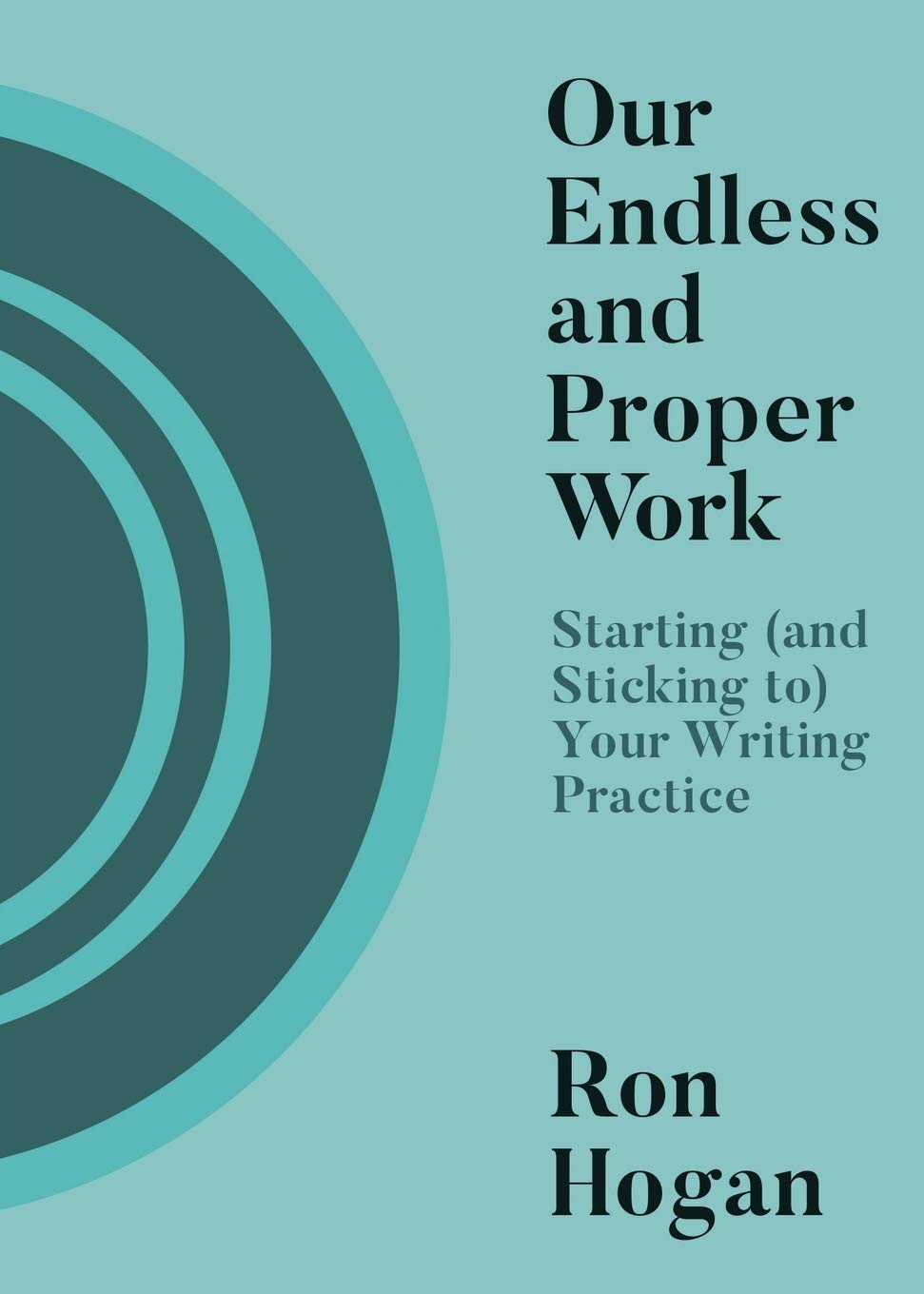 Our Endless and Proper Work is my new book with Belt Publishing about starting (and sticking to) a productive writing practice.