
Syrie James: 15 Ways to Keep Love Alive

Nocturne opens like a Bizarro World production of Misery—this time, it’s the fan who gets into the accident, and finds herself in the secluded home of the bestselling author—but Syrie James takes the story in a more romantic direction… and a more supernatural one, as well. Because, let’s face it, if a handsome, charming and brilliant writer goes out of his way to make sure there isn’t anybody else around for miles and miles, there’s got to be a pretty compelling reason, right? James’ own love life isn’t anywhere near as tortured as that of her protagonists, though, and in this essay she shares some of the things she’s done to keep it that way.
I love writing about love. My new novel, Nocturne, is a passionate love story about two wounded souls who, for four magical days, find shelter together from a raging storm, both literally and figuratively. They share a profound, once-in-a-lifetime kind of love that is destined to change them both forever. I loved writing about Nicole and Michael; by the time the book was finished, I felt so close to the characters, and had delved so deeply inside their minds and hearts, that I felt as though their life-altering encounter had really happened.
With Valentine’s Day here, I’m reminded that the characters in our books shouldn’t be the only ones experiencing romance and passion in their lives. We all have to make the time to keep our love alive. My own, personal love story began in college. I met Bill when I was 19 years old. We fell in love overnight, became engaged three weeks later, and married eight months after that. I managed to graduate from college early so I could begin a new life with Bill in southern California—a life that was sometimes difficult and complicated but was always nurtured by our mutual love and respect. We literally grew up together, navigating the challenges of building careers and a home while raising a family. Every day of the journey has been a great adventure.
I feel blessed that the adventure is still continuing. “Grow old along with me; the best is yet to be” (Robert Browning) is a perfect way to describe our relationship. My husband and I just celebrated our 35th anniversary. We have two talented, terrific sons who are married to lovely young women. But Bill and I both work very long hours at very different jobs. Is there time in the mad rush of life for love and romance? Are we doing all that we can and should to nurture our marriage? I’ll say this: we really try!
14 February 2011 | guest authors |
Giles Murray on Gush: “Watery, But Certainly Not Grave”
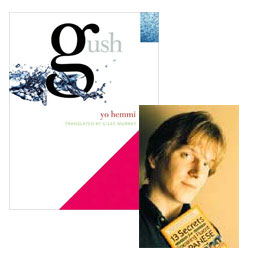 Gush is, as far as I know, the first time that English-language readers have been able to read the fiction of the Japanese poet and social activist Yo Hemmi—thanks to the translation work of Giles Murray. I had a look at the title novella earlier this week, and as Murray discusses in this essay explaining what drew him to the story, it’s a very unusual story, narrated by an insurance salesman who spots a woman shoplifting some imported cheese from a Tokyo supermarket. As she’s leaving, he notices a puddle of water on the floor; when they meet again soon after, she explains that the water builds up inside her until “I know I’m doing something bad, something I shouldn’t, [and] that’s when it comes out.” Of course, this “urge to spout water,” which she views as “a horrible, weird disease,” is basically female ejaculation… but, as our protagonist discovers when he embarks on an affair with her, for this woman it takes place on an epic scale. And, he soon realizes, the source of her deepest shame is also the source of his greatest pleasure. In the wrong hands, this could be crude and farcical, but Hemmi (and Murray) turn it into a melancholic story of the waning strength of impulsive love. (And there are still two other Hemmi stories for me to read after this! I’m looking forward to that.)
Alex Kerr, the author of two books on the arts, economy and society of Japan, believes that traditional Japanese culture was defined by the tension between man-made order and the disorder of nature. Stone gardens are one example he gives: Inside the garden, all is cold, sterile, gray and orderly; but immediately outside looms a mountainside heaving with great shaggy cedars, red-leafed maples and gaudy pink camellias. The artful austerity of the garden would be nothing without the wild fecundity of the natural world to set it off. Present-day Japan has erred too far on the side of sterility, artifice and order, argues Kerr, a loss of balance that has been detrimental both to the arts, and to society at large.
The existence of a handful of artists still able to channel Japan’s old earthy and instinctual side gives Kerr grounds for hope. One of these was Shohei Imamura, the movie director best known for The Eel, the 1997 Cannes Film Festival Palme d’Or winner. Prior to his death in 2006, the last full-length feature Imamura made was an adaptation of “Warm Water Under a Red Bridge,” a 1992 novella by Yo Hemmi. This novella has finally been translated into English (in a collection with two other short stories) under the title “Gush.”
11 February 2011 | in translation |
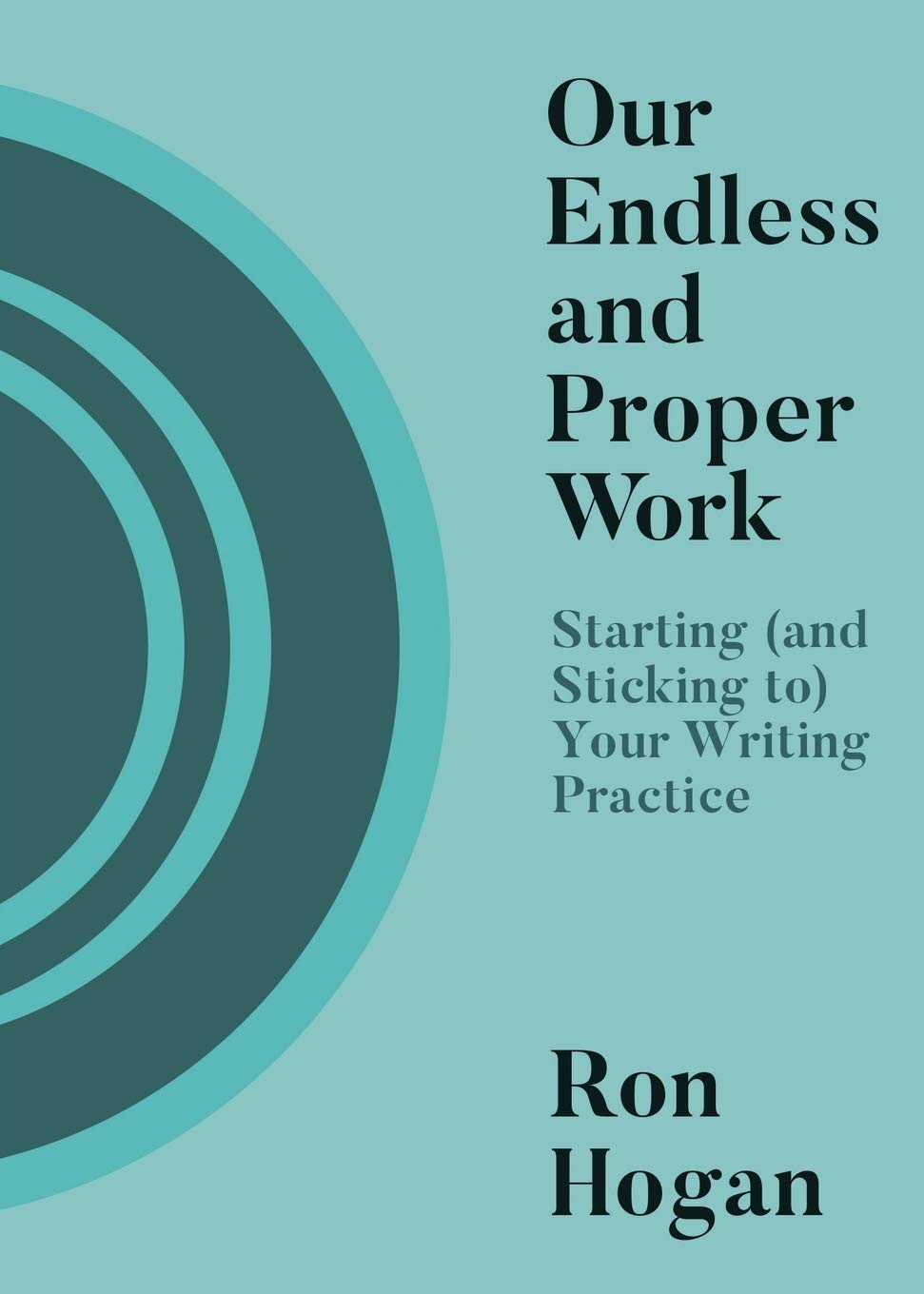 Our Endless and Proper Work is my new book with Belt Publishing about starting (and sticking to) a productive writing practice.