Emma Straub’s First Kisses
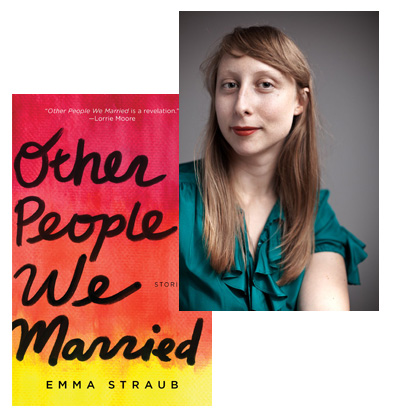
In early 2011, Emma Straub released a collection of wonderful short stories through the book publishing arm of the online literary magazine Five Chapters. A lot of people fell in love with those stories over the following months—one of them was Megan Lynch, an editor at Riverhead Books. Lynch was so impressed after hearing Straub read at a bookstore event that she didn’t just buy a copy of the book, she bought the book… and now, almost a year to the date after its original publication, Other People We Married has an even greater opportunity to impress itself upon readers. (Riverhead will also be publishing Straub’s first novel later in 2012.) Sometimes it’s hard for a “Selling Shorts” to pick just one story to write about, and that’s how it was for Straub. She’s got a list of great stories that helped awaken her to the possibility of writing in this genre, and she’s still discovering amazing stories by new writers. And I won’t be surprised if, some day, another writer comes along who talks about stories like “Fly-Over State” or “Puttanesca” or “Marjorie and the Birds” the way she talks about her favorites.
I didn’t write a short story until I was twenty-six, and already in graduate school. Up until then, I’d fancied myself a novelist and a poet. My writing could either be plot-driven or language and image-centered, with character-driven human emotion itself falling somewhere in the chasm between them.
People may love to mock the proliferation of MFA programs, but I can say without hesitation that my MFA experience, at the University of Wisconsin-Madison, introduced me to the subtlety, epiphanies, and to the millions of minute shifts in feeling. Of course, I wasn’t actually being introduced to these concepts, not having been born a robot, but I was given a much better language for understanding and describing them.
Some of the stories I read during those first six months or so will always stay with me, no matter how many stories I read and love. I suppose it’s something like remembering your first kiss, even though you’ve been kissed better a thousand times since. They include Flannery O’Connor’s “A Good Man Is Hard to Find,” and Toni Cade Bambara’s “Raymond’s Run.” They include Michael Cunningham’s “White Angel,” and Richard Ford’s “Rock Springs.” They include Raymond Carver’s “Cathedral,” and Lorrie Moore’s “You’re Ugly, Too.” Sometimes your first kiss is an epic one. I went on to read famous stories and obscure ones, anthologized classics and stories by my friends. I was obsessed.
And some obsessions, like kissing, never go away. This last year I fell hard for stories by Stuart Nadler, and Dan Chaon, and Caitlin Horrocks, and Megan Mayhew Bergman, and Adam Wilson. Short stories make me feel, even more than poems or novels, that some things are still possible: that there are other languages out there for me to learn, other geographies to traverse. And when I get there, to the other side of some rocky shore, I will be able to tell you all about it.
8 February 2012 | selling shorts |
Lysley Tenorio On Dying & Character Development
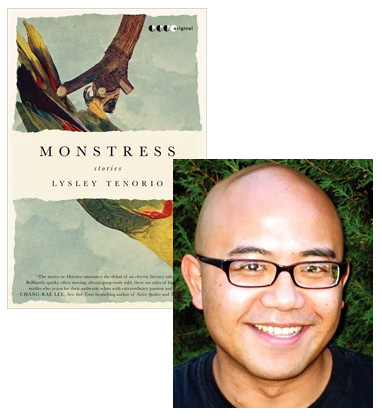
The stories in Lysley Tenorio’s Monstress cover a wide range of Filipino and Filipino-American experiences, from a teen’s confused efforts to help his Imelda-fixated uncle exact revenge against the Beatles for a perceived offense during their 1960s visit to Manila to two elderly men who’ve spent their adult lives together in San Francisco’s International Hotel, from an actress in grade-Z monster movies who follows her husband on a desperate trip to Hollywood and discovers an unforeseen opportunity to a contemporary young man struggling to come to terms with the death of his transsexual younger sibling. There’s also a fantastic story, “Superassassin,” in which a teenage boy schemes to exact vicious revenge against his tormentors while caught up in his comic book-inspired fantasies. Tenorio comes by his portrayal of comics fandom honestly, as we’ll discover in this essay, and it’s also played an interesting role in shaping his literary vision.
I loved a girl once. For almost ten years. She was kind and selfless, a girl of unmatched courage, stronger than anyone I knew.
Then, when I was twelve years old, she died.
Her name was Kara. Kara Zor-el.
You might know her as Supergirl.
It was 1985. DC Comics had released Crisis On Infinite Earths, a 12-part series designed to streamline the overstuffed and overcomplicated DC Universe of multiple and parallel earths. In issue #7, Supergirl squares off against the Anti-Monitor, an all-powerful ruler of an Anti-Matter universe determined to destroy our own. It was a battle for the ages: just as the Anti-Monitor is about to kill her cousin, Superman, Supergirl swoops in, pummels the crap out of the Anti-Monitor, but on the verge of victory, she makes one fatal mistake: she looks away. With that, the Anti-Monitor unleashes his deadliest force-blast, killing her. But for the meantime, Supergirl has managed to disable his weapons, temporarily foiling his plans. “Thank heavens…” Supergirl says in her final breaths, “…the worlds have a chance to live…” Then, in Superman’s arms, she dies.
I finished reading it inside the comic book store, paid for it, then went with my sister to Pizza Hut. But I couldn’t eat. I felt numb. I felt dizzy. Across the table, my sister looked at me like I was an idiot, mourning a make-believe character, a girl of two dimensions. But I knew: This was grief. It had to be.
Lately, there has been a lot of dying in my classroom. In my freshmen fiction workshop, my students have been killing off their characters with cancer, brain tumors, car crashes, hit men, and comas from which they never awake. And they render these deaths with a gusto that’s admirable: they know the effect they want, and they go for broke, indulging every tear, breakdown, and bloodspurt. But for the most part, it doesn’t work. Reading these stories, we might find something recognizable or familiar (“Someone died at my high school too!”), but at most we understand these spectacular deaths, but we don’t feel them.
The problem isn’t necessarily the death itself; death is an intriguing and potent subject for fiction. The problem is the lack of life preceding it, the absence of that singular life force that every fictional character must possess in order to earn the right to die. We can only feel so much from the summarized life.
When I read these stories, I want to tell them about Supergirl. I was a living witness to the destruction of her home, Argo City (a sort of final city-remnant of Krypton, which exploded years before). I knew her as Linda Lee, the alias she assumed at the Midvale Orphanage, and that she had two pets: Comet the Superhorse and Streaky the Supercat. And when she wasn’t Supergirl, when she was simply Linda, she had the ambition and aimlessness of young adulthood—she was a high school counselor one day, an aspiring TV reporter the next, a soap opera actress soon after. I knew her powers and weaknesses, her losses and loves, her allies and nemeses, her victories and defeats. All that super-living, measured against a gloriously epic death scene. No wonder it worked. No wonder I mourned her.
6 February 2012 | selling shorts |
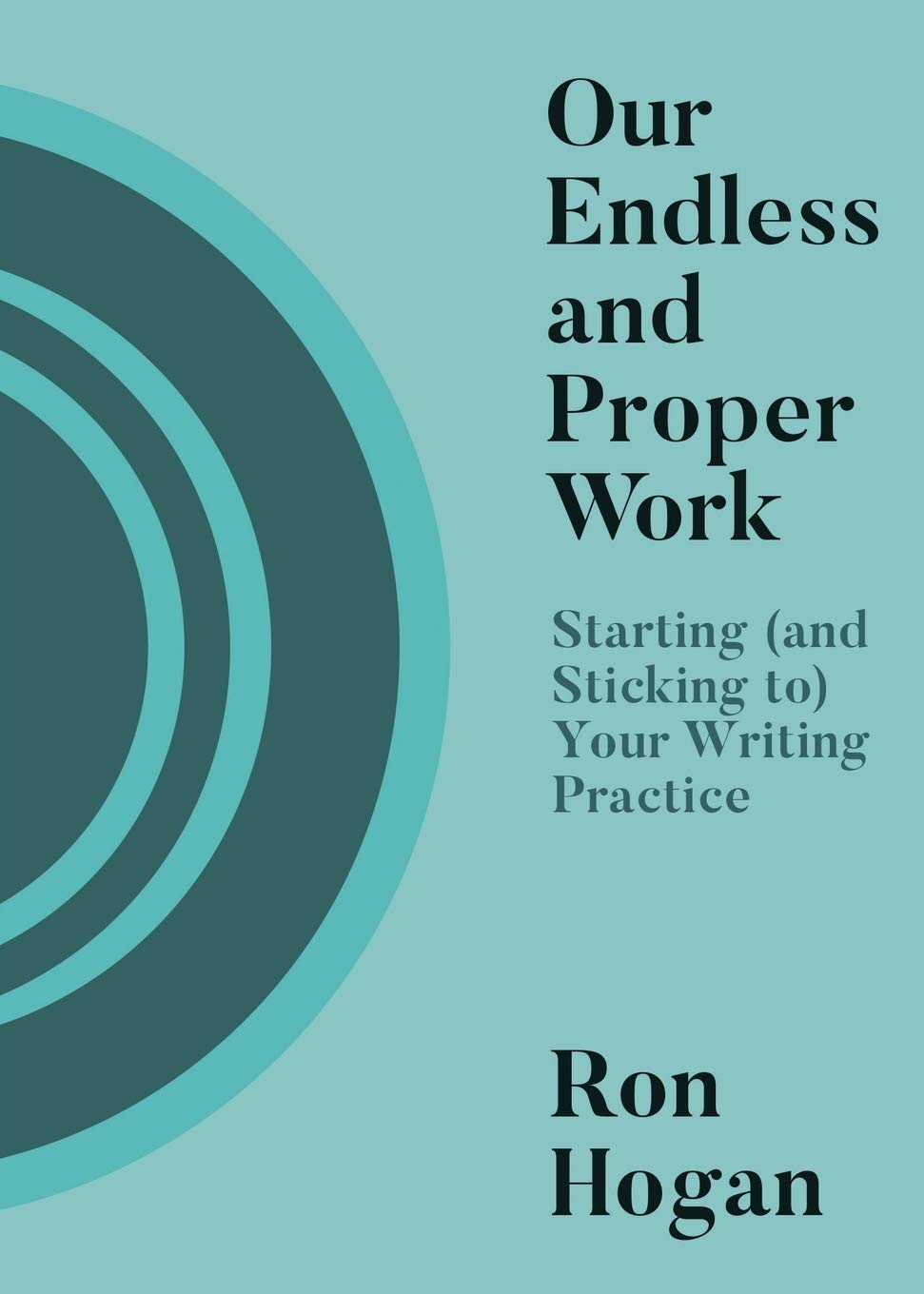 Our Endless and Proper Work is my new book with Belt Publishing about starting (and sticking to) a productive writing practice.