
Andrea G. Labinger: The Story Continues
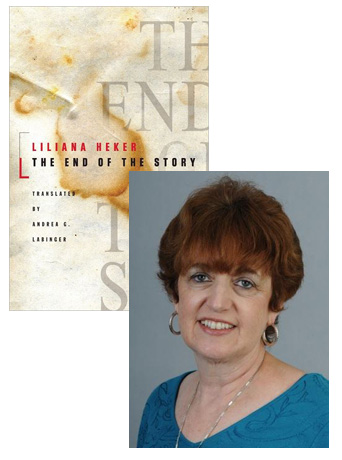
Liliana Heker’s The End of the Story is a powerful novel about Argentinean politics, a novel which sparked much controversy when it was published in 1996—particularly for its portrayal of a revolutionary who abandons her politics under torture and becomes an active collaborator with the ruling junta. Andrea G. Labinger, who’s translated many works by Latin American authors, wrote in a previous essay (see the link below) that she decided to take on The End of the Story “because I was attracted to its complexity as well as to the originality of Heker’s style;” it’s precisely because the novel’s political and literary tensions aren’t neatly resolved that it’s such a compelling story. In this essay, Prof. Labinger discusses some of the other questions she needed to address in formulating her approach to Heker’s prose.
There’s something vertiginous about writing an essay about translating a book about writing a book about the impossibility of telling a story. Too many “abouts,” for one thing. For another, as one perceptive reader of The End of the Story recently observed, the author grants few concessions to the reader. As is the case with most postmodern fiction, Liliana Heker makes us work for it: the complexity of her syntax only serves to intensify the multiplicity of narrative voices, dizzying time shifts, and moral ambiguity of the unsettling tale she has chosen to tell, like a tragic theme with variations, over and over again.
18 June 2012 | in translation |
Heather Barbieri & The Novel as Remembrance

All novels are personal, of course, but The Cottage at Glass Beach holds a particularly special meaning for Heather Barbieri. Although the storyline, about a woman trying to resolve a mystery from her family’s past while she’s still reeling from a blow to her marriage, has little to do with Barbieri’s own experience, the novel’s themes of motherhood resonated deeply with her during the writing process, as she explains in this guest essay…
I’d just submitted an outline and sample chapters for The Cottage at Glass Beach to my agent when the news came. My previously healthy, active mother, the woman who was frequently asked what products she used to keep her appearance so young (answer: the old school version of Oil of Olay), had been flown to the emergency room here in Seattle. It took a day or two before the doctors realized she had one of the worst conditions possible, cerebral amyloidosis, from which there was no recovery. (C. a. is a little known member of the Alzheimer’s family of illnesses; there’s no treatment, no cure.) She never regained consciousness and died within a few days—better for her, given the prognosis; hard for us, as it is for so many who find themselves suddenly bereft.
Two weeks later, I had a book deal, but was struggling to get my bearings. As had been happening frequently since my mother’s death, a blue jay perched in the rhododendron bush across from my office window, trilling in what might have been interpreted as encouragement and staring me in the eye. It’s going to be all right, it seemed to say. Whenever I was feeling uncertain it, or one of its brethren, would appear to cheer me up at just the right time. (One of the birds had alighted on the dining room windowsill when we were telling my dad that Mom had passed away, tapping on the glass to get our attention.) Blue had been her favorite color, and the birds became her emissaries, signs and wonders, in a time of need.
17 June 2012 | guest authors |
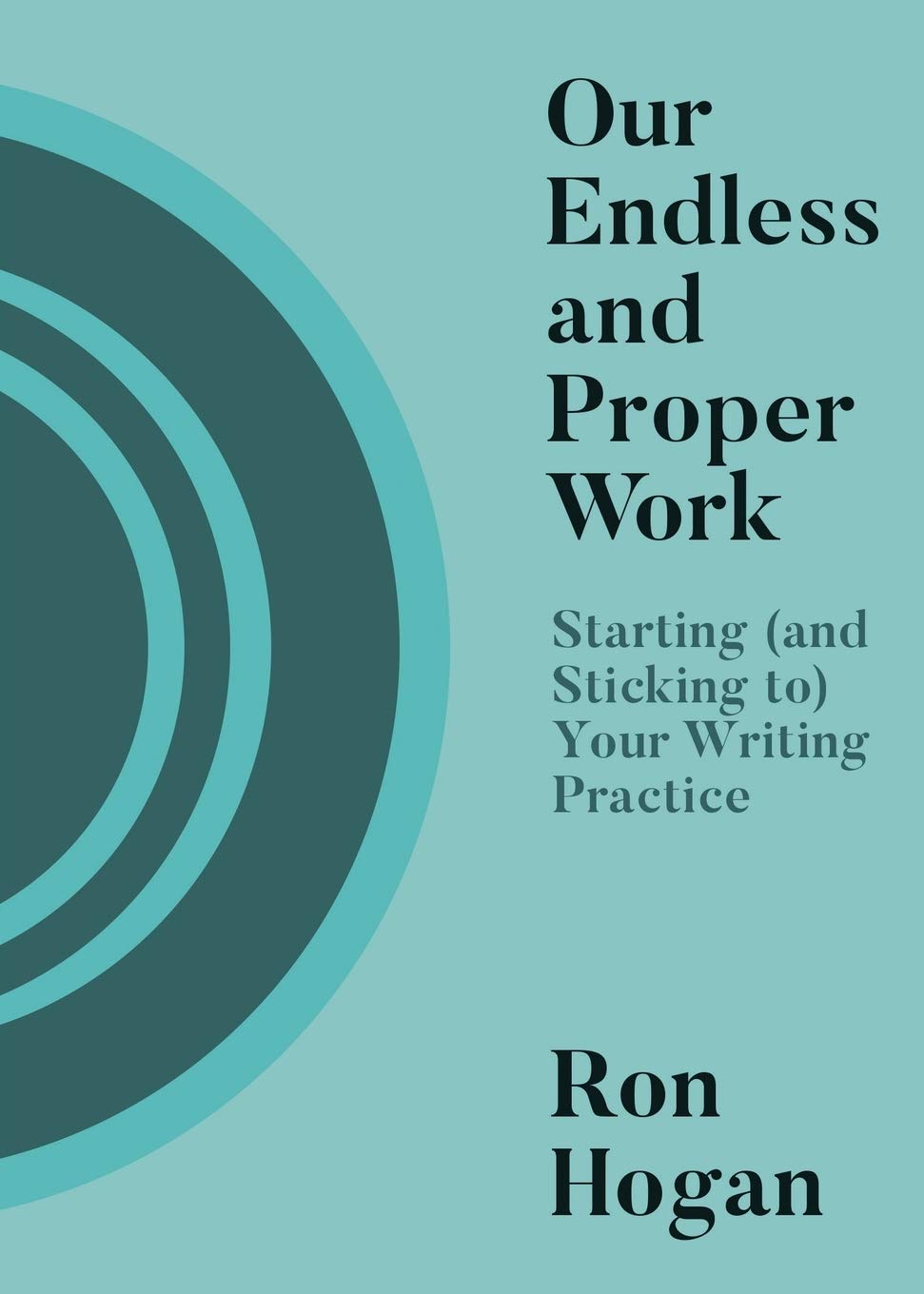 Our Endless and Proper Work is my new book with Belt Publishing about starting (and sticking to) a productive writing practice.