Read This: American Science Fiction
Library of America
People are always talking about having been born so many years too soon or too many years too late, but I think that when it comes to science fiction fandom, I was born at just the right time. As a teenager in the 1980s, I only had about a half-century of reading to catch up on, give or take—yes, yes, plus a few major precursors—and I had a well-stocked public library, a speedy reading eye, and plenty of free time. The early boom years of SF were still close enough that much of that material was still in print, so what my library didn’t have, I could track down and buy. So I did a reasonably decent job of staying up to date with “the good stuff” that decade, at least as far as hard SF was concerned, but I was also able to make a pretty good dent in the 1950s and 1960s, too. Although there were gaps…
That’s one of the reasons I’m excited about the arrival of American Science Fiction: Nine Classic SF Novels of the 1950s, a new boxed set from the Library of America. I’m finally going to get to read Fritz Leiber’s The Big Time! Plus, I suspect I’m going to understand Theodore Sturgeon’s More Than Human a lot better than I did when I was 15. (I’ve already started in on The Space Merchants by Frederick Pohl and C.M. Kornbluth, which is a bit funnier with Mad Men-colored retrospective, but I do remember finding it pretty funny—finding a lot of Kornbluth funny, for that matter—in high school.)
As with any attempt to do a “big picture” sampling like this collection, I’ve got a few items left on my wish list, The Languages of Pao by Jack Vance chief among them. Oh, okay, I’ve got a soft spot for Fredric Brown’s Martians, Go Home, too. And though I’m not too frustrated by its absence, I know a lot of other SF fans will mark the omission of Walter Miller, Jr.’s A Canticle for Leibowitz—actually, there seems to be some question about that. The Library of America’s 1950s timeline puts the publication of Canticle at October 1959, while Wikipedia says it was published in 1960 (but with a 1959 copyright). So maybe it’ll be in the 1960s batch!
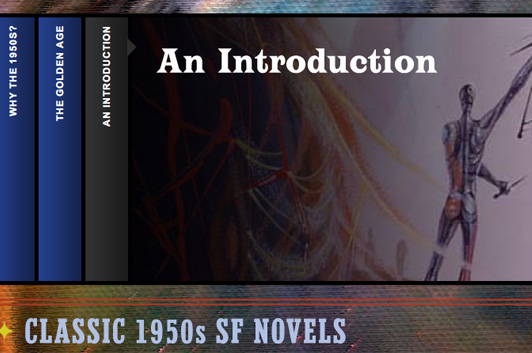
Wait, you’d probably like to hear more about that timeline, right? It’s part of an elaborate website the Library of America has created as a sort of critical apparatus to go with the books. So you get not just, for example, William Gibson talking about Alfred Bester’s The Stars My Destination or Neil Gaiman discussing The Big Time, you also get an autobiographical essay by Bester and an introductory essay from Leiber plus five additional short stories set in his “Change War” series. And a bunch of other stuff besides. As supplementary websites go, this is pretty sweet.
24 July 2012 | read this |
When Anti-Bully Bullies Go Mainsteam
I haven’t written anything about the “Stop the Goodreads Bullies” phenomenon, because (1) I haven’t really wanted to give them that extra little bit of exposure, and (2) people like Stacia Kane, Foz Meadows, and John Scalzi have already covered the things that needed to be said about this group specifically, while Sarah Wendell of Smart Bitches, Trashy Books wrote a fantastic post about the broader reality of public conversations and criticism:
“The conversation and interaction in response to what we consume is essential. It is normal. It is not always positive. It is always valuable.”
I didn’t have much to add to all that, beyond a few tweets.
If you aren’t familiar with this situation, here’s the short version: There’s a cluster of people who are put out by Goodreads users “bullying” authors through negative reviews, so they’ve taken it upon themselves to anonymously (and pseudonymously) harass those users by exposing their personal information. They’re nothing more than a sub-literary version of jumped-up thug wannabes, and even that is giving them more respect than they deserve. They’re the kind of malicious people who claim they’re speaking truth to power, when what they’re really doing is using a thimbleful of power to intimidate people they think don’t even have that much, and convincing themselves they’ve got the moral authority to do so.
They’re a mutual appreciation society of cruel, smug assholes, and I say that as somebody who, nearly half a lifetime ago, was myself capable of being a major asshole on the Internet, until I acquired a proper sense of shame and mortification. I also say it as somebody who’s been in the crosshairs of cruel, smug assholes, and who continues to see good friends in the literary community have to deal with cruel, smug assholes and self-appointed enforcers of what’s wrong and right. But it’s not a pleasant topic, and I didn’t have anything particularly original to add to the conversation, so as I say I’ve held off.
But then the Huffington Post book section decided to give these smug assholes a platform.
I’m not going to link directly to the post; you can find it if you want (and it’s one click away from a link I’m about to give you). Suffice it to say that HuffPo basically gave them an uncritical space in which to make their case for literary vigilantism, and they took full advantage of the opportunity. And when readers began to point out what had happened, HuffPo’s response was to add a note at the beginning: “This is an opinion piece, and does not represent the views of HuffPost Books or its editors.” And to tweet: “We do not endorse the actions or words of people who write blogposts on our site.”
20 July 2012 | theory |
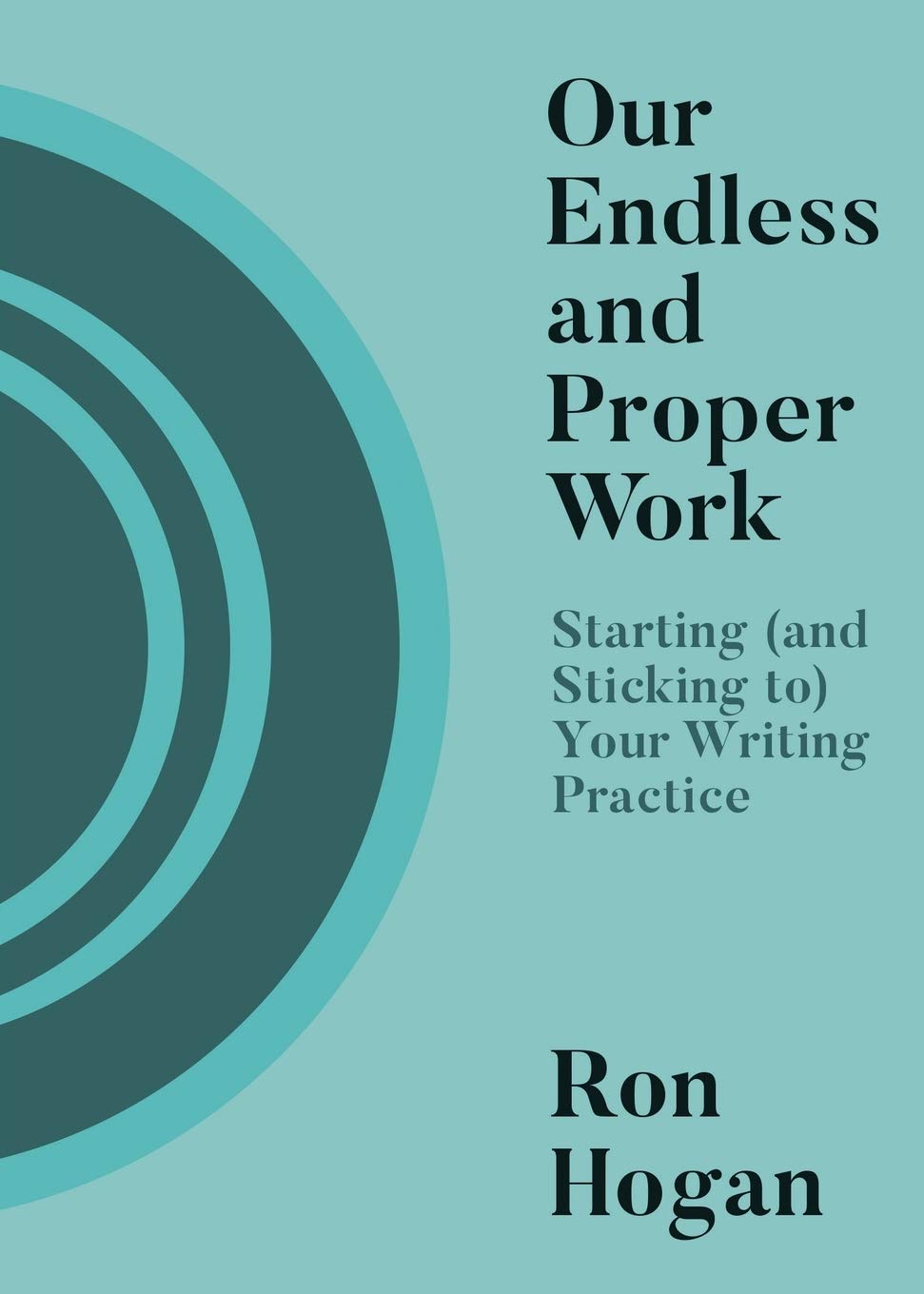 Our Endless and Proper Work is my new book with Belt Publishing about starting (and sticking to) a productive writing practice.