Jessica Anthony’s Best Story Ever
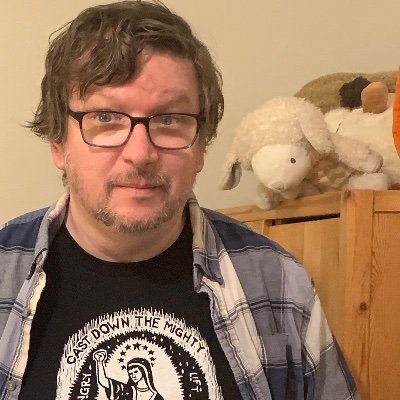
I first discovered Jessica Anthony when I heard her reading from “The Rust Preventer” at an event for Best New American Voices 2006 (which is also how I met Amber Dermont), by the way). Jessica’s work has also appeared in Best American Nonrequired Reading, McSweeney’s, New American Writing, Mid-American Review, and many other fine publications. Her first novel is dangerously close to completion, and when asked to tell Beatrice readers about her favorite short story, she took a clever tack (along with her unique author picture).
Dear Reader,
The best thing about writing an essay like this (“Name a Short Story Or Novel That Has Influenced You And Why”) is that the assignment carries with it a whiff of elementary school’s classic biftek: “What I Did Last Summer.”
The problem was that I never really did anything over the summer. I grew up in a small agricultural community. I had a dog and a backyard. I climbed trees. Do children even climb trees anymore? I ran around in shorts with my shirt off. I played a lot of badminton. Mostly, I read. But “I read” is not a very exciting answer for “What I Did Over the Summer,” so I often made a few important embellishments to my essay which included things like rescuing puppies from high places, throwing rocks through the window of a limousine, and accidentally setting the carpet on fire.
But that’s not why I’m here today. I?m here to talk about a short story or novel that has influenced my writing, and you have been very patient to wait so long, and so without further ado, I present to you the title of the aforementioned, extremely influential story. Here it is:
METAMORPHOCATCHHARRISONMOBYLOLITARTISTNOT
ESFROMFRANKENBARTLEBYSTRANGERBREAKFASTHUC
KCIVILWARLAND84SHORTHAPPYLIFEOFQUIXOTEGULLI
VER’SPERFECTDAYFORONEFLEWOVERTHEMOCKINGBIR
DCANDIDECOSMICONNECTICUTYANKEEANIMALWORLD
ACCORDINGTOGATSBYALONELYHUNTERGREATEXPECT
AONEHUNDREDYEARSOFULYSSES.
10 February 2006 | selling shorts |
Amber Dermont Gets “The Point”
Amber Dermont’s short story “Lyndon” was included in Best New American Voices 2006. She’s a graduate of the Iowa Writers’ Workshop and has had stories published in Zoetrope, Open City, Alaska Quarterly Review, and other publications. She’s currently a fiction writer in residence at Rice University. Today, she’s talking about the title story in Charles D’Ambrosio’s first collection, The Point.
I’m a fiction writer so all of my favorite memories are false. Most are located in the lives of other people’s stories. I too have spent afternoons on the Lucinda River swimming the Australian Crawl. I too have taken off my false leg for a false bible salesman and been abandoned in a barn loft. With outstretched arms, I have stood on the roof of a synagogue and converted my mother, my rabbi, my friends. I have killed the Swede. I know Sonny and his Blues. I have visited the cemetery where Al Jolson is buried. These stories have transported me across state lines, down a vast rabbit hole, beyond the constraints of history, gender, and race.
My memory, though false, is rarely faulty and I’ve recently found myself in the throes of nostalgia, dwelling on one short story in particular: Charles D’Ambrosio’s “The Point.” The highly evocative title of this narrative conjures up multiple memories by referring simultaneously to a sharp end, a peninsula, a specific moment in time, an objective worth reaching, a unit of scoring, the attentive stance taken by a hunting dog, a jeweler’s measure of weight, a place where lovers retreat, and a mark formed by a sharp end. The story’s lush language, its unflinching examination of grief, its sorrowful sense of humor, and its unwavering devotion to family are worth reminiscing over, especially when the writer takes so many risks and breaks so many rules.
Never begin a story with a dream unless that dream is a nightmare. Preferably a nightmare involving a dead father, a helium balloon, and a stringbean. Better still, make sure our first-person narrator has been pushed out of his slumber by this nightmare, by the beach sand collecting in his sheets, and by the party his alcoholic mother is throwing in their home. Make sure when said mother enters the room that our narrator doesn’t recognize her: “A woman crossed over and sat on the edge of my bed, bending over me. It was mother.” Everything we need to know about the distance, the gulf that exists between this son and the woman who gave him life is located in the juxtaposition of those two sentences. Everything we need to know about the story to follow is located in this first paragraph and established through the kind of unusual sensory detail—the party’s silver smoke, the female guests who smell like rotting fruit, the hysterical clinking of ice cubes, the bitter twist of a vodka-soaked lemon peel—that locates the reader in a de-familiarized familiar world. The final sentence of the first paragraph sends the story off on a trajectory no reader can recover from. “When father was alive, (Mom) rarely drank, but after he shot himself you could say she really let herself go.” With this line, the bullet of the story leaves the comfort of its chamber and the hunt to see where it will ricochet and where it will strike is on.
7 February 2006 | selling shorts |
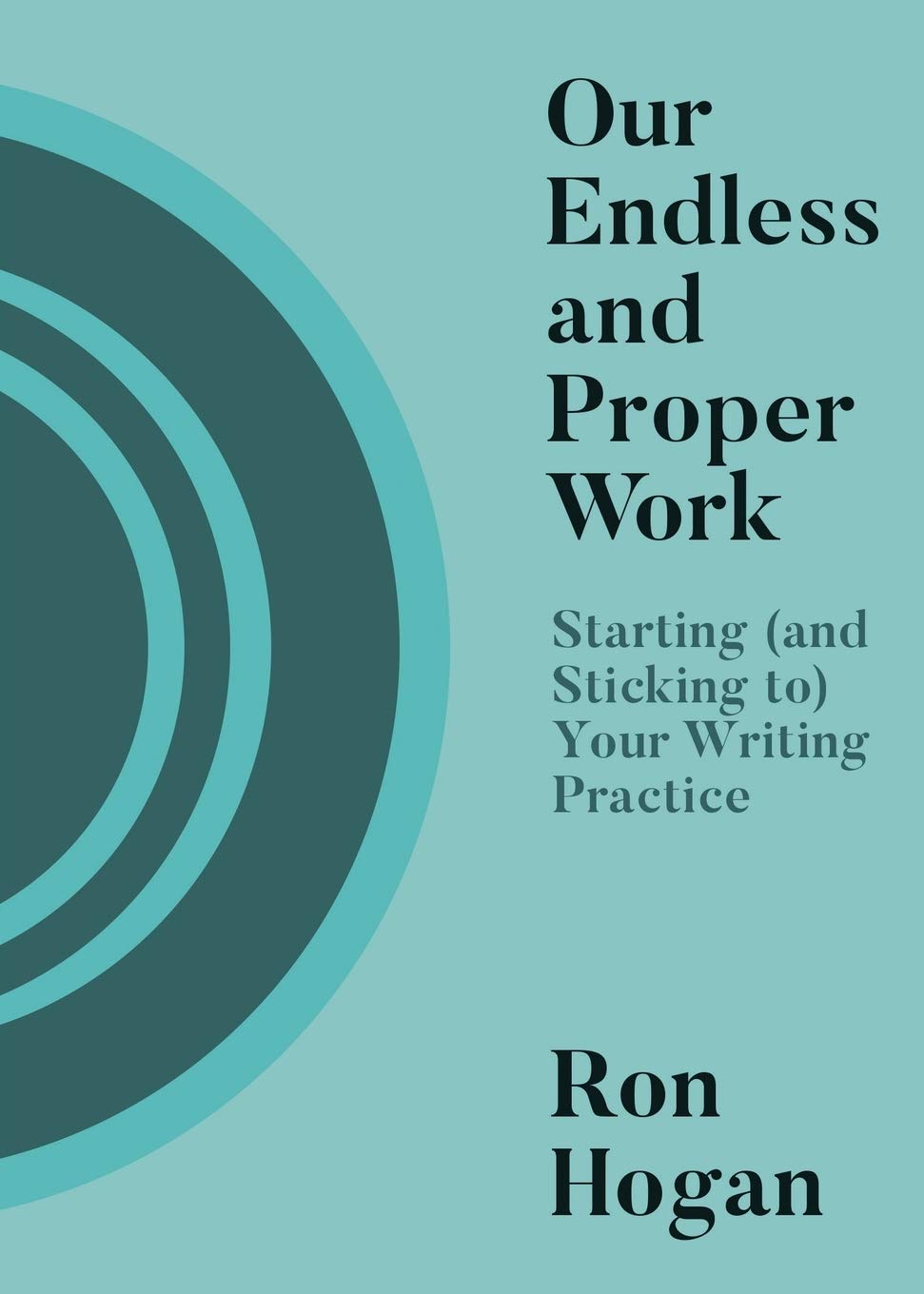 Our Endless and Proper Work is my new book with Belt Publishing about starting (and sticking to) a productive writing practice.